A successful Singapore-to-South Florida move with an animal depends on three coordinated systems: federal and local entry compliance, building-level approval, and an itinerary designed around airline and transit rules. Buyers should verify condominium documents before contracting, distinguish ordinary pets from qualifying assistance animals, and preserve a permanent travel record for future journeys, including a possible return to Singapore.
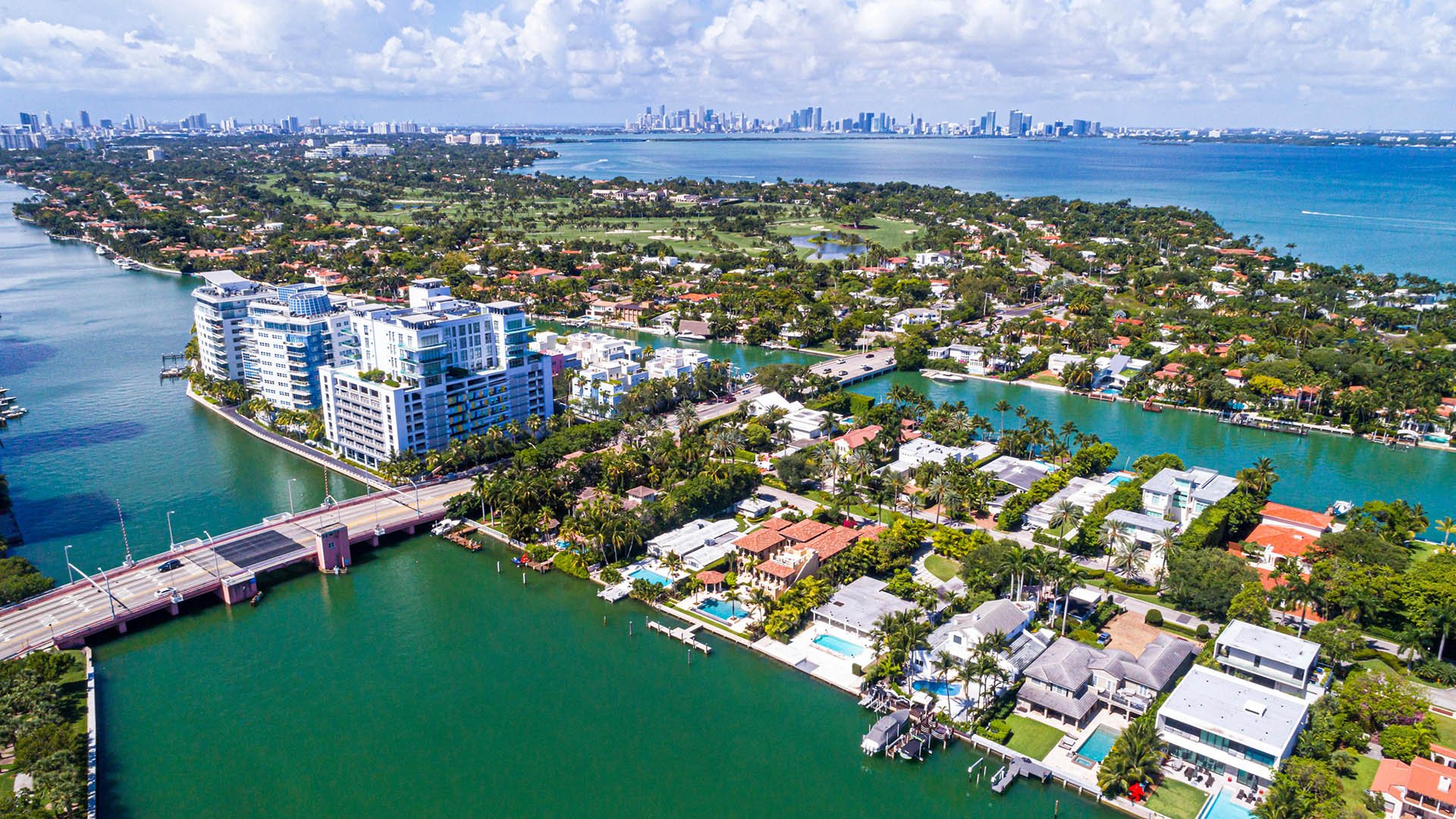
For a household leaving Singapore, selecting a South Florida residence is only one part of the animal-relocation strategy. The most reliable plan treats entry into the United States, airline carriage, and acceptance by the residence as three distinct approval systems. Approval in one does not guarantee approval in the others.
For dogs, the federal entry baseline includes a completed Dog Import Form receipt for every arrival or return to the United States since August 1, 2024. A dog arriving from a country considered dog-rabies-free or low-risk must be at least six months old, appear healthy, have a detectable microchip, and satisfy the applicable documentation requirements. Singapore falls within that lower-risk framework when the dog arrives directly, but the animal's whereabouts during the preceding six months also matter. Time spent in another country can change the applicable procedure.
The elegant move is the one in which the residence file and travel file are ready before either is tested.
Federal clearance is not a universal permission slip. Airline conditions may be more demanding, while Florida and municipal vaccination, licensing, and veterinary requirements still apply after arrival. Agriculture, customs, quarantine, and wildlife controls may also be relevant, depending on the animal and itinerary.
“Pet-friendly” is a useful starting description, not a substitute for governing documents. Before signing a contract, an ordinary pet owner should obtain the current condominium declaration and rules directly from management. The review should address the permitted number of animals, size or weight limits, breed restrictions, registration, designated elevators, access to common areas, and any conditions affecting leased residences.
This discipline applies across property types and neighborhoods. A buyer comparing 2200 Brickell with other Brickell options should request the same documentary detail as a purchaser considering The Ritz-Carlton Residences® Miami Beach in Miami Beach. Neither luxury positioning nor an amenity program establishes the operative animal policy. Only the latest documents and a written response from management can clarify the current process for a particular household.
The practical principle is simple: resolve animal eligibility during due diligence, not after closing. If a rule is central to the purchase decision, the buyer's advisers should determine how it is documented and whether approval must precede occupancy.
Housing treatment changes when an animal qualifies as an assistance animal for a person with a disability. In that setting, a qualifying service animal or emotional-support animal is not treated as an ordinary pet. Housing providers generally cannot apply conventional no-pet provisions, breed or weight limits, pet fees, or pet deposits to a qualifying assistance animal. Florida associations must make reasonable rule modifications when necessary for a person with a disability to use and enjoy a dwelling, and extra compensation may not be charged specifically for an emotional-support animal tied to a disability-related need.
The categories still require precision. A service animal is trained to perform work or tasks related to a disability. An animal whose sole function is comfort or emotional support is not a service animal under the public-access framework, even though it may qualify as an assistance animal in housing. When the disability or related need is not apparent, a housing provider may request reliable supporting information.
The prudent approach is to submit a written accommodation request, accompanied by appropriate documentation, well before move-in. Keep that file separate from the building's ordinary pet application so that fees, restrictions, and classifications are not inadvertently conflated. Buyers evaluating a lower-density setting such as Arbor Coconut Grove in Coconut Grove should follow the same formal process as those considering a larger tower.
Government entry rules are only the first layer of an international itinerary. An airline may impose its own health-certificate timing, vaccination records, crate dimensions, breed restrictions, and cabin-versus-cargo criteria. Confirm these requirements directly with every operating carrier before making any nonrefundable booking, particularly for a large dog, a restricted breed, or a journey involving more than one airline.
Transit deserves equal attention. A connecting country may apply separate animal-entry or transit requirements even when the animal remains within the airport. The best itinerary is therefore not necessarily the shortest or most prestigious route. It is the route whose government, carrier, aircraft, transfer, and arrival conditions can all be satisfied within a realistic document timetable.
Recognition of an emotional-support animal in housing does not automatically confer service-animal status for air travel. Classification and documentation must be established under the carrier's applicable procedures. This distinction should shape both the flight plan and expectations at the airport.
A well-managed household should maintain one durable digital file, supported by accessible originals where required. It should contain the animal's microchip number, complete vaccination history, laboratory results, permits, Dog Import Form receipts, veterinary certificates, and airline correspondence. Version control matters: expired records should remain archived, while the active set should be clearly identified for the next journey.
Even when a federal health certificate is not generally required for entry, the airline or destination jurisdiction may require one. The veterinary appointment should therefore be scheduled around the strictest applicable deadline, not the least demanding rule.
For owners who may later return to Singapore, preparation begins long before departure from Florida. Rabies vaccination, testing, retained records, veterinary documents, and any quarantine booking should be structured around Singapore's schedule-based import conditions. Requirements and forms can change, so the complete route should be rechecked before every trip.
The right home supports the animal's daily pattern as well as its legal status. Before committing, owners can map the route from the residence to the approved exit, elevator, vehicle pickup, and nearby veterinary care. They should also ask how temporary caregivers, visiting handlers, and leased occupancy interact with registration rules. These are operational questions, not merely amenity preferences.
Priorities will vary by household. A frequent international traveler may value a building process that is clear and repeatable, while an owner with a large dog may prioritize circulation and private arrival arrangements. When considering an option such as Bentley Residences Sunny Isles, the meaningful inquiry is not whether the property appears suitable, but whether its current written rules align with the specific animal, ownership structure, and travel routine.
First, document the animal's classification, microchip, age, vaccination record, and six-month travel history. Second, review the residence's current rules and determine whether the household requires ordinary pet registration or a written reasonable-accommodation process. Third, test the intended flight against every carrier and transit-country requirement. Fourth, arrange the Florida and municipal obligations that apply upon arrival. Finally, preserve the complete record with sufficient lead time to reverse the journey if Singapore becomes home again.
This sequence turns a potentially fragile relocation into a controlled residence strategy. It also allows the buyer to compare homes based on the quality of their fit rather than assumptions attached to a marketing phrase.
For discreet guidance on aligning a South Florida residence search with the realities of international ownership, connect with MILLION.
If branded residences are on your mind — as a home or as an allocation — we would be glad to share what we are seeing, privately.
Begin a quiet conversationYes. Since August 1, 2024, every dog entering or returning to the United States must be accompanied by a completed Dog Import Form receipt.
The dog must be at least six months old, appear healthy, have a detectable microchip, and meet the applicable federal documentation requirements.
Yes. The applicable requirements depend partly on where the dog has been during the six months before arrival, not only the final departure point.
Not generally, but an airline or destination jurisdiction may require one. Owners should plan to satisfy the strictest rule governing the itinerary.
Yes. Carriers may set additional requirements for certificates, vaccinations, crates, breeds, and cabin or cargo eligibility.
Yes. A transit country may impose its own animal-entry or transfer rules even when the animal remains airside.
No. Buyers should review the current declaration and rules for number, size, breed, elevator, common-area, registration, and leasing restrictions.
No. A qualifying service animal or emotional-support animal is an assistance animal, and ordinary pet fees and restrictions generally cannot be applied to it.
Submit a written accommodation request with reliable supporting information when appropriate, preferably before move-in and separately from ordinary pet registration.
No. Housing recognition does not automatically create service-animal status for a flight, so classification and documentation must be confirmed with the carrier.
.jpg&width=700&height=438&fit=cover)