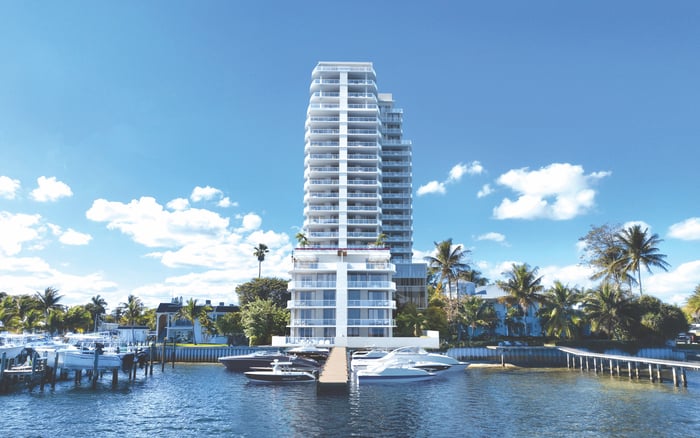
For yacht owners relocating from Los Angeles, a West Palm Beach home search should begin with the operating brief. Berth compatibility, service access, crew housing, marina terms, municipal rules, and airport routes should be reviewed before selecting a residence.

For an owner leaving Los Angeles for West Palm Beach, the residence should be selected as part of a broader shoreside operating plan. The home, berth, service access, crew accommodations, airport route, and local regulatory framework need to work together.
The first step is to create a vessel-specific brief. Length, beam, draft, shore-power requirements, maintenance needs, security expectations, crew routines, guest movements, and seasonal plans can all affect whether a marina and residence are practical. These points should be verified directly rather than inferred from marketing language or general descriptions.
The strongest residence strategy treats the home and yacht as one operating system.
Safe Harbor Rybovich, Palm Harbor Marina, and the Town of Palm Beach Marina may each warrant investigation during a Palm Beach-area search. The relevant question is not which marina has the strongest profile in the abstract, but which one can support the vessel, ownership pattern, service calendar, and crew plan under current terms.
The captain or yacht manager should request written answers covering berth dimensions, depth considerations, shore power, access controls, insurance requirements, contractor procedures, service availability, parking, deliveries, overnight occupancy, and seasonal availability. Any stated capability should be confirmed for the specific yacht and intended dates.
The marina review should also account for routine movement. Owners can test routes among the berth, residence, service providers, airport, provisioning points, and crew housing at the times they expect to use them. This reveals operational friction that a simple distance comparison may miss.
Once the marina shortlist is established, the residential search can be organized around real operating patterns. A downtown candidate such as Mr. C Residences West Palm Beach may be evaluated for its relationship to the owner’s preferred berth, city routine, and arrival pattern. Along the Flagler corridor, Alba West Palm Beach and Forté on Flagler West Palm Beach can be reviewed against the same criteria.
The buyer should model actual scenarios rather than rely on a broad claim of convenience. Consider how luggage, provisions, technicians, household staff, crew, and guests would move between the building and yacht. Review vehicle waiting areas, parking arrangements, loading procedures, service access, storage, and late-arrival protocols.
For an island-centered search, Palm Beach Residences can remain part of the comparison. The decisive issue is whether the property reduces friction among the front door, marina gate, crew base, service needs, and airport route while meeting the owner’s privacy and lifestyle priorities.
Owner and crew housing should be treated as related but distinct assignments. The owner may prioritize privacy, views, entertaining space, security, and controlled access. A captain and crew may need reliable parking, practical storage, predictable commuting, and occupancy terms compatible with the operating schedule.
Keeping the briefs separate can improve privacy and efficiency. It can also provide continuity when the yacht changes berth, enters a service period, or is unavailable for overnight use. Any proposed crew arrangement should be checked against the applicable lease, building rules, marina terms, and municipal requirements.
The residential review should address how the building handles recurring marine operations. Management rules for contractors, deliveries, staff, guests, pets, parking, storage, and leasing may affect the suitability of a property even when its location appears ideal.
A berth arrangement should not be assumed to create residential or live-aboard rights. Marina agreements, operating permissions, and municipal rules can differ by location and may change. Owners should obtain advice specific to the chosen jurisdiction, marina, vessel, and occupancy plan.
Before committing to a berth or residence, legal counsel should review the relevant marina documents and local requirements. The review should determine whether overnight occupancy is permitted, what utilities or sanitation arrangements are required, whether any allocation or approval applies, and how enforcement or termination provisions could affect the plan.
Questions involving domicile, licensing, voter registration, taxation, or residency should be handled separately by qualified legal and tax advisers. A yacht’s physical suitability for overnight accommodation does not by itself answer those legal questions.
Marina and residential reviews should proceed together. On the marine side, the captain can verify vessel fit, power, security, insurance, contractor access, service procedures, parking, provisioning, and emergency planning. On the residential side, the buyer can examine building governance, staffing logistics, storage, deliveries, guest access, leasing restrictions, and transportation routes.
The operating plan should be tested under more than ideal conditions. Model an ordinary weekend, a service period, a crew change, a guest arrival, and storm preparation. Consider what happens when technicians, crew, household staff, luggage, and provisions need access at the same time.
Written confirmations are preferable to assumptions. Important representations about berth suitability, occupancy, services, access, or building procedures should be documented and reviewed by the appropriate advisers before contracts become binding.
A disciplined sequence can keep the relocation focused. First, define the yacht’s technical and operational requirements. Second, investigate marina candidates and verify current terms. Third, map owner and crew movements. Fourth, compare residences against those routes and operating needs. Finally, complete legal, tax, marina, and building due diligence before relying on the combined plan.
This approach avoids selecting a home first and attempting to solve yacht logistics afterward. It also makes trade-offs easier to identify: an owner can decide whether privacy, marina access, service convenience, airport movement, or crew efficiency should carry the greatest weight.
For a relocating yacht owner, West Palm Beach is most effective when the residence and marine plan are evaluated as one system. The preferred solution should support the vessel’s verified requirements, provide workable owner and crew arrangements, and remain viable under marina agreements, building rules, and applicable municipal requirements.
For discreet guidance on aligning a Palm Beach-area residence with your yachting requirements, connect with MILLION.
If branded residences are on your mind — as a home or as an allocation — we would be glad to share what we are seeing, privately.
Begin a quiet conversationThe initial brief should cover vessel dimensions, power, service, security, crew, guest, and seasonal operating needs.
Safe Harbor Rybovich, Palm Harbor Marina, and the Town of Palm Beach Marina may be investigated against the yacht’s specific requirements.
Compare each facility using written confirmation of vessel fit, power, access, security, service procedures, occupancy terms, and availability.
A residence may be attractive yet inefficient if its building rules or daily routes conflict with yacht operations.
No. Owner priorities often center on privacy and lifestyle, while crew needs may emphasize parking, storage, commuting, and practical occupancy terms.
No. Overnight occupancy depends on marina terms, operating permissions, and rules applicable to the specific jurisdiction.
Review provisions concerning staff, contractors, deliveries, guests, parking, storage, pets, leasing, and access procedures.
Test trips among the residence, marina, crew housing, service providers, provisioning points, and airport at realistic travel times.
Qualified legal and tax advisers should assess domicile, licensing, voter registration, taxation, and residency matters separately.
Define the yacht brief, verify marina terms, map daily movements, compare residences, and complete legal and operational due diligence.