Turnberry Ocean Club offers a private-club residential experience, but its public positioning does not establish leaseback terms or detailed rental permissions. Buyers should verify every leasing condition in current condominium and contractual documents before relying on rental income or periodic tenant occupancy.

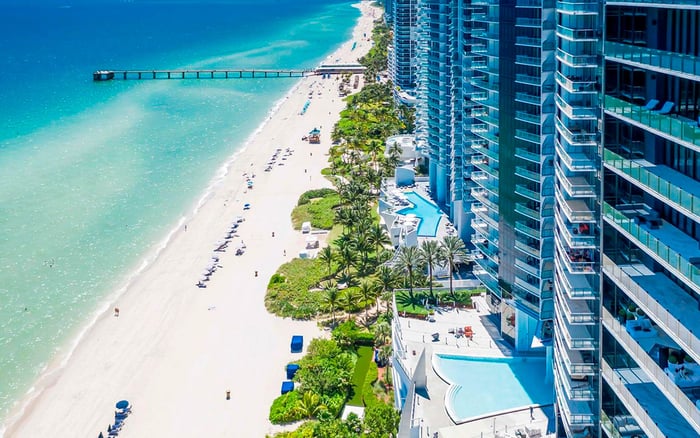
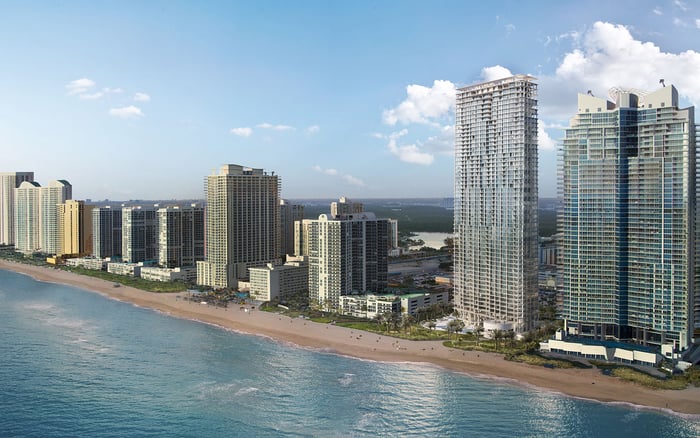
For a second-home purchaser, the appeal of Turnberry Ocean Club Sunny Isles is clear. The ultra-luxury condominium stands on the Atlantic Ocean in Sunny Isles Beach, with direct beach access and an amenity program conceived as a “vertical private club.” Multiple swimming pools, elevated club and social spaces, fitness and wellness facilities, spa amenities, and concierge service give ownership a distinctly resort-like rhythm.
That atmosphere, however, should not be mistaken for a hotel operating model. Turnberry Ocean Club is positioned as a private residential development, not a condo-hotel whose residences enter hotel inventory. For purchasers balancing occasional personal use with rental income, that distinction is foundational.
No developer-sponsored leaseback or hotel rental-pool program has been identified. Nor have the minimum lease term, number of leases permitted annually, tenant approval procedures, leasing fees, or permission for short-term vacation rentals been established. None of these terms should be inferred from the caliber of the amenities.
A leaseback is a separate contractual arrangement under which an owner leases a residence to a developer, operator, or another counterparty, often with defined income and owner-use terms. A rental pool typically involves centralized management and may place participating residences into a shared hospitality or rental program. Neither concept is interchangeable with an owner’s ordinary right to lease a condominium independently.
If a leaseback is presented during a transaction, request the complete agreement rather than relying on a brochure, conversation, or projected return. The contract should identify the operator, rent calculation, payment timing, expense allocation, maintenance obligations, owner-use restrictions, default remedies, renewal provisions, and termination rights. Any claimed guarantee warrants particular scrutiny, including the identity and obligations of the party providing it.
For Turnberry Ocean Club, buyers should proceed on the basis that any leaseback must be proven by a specific, enforceable contract. The building’s residential positioning and private-club services do not, by themselves, create a rental program.
The controlling answer ordinarily lies within the current declaration of condominium, bylaws, rules and regulations, purchase contract, and association leasing materials. These documents should be reviewed together, as a broad leasing right in one instrument may be qualified by procedures or restrictions elsewhere.
Request written confirmation of the minimum permitted lease duration and the maximum number of leases allowed in a calendar year or rolling 12-month period. Ask whether new owners face a waiting period, whether renewals count as new leases, and whether owner occupancy is required before a residence may be rented.
Diligence should also cover tenant screening, association approval, application deadlines, deposits, move-in procedures, administrative charges, insurance requirements, and any restrictions on advertising. Short-term or vacation-rental permission remains unconfirmed, so buyers should not underwrite nightly, weekly, or other transient occupancy until counsel verifies that every applicable authority permits it.
A second-home acquisition should first work as a private ownership decision. Rental flexibility can be valuable, but it should be treated as a documented right rather than an assumed amenity. This distinction is especially important when an investment model depends on occupancy frequency, seasonal pricing, or uninterrupted availability.
Define the intended use before making an offer. Will the residence be occupied personally for extended periods, leased once for a longer term, or made available more frequently? Each scenario can create a different legal, financial, insurance, and operational profile. Buyers considering resale value should also assess how current restrictions may shape the future purchaser pool.
Comparable diligence is prudent across Sunny Isles. A buyer weighing Bentley Residences Sunny Isles, The Ritz-Carlton Residences® Sunny Isles, or Jade Signature Sunny Isles Beach should compare governing documents-not merely architecture, branding, services, or waterfront setting. Rental policies can be property-specific and may materially affect how a residence functions when its owner is away.
Before executing a contract, request the complete, current condominium document set, all amendments, the latest leasing application, and a written schedule of association charges related to tenants and moves. Counsel should confirm whether the seller has made representations about rental rights and whether those representations survive closing.
The review should extend beyond the association. Local licensing, zoning, tax registration, insurance, and mortgage conditions may apply even when condominium documents permit a particular lease. An insurer or lender may define occupancy differently from the association, adding another layer of compliance.
Financial projections should therefore reflect only a verified leasing scenario. Include management, cleaning, repairs, utilities, insurance, taxes, association charges, vacancies, and tenant-related fees where applicable. If the economics depend on short stays or a guaranteed leaseback, make satisfactory documentation a condition of purchase rather than a post-closing task.
Is Turnberry Ocean Club a condo-hotel? It is positioned as a private residential condominium, not a condo-hotel that places residences into hotel inventory.
Does the building advertise a developer-sponsored leaseback? No developer-sponsored leaseback program has been identified.
Is there a hotel rental pool for owners? No hotel rental-pool program has been identified.
What is the minimum lease term? The minimum permitted term has not been established and requires review of the current governing documents.
How many times per year may an owner lease? An annual leasing limit has not been established.
Are short-term vacation rentals permitted? Permission remains unconfirmed, so buyers should not assume that transient or vacation rentals are allowed.
Does the association screen or approve tenants? Tenant application and approval procedures have not been disclosed and should be requested directly in writing.
Can resort-style amenities imply hotel-style rental rights? No. Pools, spa facilities, concierge service, and private-club spaces do not establish a right to conduct hotel-style rentals.
Which documents should a buyer review? Review the current declaration, bylaws, rules and regulations, amendments, purchase contract, and association leasing application with counsel.
What else can restrict leasing? Licensing, zoning, tax, insurance, and mortgage requirements may apply independently of condominium association permission.
For a tailored shortlist and next-step guidance, connect with MILLION.
If branded residences are on your mind — as a home or as an allocation — we would be glad to share what we are seeing, privately.
Begin a quiet conversation