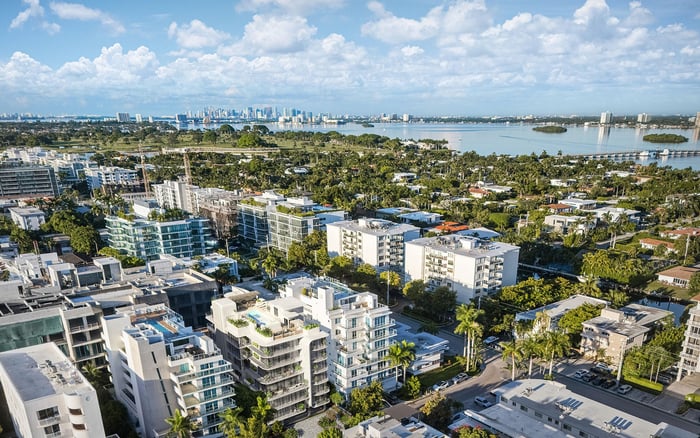
A buyer-focused due-diligence framework for evaluating reserve contributions, possible borrowing, and potential special assessments at La Baia North after association turnover.

For buyers considering La Baia North Bay Harbor Islands, the post-turnover financial picture deserves careful review. The key questions concern how the association may budget for recurring expenses, build reserves, respond to major work, and communicate financial decisions to owners.
No exact post-turnover reserve balance, credit facility, loan terms, or proposed special assessment is provided here. Buyers should therefore treat each funding method as a possible scenario rather than a disclosed plan.
The same disciplined approach can inform comparisons with Alana Bay Harbor Islands. A current assessment figure offers only a limited view unless it is considered alongside the budget, reserve schedule, contracts, insurance information, meeting records, and any planned capital work.
Reserve contributions can help an association accumulate funds before major repair or replacement costs arise. A buyer should examine which components appear in the reserve schedule, how projected costs and timelines are presented, and whether the stated contribution plan aligns with the association’s available cash.
Reserve planning can change as building conditions, project scopes, professional estimates, and financial priorities evolve. For that reason, today’s contribution level should not be treated as a guarantee of future assessments.
When comparing La Baia North with Onda Bay Harbor, buyers should focus on the documents behind each property’s figures rather than comparing a single headline number. Different budgets may classify and schedule costs differently.
A line of credit or loan can spread the collection of a major cost across a longer period. It does not remove the underlying expense, and financing may introduce interest, fees, payment schedules, covenants, or other obligations reflected in future association costs.
If borrowing is proposed, buyers should request the actual documents and review the purpose of the financing, authorized amount, repayment structure, rate terms, maturity date, draw controls, and any owner approval reflected in the association records. No specific financing structure should be assumed without those materials.
Buyers should also ask how an outstanding obligation would be addressed in a sale. The governing documents, transaction records, and professional advice should guide that analysis rather than a general assumption about whether the seller or buyer bears a particular cost.
A special assessment can be considered as one possible way to collect funds for a defined association need. Depending on the documents and decisions in place at the time, it could stand alone or be discussed alongside regular contributions or financing.
The practical buyer questions are straightforward: What work or obligation would the assessment address? How was the amount developed? When would payments be due? Are payment options contemplated? What approvals and notices appear in the association records?
An assessment should not be inferred merely because turnover is expected or because borrowing is being discussed. Conversely, the absence of a currently disclosed assessment does not establish what a future association may decide after reviewing its finances and property needs.
A careful review may include the adopted budget, current financial statements, reserve schedule, meeting minutes, assessment notices, insurance information, contracts, and any loan or credit documents. Buyers should confirm which materials are current and whether later updates are available.
The budget review should distinguish recurring operating expenses from reserve contributions and separately identified project costs. Meeting records may provide context about bids, repairs, financing discussions, collections, and proposed owner decisions, but they should be read together with the governing and financial documents.
This process is equally relevant when evaluating boutique South Florida properties such as The Well Bay Harbor Islands. Design and location can shape a property’s appeal, while document review helps buyers assess the possible durability of ownership costs.
Instead of relying on one projection, a buyer can model several possibilities: stable recurring contributions, increased contributions, a one-time charge, or financed work repaid over time. These are planning scenarios, not predictions about La Baia North.
Each scenario affects liquidity and ongoing carrying costs differently. Buyers should use actual association documents, transaction terms, and appropriate professional guidance before making a decision.
Is a future special assessment at La Baia North disclosed here? No specific future special assessment or amount is provided here.
Is an association loan or line of credit disclosed? No exact credit facility, lender, rate, term, or authorized amount is provided.
Why review reserve funding after turnover? Reserve planning can influence how an association prepares for major future costs and how those costs may affect owners.
Does borrowing eliminate the cost of association work? No. Borrowing changes payment timing and may add interest, fees, and repayment obligations.
What should buyers request before closing? Buyers can request current budgets, financial statements, reserve schedules, meeting records, assessment notices, insurance information, and financing documents.
Why are meeting minutes useful? Minutes may show what the association has discussed, but buyers should compare them with current financial and governing documents.
Should a buyer rely only on the current assessment amount? No. The figure is more useful when reviewed with the expenses, reserves, contracts, and planned work behind it.
How can buyers evaluate a proposed special assessment? They should examine its stated purpose, calculation, payment schedule, approvals, notices, and supporting records.
Can future ownership costs be predicted precisely? Not from the information provided here. Buyers can instead model several scenarios and update them when verified documents become available.
What is the safest way to assess post-turnover finances? Review current association records, confirm transaction-specific obligations, and seek appropriate professional guidance where needed.
For a tailored shortlist and next-step guidance, connect with MILLION.
If branded residences are on your mind — as a home or as an allocation — we would be glad to share what we are seeing, privately.
Begin a quiet conversation