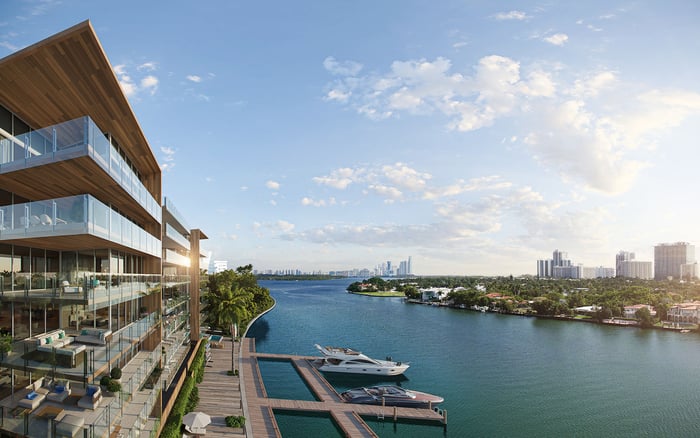
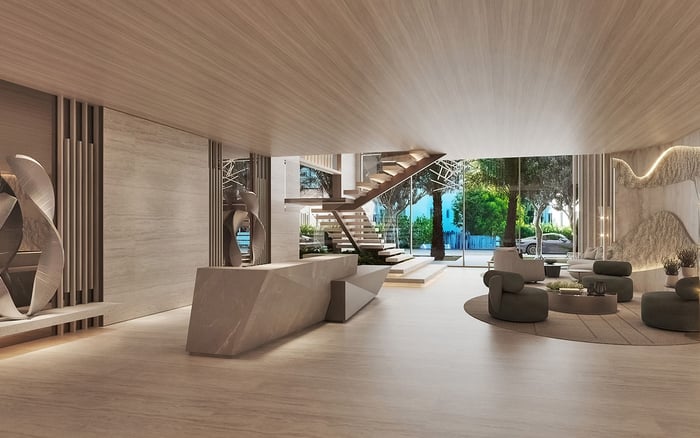
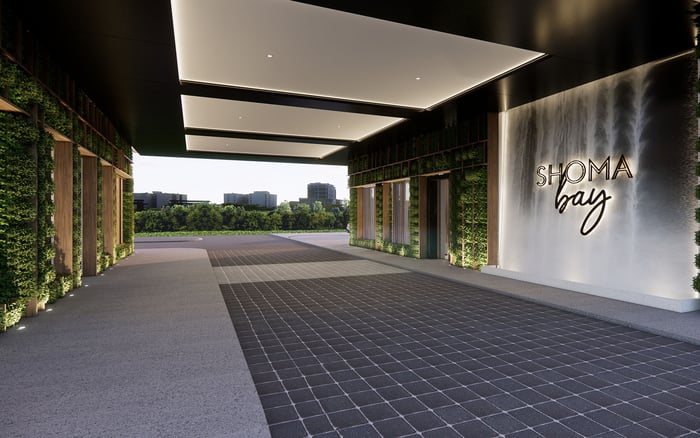
A discreet arrival is not simply a handsome lobby. At La Baia North and La Maré, buyers should assess the complete transition from street to residence, including vehicle approach, guest access, valet staging, sightlines, service circulation, and the operating protocols that will determine privacy in daily life.
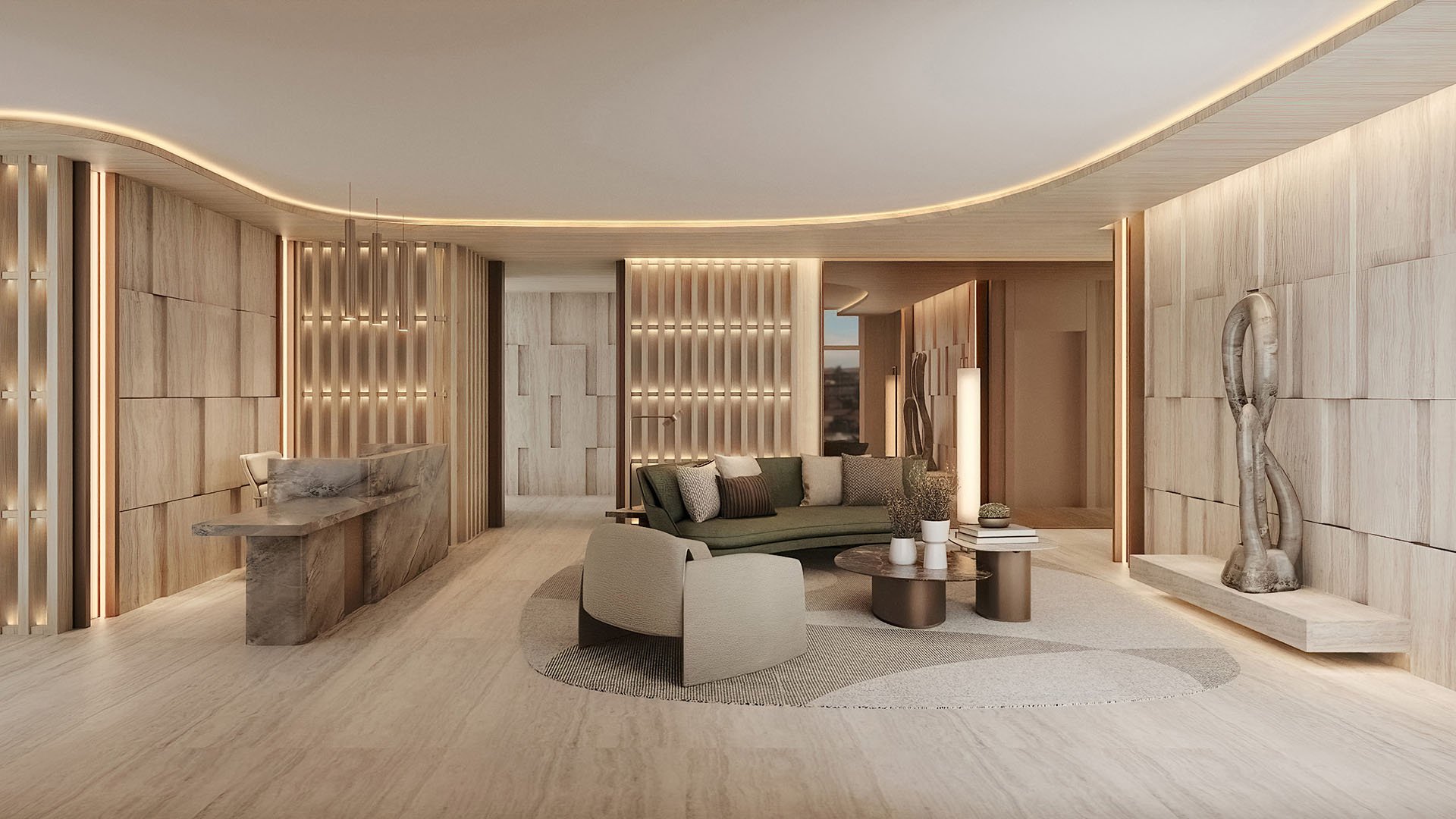
For a luxury buyer, privacy begins before the front door opens. It starts with the turn into the property, the pause at access control, the handoff to valet or private parking, and the transition through the lobby to the elevator. Each of these moments can influence how discreet the experience feels.
This is a relevant diligence question for buyers considering La Baia North Bay Harbor Islands or La Maré Bay Harbor Islands. The essential distinction is that discretion is not delivered by architecture alone. It emerges from the relationship between design and daily operations: driveway geometry, landscaping, entrance orientation, staff positioning, camera coverage, lighting, loading, and elevator control all matter.
At La Baia North, buyers should first study the vehicle approach. The key questions are practical: Can a resident enter without lingering in a visible queue? Where does a guest pause for authorization? Is valet staging positioned so arriving and departing vehicles do not create unnecessary exposure? How directly is the lobby visible from the street?
Landscaping, setbacks, and entrance orientation deserve close review. Planting can soften views, but buyers should distinguish between conceptual visual screening and privacy that will function after completion. A current site plan can clarify the relationship among the curb, driveway, entrance, lobby glazing, and neighboring sightlines.
Circulation should then be assessed by user. Resident movement is only one layer. Guest arrivals, deliveries, loading, building staff, and service personnel may follow separate patterns or intersect. Buyers seeking a discreet experience should confirm where those paths converge and whether elevator access remains controlled beyond the lobby.
At La Maré, a buyer’s review should encompass vehicle approach, drop-off arrangements, guest access, valet operations, and visibility from neighboring properties. Weather protection is more than a comfort consideration. Its positioning can influence where cars stop, how long doors remain open, and whether residents or guests wait within view of the street.
The most useful analysis treats resident, guest, and service circulation as three distinct systems. Ask how each person enters, where credentials are checked, which elevator is used, and whether packages or service activity pass through resident-facing spaces. Final security, camera, lighting, parking, loading, and staff-access protocols should be verified rather than inferred from presentation materials.
A polished lobby image can be persuasive, but it reveals little about a busy arrival. Buyers comparing La Baia North and La Maré should map the complete sequence in consistent steps: street approach, gate or access point, vehicle pause, covered threshold, lobby entry, elevator authorization, and final residential access.
The same framework can sharpen comparisons with other island projects, including Onda Bay Harbor and Alana Bay Harbor Islands. These projects are best used as a broader comparison set, not as a substitute for project-specific plans and operating details.
The strongest privacy review is experiential. Visit at more than one time of day. Approach as a resident would, then imagine arriving as a guest, receiving a delivery, or encountering a service vehicle. Observe turning movements, pedestrian conflicts, adjacent windows, lobby visibility, waiting areas, and the space available for more than one vehicle.
Request the current site plan and the latest information governing access control, parking, loading, deliveries, cameras, lighting, and staff entry. Final architectural plans, condominium documents, staffing policies, and operating protocols are essential because procedures can evolve during development.
Ask who controls the gate or door, how guest credentials are issued, where a rideshare vehicle waits, and what happens when valet demand peaks. Confirm whether package couriers enter resident areas, how large deliveries are routed, and whether service personnel use distinct access points or elevators. Buyers should also understand how the building handles a vehicle that arrives before authorization is complete.
A discreet arrival is ultimately a chain. If one link is exposed, congested, or operationally unclear, the effect can carry through the entire experience. The best choice will be the building whose physical layout and confirmed procedures align with the buyer’s own threshold for privacy.
Why is the arrival sequence important when evaluating a residence? The route from the street to the residence can reveal how access, visibility, traffic, and service activity may affect everyday privacy.
What should buyers inspect first at La Baia North? Begin with the vehicle approach, resident and guest entrances, valet staging, and lobby visibility from the street.
What deserves particular attention at La Maré? Review driveway positioning, drop-off arrangements, guest access, valet operations, and neighboring sightlines.
Can landscaping guarantee privacy? No. Landscaping can support visual screening, but entrance orientation, setbacks, lighting, and operating procedures also shape discretion.
Should resident and service circulation be reviewed separately? Yes. Buyers should understand where resident, guest, delivery, loading, staff, and service routes intersect.
Why test the arrival at different times of day? Traffic, lighting, vehicle queues, deliveries, and neighboring activity can alter how private and efficient the sequence feels.
Which operating details should be confirmed? Confirm access control, valet procedures, parking, loading, cameras, lighting, deliveries, service routes, and staff access.
Are conceptual materials enough for this review? No. Buyers should request current plans and applicable documents, then verify how the completed building is expected to operate.
What should buyers ask about elevator access? Ask how residents, guests, staff, and service personnel are authorized and whether their elevator paths remain distinct.
What is the clearest sign of a well-resolved arrival? The approach should allow vehicles, people, credentials, and service activity to move through clearly defined paths.
For a discreet conversation and a curated building-by-building shortlist, connect with MILLION.
If branded residences are on your mind — as a home or as an allocation — we would be glad to share what we are seeing, privately.
Begin a quiet conversation