Kempinski Residences Miami Design District and 619 Brickell invite the same essential ownership questions: who governs, how owners participate remotely, and how association records can be accessed. A document-led comparison matters more than hospitality branding.

For a buyer choosing between Kempinski Residences Miami Design District and 619 Brickell, the most consequential comparison may extend beyond architecture and hospitality. It concerns the ownership framework: who makes decisions, how an absent owner participates, and whether association documents are available through a clear, dependable procedure.
These are distinct developments with different announced programs, but neither hospitality identity establishes association voting rights or board control. Available public disclosures do not support ranking one above the other for governance transparency, remote voting, or owner-record access. That is not a judgment on compliance or quality. It is a reason to put the governing documents at the center of the purchase decision.
The essential distinction is between a service promise and an ownership right. A brand may shape the residential experience; the applicable documents and agreements must define its authority, obligations, and relationship with the association.
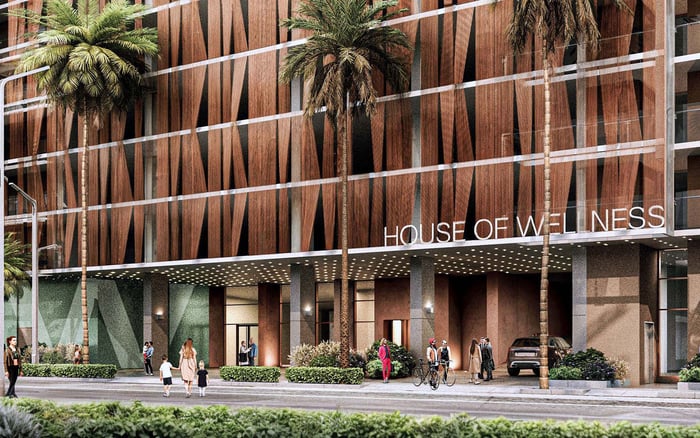
Kempinski Residences Miami Design District is planned at 3801 and 3883 Biscayne Boulevard, at the gateway to the Design District. Its announced program includes 132 private residences across two 20-story towers, plus six townhomes and 17 guest suites exclusively for sale to residents. Completion is targeted for Q4 2029; that date is not guaranteed.
Those components warrant close document review. Buyers should ask how the residences, townhomes, and guest suites are treated for ownership, assessments, voting, and access. The announced program alone does not establish whether their rights or obligations differ.
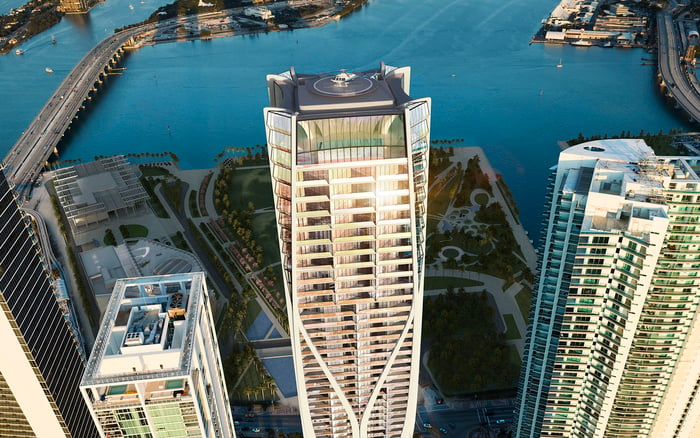
The development presented as 619 Residences by Foster + Partners + Nobu Hospitality is referred to here as 619 Brickell, not as a separate project. Planned for 619 Brickell Avenue, Miami, FL 33131, it is marketed as a 75-story development with 296 residences. Final counts and configurations require confirmation in the current offering documents.
619 Brickell is Nobu Hospitality’s first residential project in Miami, with amenities by Nobu Hospitality. The condominium is not owned, developed, or sold by NH Downtown Miami LLC, Nobu Hospitality LLC, or their affiliates, collectively defined as Nobu. That distinction should remain clear throughout the purchase review.
619 Brickell is designed by Foster + Partners in collaboration with Sieger Suarez Architects. Those design credentials and the Nobu amenities relationship define important aspects of the project. Neither, however, establishes who appoints directors, controls budgets, or approves changes to association arrangements.
Likewise, Kempinski’s publicly disclosed brand relationship does not establish that Kempinski will control the condominium association or its owner-elected board. Buyers should not assign governance authority to either hospitality name without supporting contractual language.
Request the management, brand-license, service, amenity, and reciprocal-use agreements applicable to the purchase. Have counsel identify the parties, obligations, approval rights, renewal terms, and termination provisions. Ask which arrangements bind the association and which involve a separate entity. The objective is not to discount branding, but to understand precisely what accompanies it.
Begin with the current declaration and amendments, articles, bylaws, and rules. Request the developer-control and turnover provisions at the same time, rather than treating turnover as a detail to revisit near completion.
For each project, ask who initially appoints the board, what triggers changes in control, and which decisions owners can make at each stage. Request the specific provisions supporting each answer. If a document remains a draft, ask how revisions will be communicated and have counsel explain their implications for the purchase.
For Kempinski, the declaration, bylaws, board-control provisions, remote-voting policy, and owner-record request procedure are not included in the available public disclosures. For 619 Brickell, those disclosures do not include a project-specific records policy, electronic-voting protocol, or association governance manual. These omissions do not establish that the documents do not exist or that an association is noncompliant.
A useful comparison file pairs each question with a dated document, the relevant provision, and any unresolved point. This keeps the sales presentation distinct from the terms that will govern ownership.
For an owner dividing time between residences, participation requires a series of separate questions. The ability to join a meeting remotely is not the same as the ability to cast a valid electronic ballot.
Ask whether remote meeting attendance is available, how participants are authenticated, and how attendance affects quorum. Then ask separately about electronic ballots, proxies, consent or enrollment requirements, and whether any voting platform is mandatory. Request written procedures rather than relying on a general assurance that everything can be handled online.
Practical follow-through matters as much as the stated capability. Ask how notices reach owners, what happens if credentials fail, and whom an owner contacts before a voting deadline. These are diligence questions, not confirmed features of either development.
Apply the same questionnaire if the shortlist extends to Cipriani Residences Brickell. A consistent standard makes comparison more useful without assuming that neighboring projects share governance structures or digital procedures.
Obtain the records custodian’s contact details and the written request procedure. Confirm applicable response deadlines, copying charges, digital-delivery options, and the process for following up on an incomplete response. Ask counsel to distinguish an owner’s access rights from the disclosures available to a prospective purchaser.
Clarify which records can be delivered electronically and which require another inspection arrangement. A portal demonstration may show convenience, but it should not replace a written explanation of access, responsibilities, and applicable restrictions.
Two separate public-document routes also merit attention. Miami-Dade County requires condominium, cooperative, and homeowners’ associations to register annually and provides a centralized association-document registry. The Miami-Dade Clerk’s Official Records search offers another route to recorded documents, including lookup by an exact Clerk’s File Number.
Confirm whether each association has been formed and registered before drawing conclusions from a search. Neither route establishes that a complete project disclosure package is publicly available, and neither substitutes for reviewing the current contractual documents.
The strongest buyer position rests on a consistent standard, not a premature winner. Compare who controls decisions, how owners participate from elsewhere, and how records can be obtained. Keep announced residence counts and delivery targets separate from contractual commitments.
Before committing, have counsel reconcile the governing documents with the service and brand agreements. Unresolved points should remain explicit rather than become assumptions carried into ownership. For a residence intended to simplify life, administrative clarity deserves the same attention as design.
For a discreet conversation about your South Florida residential shortlist, connect with MILLION.
If branded residences are on your mind — as a home or as an allocation — we would be glad to share what we are seeing, privately.
Begin a quiet conversationNo. The public disclosures do not establish a comparative advantage in governance transparency, remote voting, or owner-record access.
No separate development is implied here. The article uses 619 Brickell for the project presented in the title as 619 Residences by Foster + Partners + Nobu Hospitality.
The announced program includes 132 private residences across two 20-story towers, plus six townhomes and 17 guest suites exclusively for sale to residents.
Its announced completion target is Q4 2029. Buyers should treat that as a projected date, not a guaranteed delivery commitment.
619 Brickell is marketed as a 75-story development with 296 residences. Final counts and configurations should be confirmed in current offering documents.
The condominium is not owned, developed, or sold by NH Downtown Miami LLC, Nobu Hospitality LLC, or their affiliates. Its Nobu amenities relationship does not establish association voting rights.
The public brand materials do not establish that Kempinski will control the association or its owner-elected board. Buyers should review the governing documents and relevant agreements.
No. Buyers should ask separately about remote attendance, quorum, electronic ballots, proxies, authentication, and any mandatory voting platform.
Request the records custodian’s contact details, written request procedure, applicable response deadlines, copying charges, and digital-delivery options. Counsel should distinguish prospective-buyer disclosures from owner access rights.
No. The county association registry and the Clerk’s Official Records search are separate routes to documents, but neither establishes that a complete project disclosure package is publicly available.