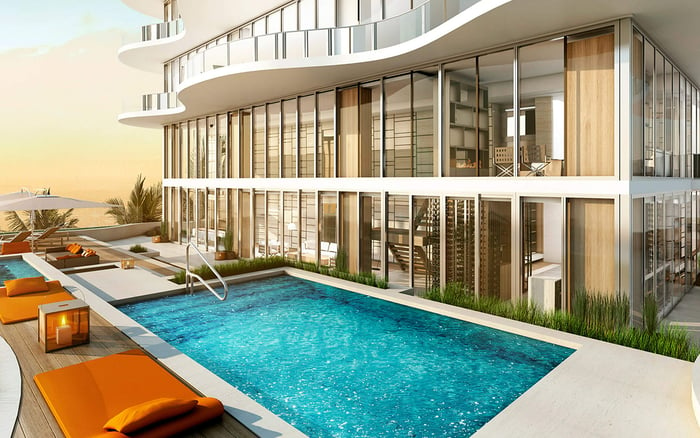
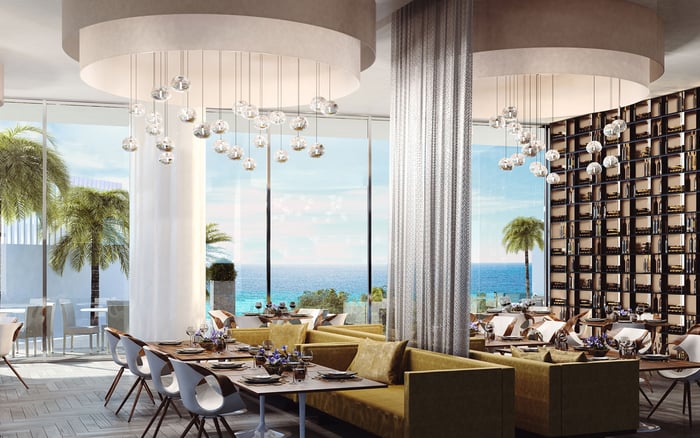
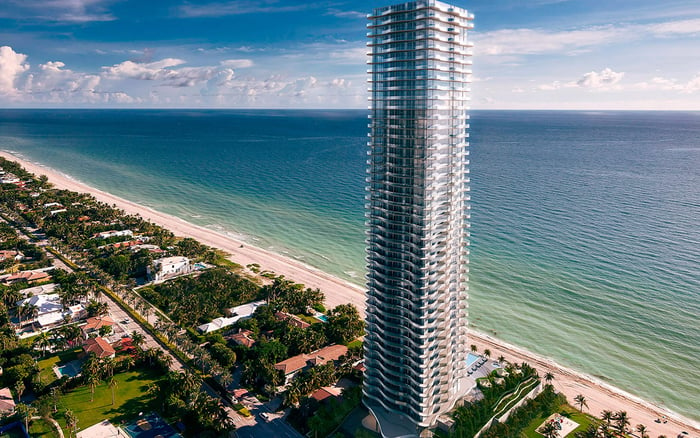
In Sunny Isles Beach, privacy takes three distinct forms: boutique low density at Regalia, planned resort circulation at Jade Signature, and controlled branded service at The Ritz-Carlton Residences. Buyers should assess how each model performs in daily life, from elevator access and amenity traffic to staffing, budgets, and seasonal use.
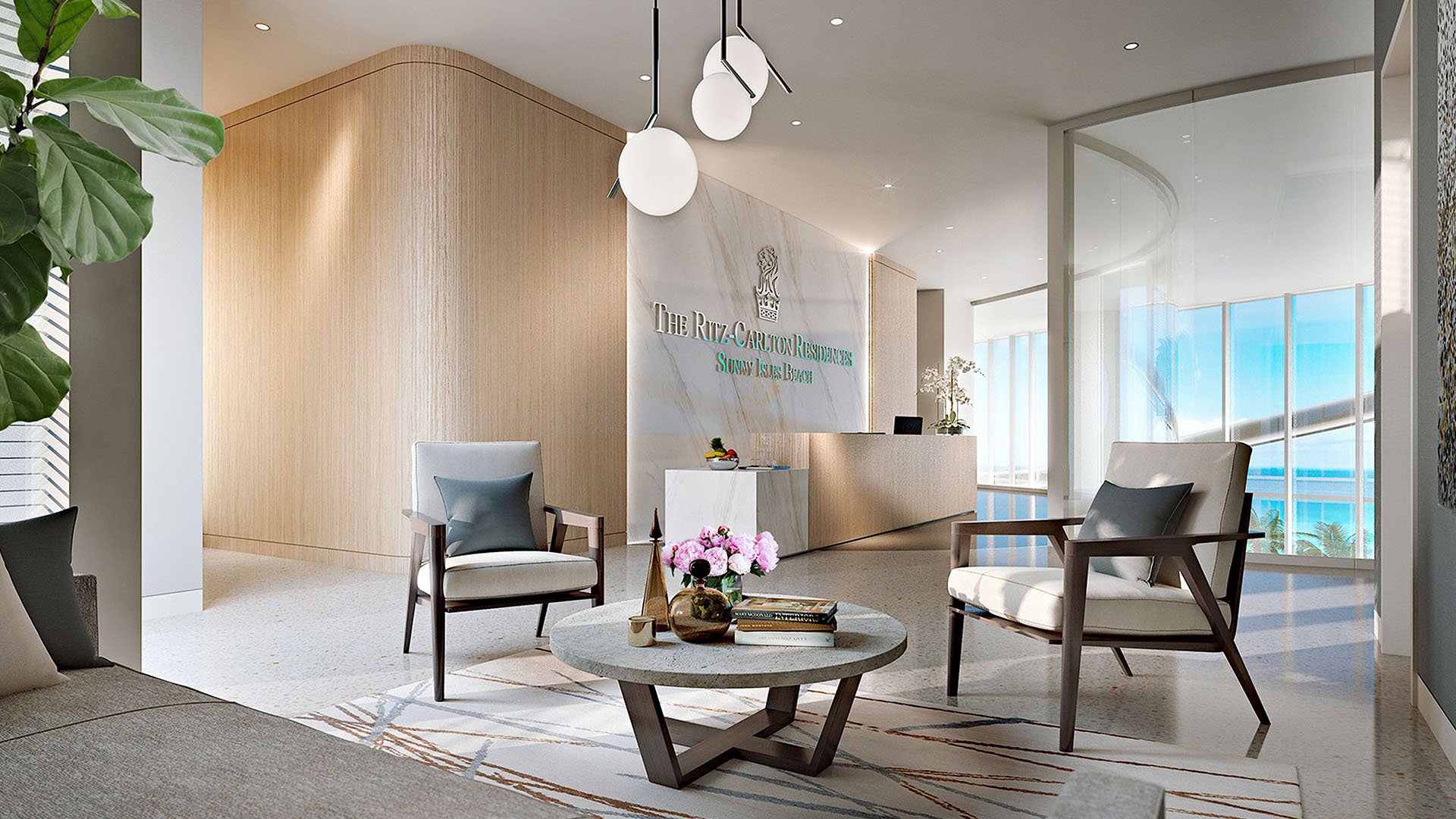
In Sunny Isles Beach, low-density privacy is relative. These are oceanfront high-rise condominiums, not secluded estates. The more useful question is not whether a building describes itself as exclusive, but how effectively it limits friction between private residential life and the movement of owners, guests, staff, vendors, vehicles, and beachgoers.
The three buildings in this comparison answer that question differently. Regalia Sunny Isles Beach expresses privacy through sheer residential scarcity. Jade Signature Sunny Isles Beach relies on planning, zoning, and controlled operations within a larger resort-style environment. The Ritz-Carlton Residences® Sunny Isles depends substantially on access control, disciplined staffing, and a branded residential service model.
For a buyer, those distinctions shape more than atmosphere. They influence elevator encounters, lobby activity, amenity availability, beach-service traffic, valet rhythms, operating costs, and the experience of arriving home.
Regalia presents the most boutique, low-density proposition of the three. Its typical-floor configuration is essentially one residence per floor, reducing the number of neighbors sharing residential circulation. That arrangement can make the transition from elevator to residence feel more like a private home than a conventional condominium corridor.
Its small overall residence count can also limit encounters across elevators, common areas, amenities, and beach spaces. For buyers who define privacy as less exposure to other residents and guests, this is the clearest model. The value proposition is straightforward: fewer households generally create fewer competing patterns of movement.
Yet scarcity introduces its own due-diligence question. A smaller ownership base may preserve exclusivity, but operating and capital costs are distributed among fewer residences. Buyers should therefore examine budgets, reserves, assessments, staffing plans, and long-term maintenance obligations with the same care they bring to floor plans and views.
Jade Signature takes a different approach. It is a larger, resort-style residential community, so its privacy proposition does not depend on an exceptionally small residence count. Instead, it rests on how spaces are zoned, circulation is separated, and operations manage the flow of residents and guests.
This may be the more compelling balance for an owner who wants substantial amenities and services without sacrificing a meaningful sense of retreat. The critical evaluation occurs where private and shared life converge: elevators, arrival areas, amenity access, private zones, and beach service.
A polished tour can reveal design quality, but it may not show the building under pressure. Buyers should observe the property at different times, including active mornings, evening arrivals, weekends, and peak seasonal periods. The goal is to determine whether operational control preserves calm when valet, amenity, guest, and beach traffic rise simultaneously.
The Ritz-Carlton Residences combines condominium ownership with the operating character of branded residences. Its privacy proposition is based less on achieving the lowest possible residence count than on controlled access, concierge oversight, valet management, security, and consistently staffed amenities.
A crucial distinction is the property’s operation as a non-hotel residential program. For privacy-focused buyers, that reduces concern about the routine presence of transient hotel guests. It does not eliminate shared activity, but it changes who moves through the property and how that movement can be supervised.
The trade-off is scale. Relative to Regalia, this is a broader residential community, and buyers must decide whether professional service infrastructure outweighs the appeal of fewer neighbors. Some owners experience attentive staffing as the highest form of privacy because needs are anticipated and access is managed. Others prefer privacy created by simple absence: fewer residences, fewer interactions, and fewer layers between the elevator and front door.
Residence count is a starting point, not a conclusion. Ask how many homes share an elevator bank, whether access is floor-controlled, how guests are admitted, and where staff and vendors circulate. Determine whether private residential routes cross amenity, valet, or service paths.
Then consider operations. Concierge coverage, security protocols, beach staffing, valet procedures, and guest policies determine whether a well-designed building remains discreet in practice. Rental restrictions also merit close review because exposure to transient occupants can materially alter the character of common spaces.
Visit more than once. A quiet weekday afternoon offers little insight into a holiday weekend or peak-season evening. Watch elevator wait patterns, lobby occupancy, vehicle queues, amenity use, and beach activity. Privacy should be tested when the property is active, not merely when it is presentation-ready.
Finally, review current condominium documents, budgets, reserves, assessments, staffing arrangements, and rental rules with qualified advisers. Low density can create an exceptional residential atmosphere, but the financial structure supporting it matters. The right choice is the model whose privacy, service, and cost profile aligns with how the owner will actually live.
Regalia offers the purest expression of privacy through low density. Jade Signature delivers privacy through resort-scale planning and managed circulation. The Ritz-Carlton Residences provides privacy through controlled branded service and non-hotel residential operations.
None is universally superior. A buyer who prizes minimal shared circulation may favor Regalia. One who wants expansive amenities within a carefully organized environment may prefer Jade Signature. An owner who values staffed access, concierge care, and operational consistency may find The Ritz-Carlton model more persuasive. In this market, privacy is best understood as a lived operating condition, not an amenity label.
Which property offers the most direct low-density proposition? Regalia provides the clearest low-density model, with essentially one residence per typical floor and a small ownership community.
Does a larger residence count automatically mean less privacy? No. Circulation planning, access controls, staffing, and guest management can preserve privacy within a larger building.
How does Jade Signature approach privacy? It relies on zoned spaces, circulation design, private areas, and controlled operations within a resort-style residential program.
Why is Regalia’s typical-floor layout important? Essentially one residence per typical floor limits the number of neighbors sharing immediate residential circulation.
Is The Ritz-Carlton Residences a hotel? No. It operates as a non-hotel residential program, an important distinction for buyers concerned about transient hotel guests.
What should buyers inspect during a property visit? Observe elevators, lobbies, valet activity, amenities, beach service, guest access, and service circulation at active times.
Why do rental restrictions matter to privacy? Rental rules can affect exposure to transient occupants and the resulting character of common areas.
Can low density affect ownership costs? Yes. Fewer residences may enhance exclusivity while spreading operating and capital expenses across a smaller ownership base.
When should a buyer visit the buildings? Visit at different times of day and during busy seasonal periods to understand changing traffic and service patterns.
What documents deserve particular attention? Review condominium documents, budgets, reserves, assessments, rental rules, staffing arrangements, and access policies with qualified advisers.
For a discreet conversation and a curated building-by-building shortlist, connect with MILLION.
If branded residences are on your mind — as a home or as an allocation — we would be glad to share what we are seeing, privately.
Begin a quiet conversation