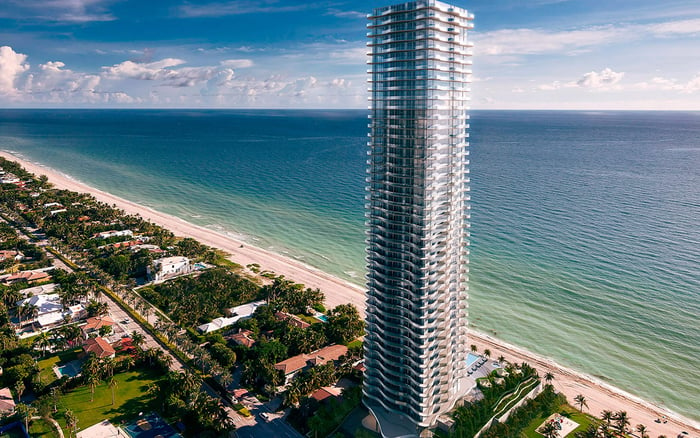
A disciplined pre-closing review separates the beachfront service promise from the recorded rights, coastal boundaries, operating rules, and public access conditions that shape ownership in Sunny Isles Beach.

In Sunny Isles Beach, phrases such as “private beach,” “deeded access,” and “exclusive cabana” may describe a polished experience without defining the underlying right. Before closing, translate each phrase into a recorded property interest, a contractual privilege, or an operating policy.
A beachfront tower’s upland ownership, shoreline conditions, association-controlled areas, and public rights are distinct. The survey and title materials should identify the parcel boundary and relevant coastal lines, while counsel should explain how those features affect the residence and its amenities.
Beach service may feel exclusive even when the underlying rights are more limited.
This distinction matters throughout the oceanfront market, whether evaluating Bentley Residences Sunny Isles or an established condominium. The buyer is reviewing several overlapping layers: ownership, permitted improvements, association authority, hospitality operations, and public access.
Do not treat the survey as a closing formality. Ask the surveyor and Florida coastal counsel to identify the parcel boundaries, relevant shoreline markers, dune areas, access corridors, and recorded easements. Compare those items with the physical locations of cabanas, decks, fences, boardwalks, stairs, beach-service stations, and equipment storage.
Any mismatch among the title commitment, survey, site plan, development approvals, and coastal permits deserves further review. The documents should consistently describe where improvements sit, who controls them, and whether their use is subject to restrictions. Resolve discrepancies before the buyer’s contractual protections expire.
If the beachfront has been restored or modified, ask counsel whether that history affects the legal boundary analysis. The visible width of the beach should not be assumed to match the privately controlled area.
For a residence at Regalia Sunny Isles Beach or another northern Collins Avenue property, compare the tower’s frontage with nearby public paths. A public access route does not by itself define a private parcel’s rights, but its location may influence pedestrian flow and perceived privacy.
A cabana may be structured as a separate real-property interest, a limited common element, an exclusive-use assignment, a license, or a revocable operating privilege. Those categories are not interchangeable, and a buyer should not presume that a cabana automatically accompanies the residence.
Request the declaration, amendments, current rules, deeds, assignment instruments, licenses, and relevant association approvals. Confirm whether the right transfers with the apartment, requires a separate conveyance, carries fees, can be leased, or may be reassigned. The estoppel, purchase contract, and governing documents should align.
At St. Regis® Residences Sunny Isles or another branded residence, determine whether a cabana benefit depends on the association, an operator, or a separate agreement. Ask what the documents provide if management changes or an operating agreement ends. A policy-based privilege may present a different risk profile from a recorded property interest.
Full service is an operational promise, so audit it operationally. Prepare a written matrix for owners, owner guests, tenants, hotel guests, club members, and event attendees where those categories apply. For each group, record access hours, registration requirements, chair and umbrella entitlements, cabana inventory, booking windows, priority, fees, blackout dates, cancellation rules, and capacity limits.
The matrix should also identify who can change the rules. Determine whether authority rests with the association, operator, beach-service provider, or another party. Request the relevant management agreement, rental-program documents, service contracts, and current house rules, then compare their terms for inconsistencies involving capacity, billing, staffing, or access.
This exercise is especially important in a condo-hotel or mixed hospitality setting, but conventional condominiums also rely on operating rules. Buyers considering The Ritz-Carlton Residences® Sunny Isles should apply the same documentary discipline used for any full-service property. Brand stature does not replace a transferable entitlement.
Compare available municipal access information with the survey, title commitment, and governing documents. Search specifically for pedestrian, cross-access, utility, dune-management, and beach-access easements affecting the parcel.
Nearby public paths, parking, and gateways can increase nonresident activity without creating a defect in the residence. They are location conditions to understand when evaluating privacy, circulation, and the practical use of beachfront services.
Public rules and private amenity policies operate on different levels. An association or operator may regulate its services and controlled areas, but buyers should not assume those policies determine public rights. Coastal and title counsel should explain how recorded or asserted rights relate to the specific parcel.
The final audit should reconcile four document groups: title and survey materials, condominium documents, coastal approvals, and operating contracts. Request information about pending code matters, permit issues, litigation, insurance claims, and board disputes involving cabanas, dunes, shoreline structures, beach access, or guest privileges. Ask the association to confirm current inventory and allocations in writing.
A buyer comparing Turnberry Ocean Club Sunny Isles with other full-service options should use the same checklist for every property. A standardized review can reveal differences that a conventional amenity comparison may miss.
Before closing, require counsel to identify which benefits run with the residence, which depend on association approval, which belong to a separate asset, and which may change at an operator’s discretion. The purpose is to ensure that the legal and operational package matches the beachfront experience being purchased.
For discreet guidance on Sunny Isles Beach acquisitions, connect with MILLION.
If branded residences are on your mind — as a home or as an allocation — we would be glad to share what we are seeing, privately.
Begin a quiet conversationNot necessarily. The survey, title materials, and advice from coastal counsel should establish the relevant boundaries and rights.
They help the buyer understand the parcel boundary and evaluate whether beachfront improvements require additional review.
Not necessarily. It may be a separate interest, limited common element, assignment, license, or operating privilege.
Request the declaration, amendments, rules, deeds, assignments, licenses, association approvals, and related operating agreements.
Include user categories, inventory, booking priority, fees, blackout dates, access hours, capacity limits, and rule-making authority.
They may change when they depend on operating policies, contracts, management, or service providers. The governing documents should identify who has that authority.
Review pedestrian, cross-access, utility, dune-management, and beach-access easements affecting the parcel.
Their location may affect pedestrian traffic, circulation, and the practical privacy of a tower’s beachfront.
No. Private policies govern controlled services and areas, while public rights and restrictions require a separate legal review.
Past restoration or modification may affect the boundary analysis. Counsel should compare that history with the current survey and title materials.