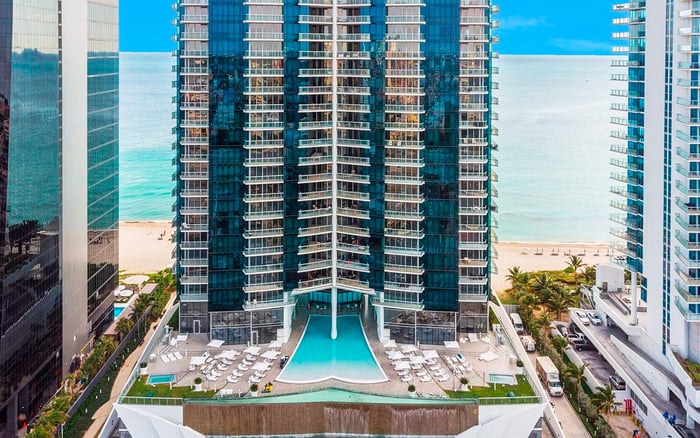
A practical buyer guide comparing the established oceanfront condominium logic of Jade Ocean Sunny Isles Beach with the more urban West Palm Beach lifestyle question represented by Nora House.
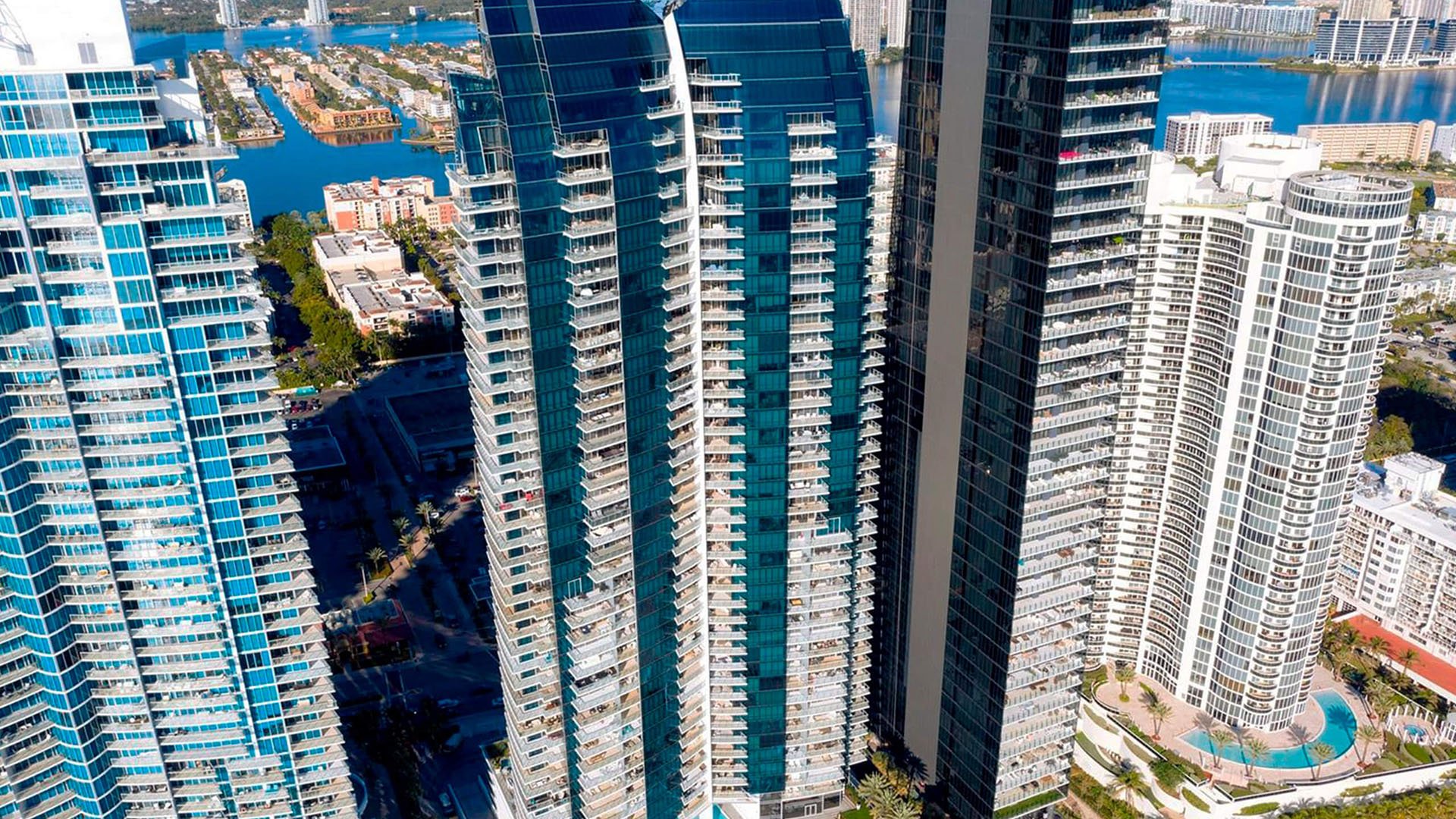
For a sophisticated South Florida buyer, the choice between Jade Ocean Sunny Isles Beach and Nora House West Palm Beach is not simply a matter of oceanfront living versus a downtown-adjacent setting. It is a practical ownership question: how much certainty does the buyer want around association governance, rental use, alteration approvals, operating history, and the day-to-day character of the residence?
Jade Ocean sits on the established side of that spectrum. It reflects the oceanfront high-rise condominium model that has long defined Sunny Isles Beach luxury inventory: vertical, resort-oriented, association-governed, and organized around a residential relationship to the beach. Nora House, as a West Palm Beach concept in this comparison, speaks to a different buyer instinct, one centered on restaurant adjacency, walkable urban energy, and the potential upside of neighborhood evolution.
That distinction matters because high-end buyers increasingly evaluate property not only by finishes and views, but by friction. Can the residence be leased when plans change? Can it be renovated without prolonged approvals? Does the association culture feel predictable? Are reserves, assessments, insurance costs, and building operations aligned with long-term ownership expectations? These are the questions that separate an elegant acquisition from a durable one.
Jade Ocean Sunny Isles Beach has a practical strength that is often undervalued in luxury conversations: it is an already operating condominium product with a defined beachfront identity. For end users, that maturity can be meaningful. The ownership structure, building procedures, association framework, and physical experience are not theoretical. A buyer can review how the building functions, how rules are administered, and how the lifestyle feels over time.
In an established oceanfront condominium, due diligence is less about architectural promise and more about operational reality. The condominium declaration, bylaws, rules, financial statements, insurance posture, reserves, assessment history, alteration procedures, and leasing policies all become central. This is where the elegance of the purchase either gains practical support or reveals future limitations.
Jade Ocean’s long-term livability appeal is tied to its beachfront, resort-style residential setting. That is a specific proposition. It suits the buyer who wants the ocean as the organizing principle of daily life, with the condominium association serving as the governance system behind that lifestyle. Oceanfront living can feel effortless, but the effort is embedded in the documents, budgets, rules, staff, maintenance standards, and enforcement culture.
The most important buyer mistake is assuming that luxury pricing automatically equals flexibility. In condominium ownership, flexibility is granted or restricted by the association documents and current rules. At Jade Ocean, rental flexibility should be verified directly through the current association framework, because leasing limits can affect both seasonal use and investment strategy. A residence that works beautifully as a personal retreat may not work equally well for a buyer expecting broad leasing discretion.
The same applies to renovation flexibility. Alteration rules, architectural approvals, elevator usage, contractor procedures, work-hour limits, insurance requirements, and board review processes can shape the cost and timeline of any redesign. For some buyers, this is not a deterrent. It is a form of quality control. For others, particularly those accustomed to single-family autonomy, it may feel restrictive.
Resale buyers should also examine how consistently rules are enforced. A strict building can be desirable if the standards are clear, even-handed, and protective of property value. A relaxed building can feel convenient until inconsistency becomes part of the ownership experience. The real issue is not whether rules exist. It is whether the rules are legible, current, and administered in a way that supports the building’s long-term identity.
Nora House West Palm Beach, as framed in this comparison, represents a different residential question. Rather than beginning with beachfront predictability, it begins with urban proximity and neighborhood evolution. The buyer drawn to this side of the equation may care less about a resort-style oceanfront rhythm and more about walkability, restaurants, services, cultural access, and the possibility that the surrounding district becomes more compelling over time.
That lifestyle can be highly attractive, especially for buyers who want a residence that feels connected to the street rather than separated from it. But the same ownership questions remain. What is the exact ownership structure? What are the leasing rules? How are alterations approved? What is the association budget likely to support? How will the district mature around the residence? Until those points are reviewed in actual governing documents and offering materials, the buyer should treat the appeal as conceptual rather than concluded.
For internal shorthand, this is less a Sunny Isles versus West Palm Beach decision than a contrast between beach predictability and district-driven possibility. One side offers a known coastal identity. The other, depending on its final structure and execution, may offer a more urban sense of momentum.
A buyer who plans to live in the residence for extended periods should begin with daily rhythm. At Jade Ocean, that rhythm is beachfront, vertical, and amenity-oriented. The appeal is waking into a resort-like environment, moving between residence, pool, fitness, lobby, beach, and private interior space with minimal dependence on a street-level urban grid. For many seasonal owners and full-time residents, that is the essence of South Florida luxury.
By contrast, a West Palm Beach urban residence asks a different question: does the buyer want the neighborhood to participate more actively in daily life? Dining, errands, social plans, and cultural access may become part of the value proposition. The tradeoff is that the buyer must be comfortable with a more evolving context, where future livability depends not only on the building but also on the district around it.
Second-home owners should be especially precise. A beachfront condominium with mature procedures may be easier to understand from afar, provided the association is well run and the rules align with the owner’s use pattern. A newer or more district-oriented product may offer energy and freshness, but it requires careful review of delivery, operations, rules, and the surrounding plan before assumptions are made.
Jade Ocean is likely to resonate with the buyer who values predictability, an established association structure, a recognized beachfront setting, and a clearer sense of how the building lives in real time. The practical advantage is not novelty. It is maturity. That maturity allows a buyer to ask sharper questions and receive answers grounded in existing operations.
The Nora House side of the comparison is likely to interest a buyer who prioritizes city adjacency, restaurant access, walkability, and the potential character of an evolving West Palm Beach neighborhood. That buyer may be less focused on immediate beachfront immersion and more focused on the daily convenience and social texture of an urban district.
Neither approach is inherently superior. The right answer depends on intended use. A primary resident, a seasonal owner, and a capital-preservation buyer may reach different conclusions. Long-term rental sensitivity, renovation ambition, pet policies, guest policies, and expected length of hold should all be evaluated before emotional preference becomes a signed contract.
The most refined buyers do not ask only which residence is more beautiful. They ask which ownership structure best supports the life they actually intend to live. Jade Ocean’s case is strongest when the buyer wants the confidence of an established oceanfront condominium, with all the benefits and constraints that association life entails. Nora House’s conceptual appeal is strongest when the buyer wants a West Palm Beach lifestyle shaped by access, movement, and urban adjacency.
The practical decision should begin with documents, continue through building culture, and end with honest self-assessment. If the buyer wants beach, maturity, and known operations, Jade Ocean deserves serious consideration. If the buyer wants district energy and a more city-connected experience, the West Palm Beach path may be compelling once the governing details are fully understood.
Is Jade Ocean Sunny Isles Beach the more predictable ownership choice? Yes. It is framed as an established oceanfront condominium with a defined association structure and known beachfront identity.
Should buyers verify rental rules before purchasing at Jade Ocean? Yes. Rental flexibility should be reviewed directly through current association rules before any investment or seasonal-use assumption is made.
Are renovation approvals important in a luxury condominium? Very. Alteration rules, architectural approvals, contractor procedures, and building logistics can materially affect timing and cost.
What is the main lifestyle appeal of Jade Ocean? Its appeal is tied to beachfront, resort-style residential living rather than a street-level urban district experience.
What does Nora House represent in this comparison? It represents the West Palm Beach urban-livability side of the decision, especially for buyers drawn to walkability and neighborhood evolution.
Is one option automatically better for investors? No. The better fit depends on leasing rules, operating costs, association policy, hold period, and the buyer’s income expectations.
Why do association documents matter so much? They define the practical limits of ownership, including leasing, renovations, governance, assessments, and resident obligations.
What should end users prioritize at Jade Ocean? End users should focus on building operations, association culture, reserves, insurance costs, assessments, and the daily beachfront experience.
Is an established building always less risky than a newer concept? Not always, but an operating building allows buyers to evaluate real procedures, costs, enforcement patterns, and livability before closing.
What is the best way to shortlist comparable options for touring? Start with location fit, delivery status, and daily lifestyle priorities, then compare stacks and elevations to validate views and privacy.
For a confidential assessment and a building-by-building shortlist, connect with MILLION.
If branded residences are on your mind — as a home or as an allocation — we would be glad to share what we are seeing, privately.
Begin a quiet conversation