A collector-focused comparison of two neighboring Sunny Isles Beach towers, examining art-friendly volume, service circulation, glazed exposure, terrace conditions, and the climate-control questions that public materials leave unanswered.
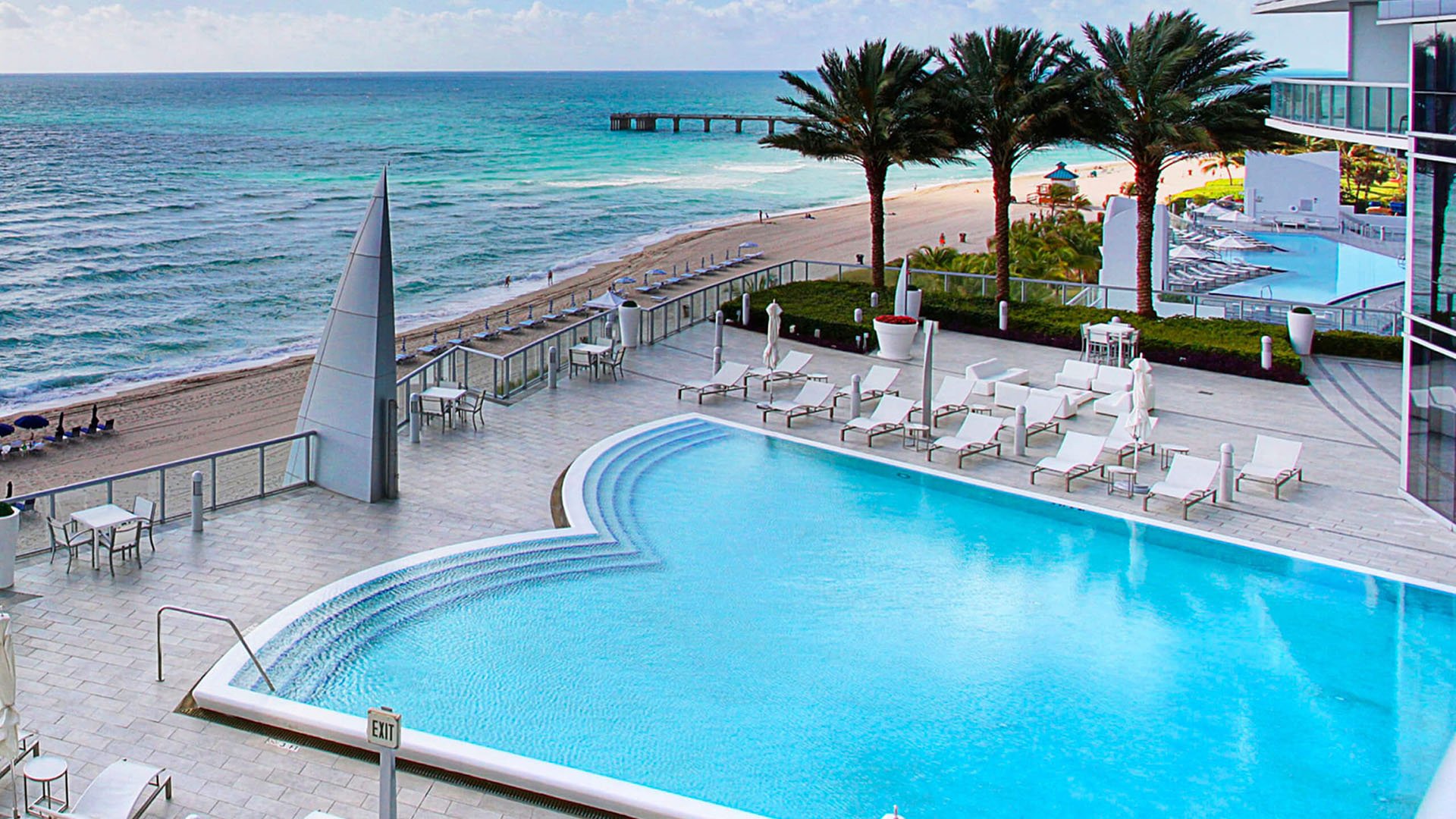
At 17121 and 17141 Collins Avenue, respectively, Jade Ocean Sunny Isles Beach and Muse Residences Sunny Isles Beach stand side by side on the Sunny Isles Beach oceanfront. Their proximity invites comparison, but a serious art buyer should look beyond frontage, views, and finish palettes. The decisive questions are operational: Can a major work reach the residence safely? Does the interior provide suitable volume and usable wall area? Can the environment remain stable enough for sensitive materials?
Based on available information, the buildings present distinct strengths. Jade Ocean outlines a more explicit service-access framework, while Muse projects a stronger art-led identity and offers 11-foot ceilings. Neither tower provides enough technical detail to establish museum-grade logistics or conservation conditions. That distinction matters: luxury positioning and collection stewardship are related, but they are not interchangeable.
For a collector, the most consequential amenity may be the route a work takes from truck to wall.
Jade Ocean has the clearer logistics advantage. Its residences include service entrances and service elevators, separating deliveries and staff movement from the primary arrival sequence. Most residences also have elevators opening into private or semi-private foyers. Together, these features can support controlled staging near the home, particularly when installers need a clean transition from circulation space to the final placement area.
The tower also offers private elevators, high-speed access using fingerprint identity, and an integrated Smart Building System. These features contribute to a controlled arrival experience, but they do not resolve the central freight questions. Available details do not specify elevator-cab dimensions, rated weight, door width, loading clearances, truck approach, or corridor turning radii.
Muse’s service path is less clearly defined. Loading-dock dimensions, freight-elevator specifications, service-corridor layouts, and detailed move routes are not stated. This does not indicate that the building cannot accommodate substantial works. It means feasibility should be confirmed directly with management before a buyer commits to a large sculpture, oversize canvas, stone piece, or crated media installation.
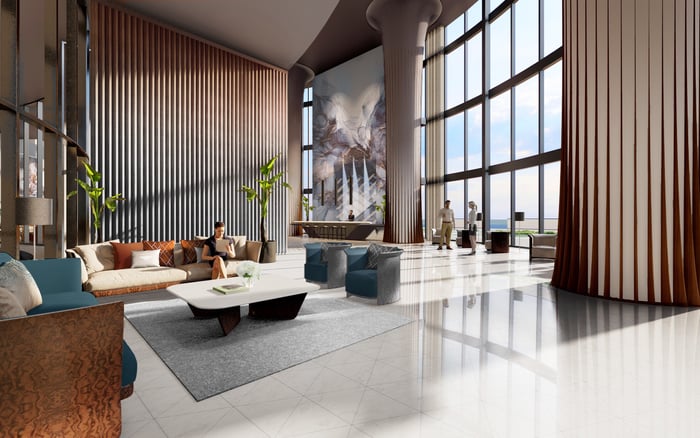
Muse presents the more pronounced identity for an art-integrated home. Its 11-foot ceilings create generous vertical volume for large-format work, while custom Italian cabinetry and Smart technology support a highly composed interior. Expansive glazing can connect art unusually closely to the Atlantic setting, particularly when placement is conceived as part of the architecture rather than introduced after furnishing.
Yet floor-to-ceiling glass is both an aesthetic asset and a curatorial constraint. It reduces conventional hanging-wall area and introduces concerns around UV exposure, glare, and solar heat. A buyer should map each proposed artwork against orientation, daylight patterns, mechanical supply locations, circulation, and sightlines. Smart technology alone does not confirm automated shading, collection-specific temperature control, or humidity monitoring; Muse does not identify its platform or detailed HVAC controls.
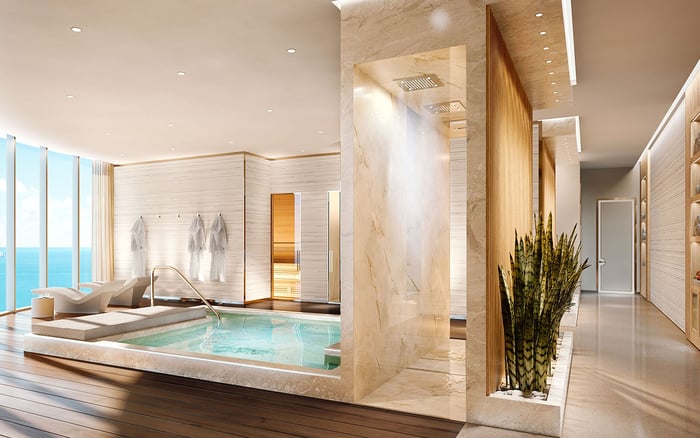
Jade Ocean likewise features floor-to-ceiling exterior glass walls, open terraces, and hurricane-impact-resistant glazing. Its design narrative centers on a three-story contemporary lobby and polished shared spaces rather than a named building-wide art collection. Within the private residence, that leaves considerable room for an owner’s curatorial voice, provided wall planning and solar mitigation are resolved early.
Neither property establishes museum-grade environmental performance. A Jade Ocean residence may have central cooling and heating, but available information does not identify the building-plant configuration, redundancy, humidity control, filtration, or backup coverage. Muse likewise does not specify its HVAC plant type, dehumidification performance, redundancy, or temperature and relative-humidity tolerances.
Collectors should request evidence rather than rely on broad comfort language. Useful materials include HVAC zoning diagrams, filtration specifications, maintenance records, emergency-power coverage, and historical temperature or humidity data. The review should also establish whether a dedicated zone can serve the principal display area and whether monitoring can issue alerts during an outage or prolonged absence.
Jade Ocean’s air-conditioned resident storage is practical, but air conditioning alone does not make a storage area suitable for conservation-sensitive works. The same caution applies within either residence. Paintings, works on paper, textiles, photography, wood, mixed media, and electronics can respond differently to moisture, temperature fluctuations, light, and salt-laden coastal conditions.
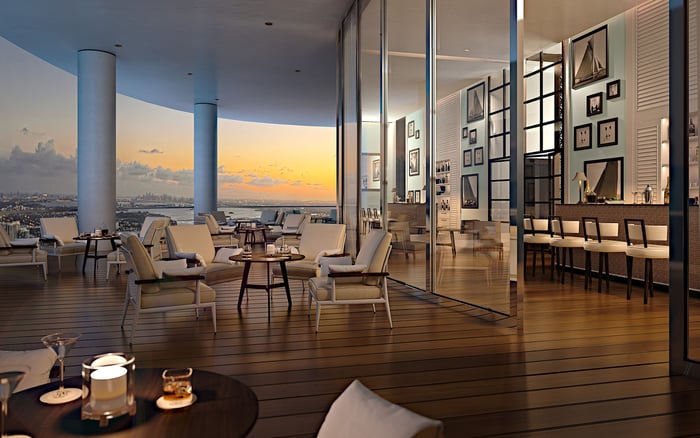
Muse balconies include summer kitchens and weatherproof entertainment systems, reinforcing the residence’s outdoor-living and integrated-media proposition. That specification should not be extended to unrelated objects. A weatherproof screen does not establish that a sculpture, finish, fastening system, plinth, or electrical component is suitable for terrace exposure.
A terrace installation faces a distinct set of challenges, including salt air, direct sun, wind, driven rain, drainage, and anchoring. Those conditions require input from the artwork’s fabricator, conservator, installer, and building management. Jade Ocean’s open terraces warrant the same object-specific review. In both towers, exterior display should be treated as a technical installation rather than routine decoration.
Before scheduling delivery, obtain the complete route from vehicle arrival to final placement. The file should record elevator dimensions and weight limits, door clearances, corridor widths, turning radii, protective-padding requirements, permitted delivery hours, certificates of insurance, staffing rules, and reservation procedures. If an artwork cannot negotiate a critical turn, private elevator access at the destination will not solve the problem.
Request a supervised route walk with the crated dimensions in hand. Confirm where unpacking may occur, whether climate-sensitive works can remain indoors throughout staging, and how debris and packing materials must exit. For heavy pieces, verify structural and floor-loading requirements with appropriately qualified professionals rather than assuming residential floors or terraces can bear the load.
Jade Ocean offers the more legible service narrative. Service entrances and elevators in the residences, combined with private or semi-private foyers, give a collector a clearer foundation for planning a controlled delivery. Muse presents the more legible art-and-media narrative through 11-foot ceilings, Smart technology, broad expanses of glass, and outdoor entertainment features.
The right choice depends on the collection. A buyer prioritizing recurring rotations, staff separation, and delivery staging may give greater weight to Jade Ocean’s service circulation. A buyer focused on dramatic interior volume and an explicitly design-led atmosphere may find Muse more naturally aligned. In either case, the deciding evidence should come from measured routes and mechanical documentation, not visual impression alone.
Nearby comparisons can sharpen the brief without replacing due diligence. Buyers considering Jade Signature Sunny Isles Beach or The Ritz-Carlton Residences® Sunny Isles should apply the same standards: trace the freight journey, quantify glazed exposure, test environmental assumptions, and match the residence to the collection’s actual materials and scale.
For an art-minded purchase, the most persuasive home is not simply the one with the grandest glass or loftiest room. It is the one whose service route, interior geometry, light management, mechanical performance, and operating rules can be verified before closing. Jade Ocean and Muse each provide a compelling framework, but the final judgment belongs in dimensions, documents, and collection-specific advice.
For discreet guidance evaluating these Sunny Isles Beach residences through a collector’s priorities, connect with MILLION.
If branded residences are on your mind — as a home or as an allocation — we would be glad to share what we are seeing, privately.
Begin a quiet conversationJade Ocean has the clearer published advantage because service entrances and service elevators are expressly described for its residences.
No. Public details do not provide cab dimensions, weight limits, loading clearances, or truck-approach information.
No. Its publicly available profile does not specify loading-dock dimensions, service corridors, freight elevators, or detailed routes.
They provide generous vertical volume for large-format artwork, although actual placement still depends on wall area, access, light, and circulation.
No. Public materials for both towers omit enough HVAC and humidity-performance detail to prevent that conclusion.
Request HVAC zoning diagrams, filtration details, maintenance records, emergency-power coverage, and historical temperature or humidity data.
Air conditioning is useful, but it does not by itself prove conservation-grade temperature, humidity, filtration, or backup performance.
No. That specification does not establish that unrelated artwork, finishes, mounts, or electronics can withstand terrace conditions.
It expands views but can reduce hanging-wall area and increase UV, glare, solar heat, and climate-management concerns.
Confirm crated dimensions, elevator capacity, door widths, turning radii, delivery rules, insurance, staging space, and the full route to final placement.