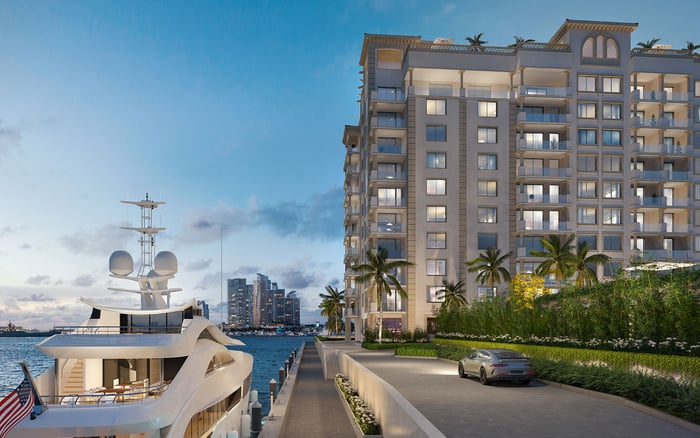
A buyer-focused framework for examining master coverage, wind and flood terms, deductible allocation, owner insurance, reserves, and assessment exposure at Apogee South Beach.
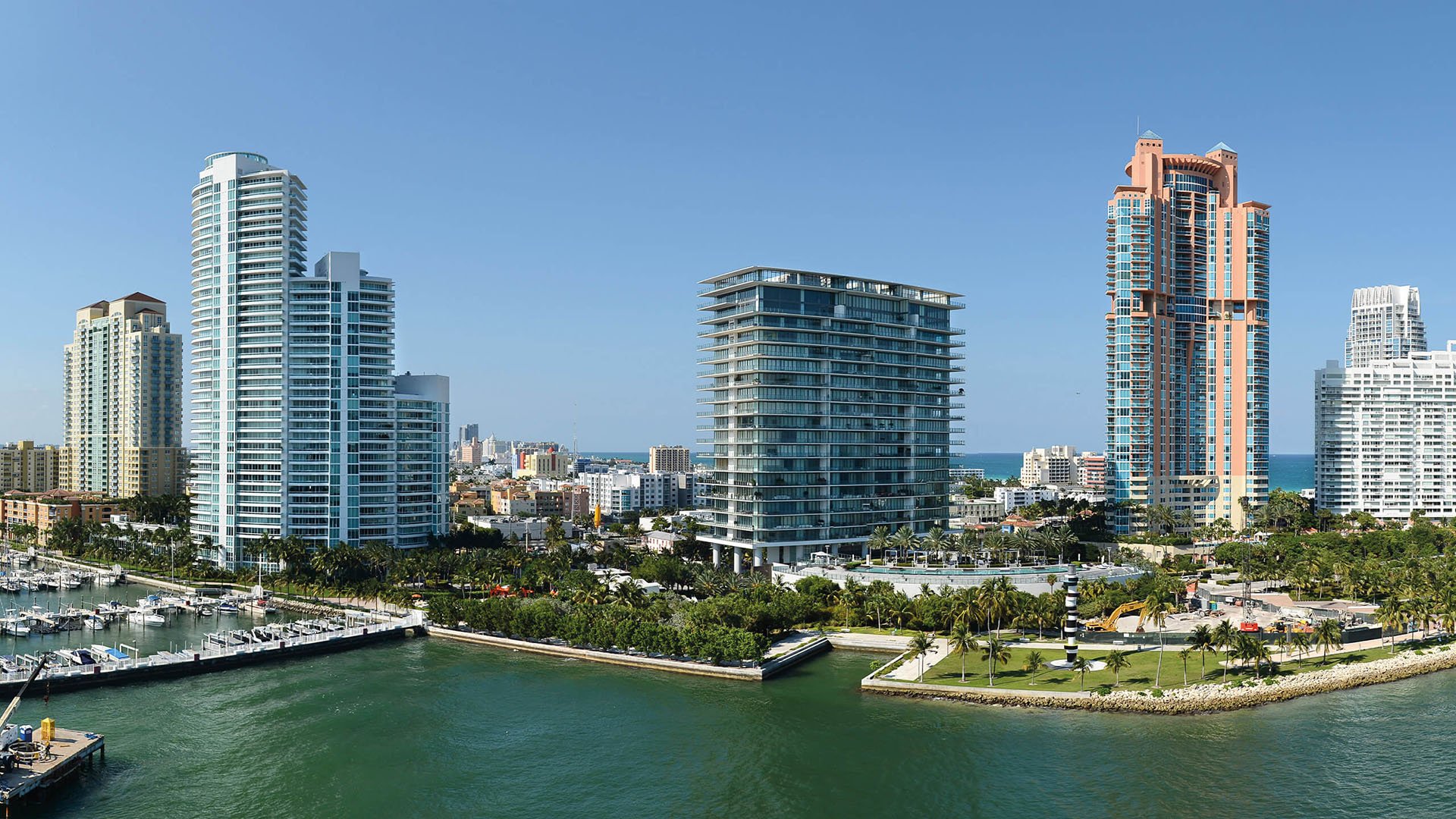
At Apogee South Beach, the visual proposition is immediate: a waterfront setting at the southern end of Miami Beach, near Government Cut, with views of the Atlantic Ocean, Biscayne Bay, Fisher Island, and the downtown Miami skyline. The building is positioned as a boutique high-rise with a limited collection of large-format residences, luxury architecture, and high-end interiors.
For a buyer, however, architectural distinction is no substitute for insurance diligence. The essential questions are what the condominium association insures, what it does not, how deductibles are allocated, and whether reserves and liquidity could absorb an uninsured or underinsured event. The answers cannot be inferred from a listing, an amenity tour, or the building’s luxury standing. They require current policy documents and financial records.
Request the complete master insurance package, not merely a summary page. The review should encompass declarations, schedules, endorsements, exclusions, deductibles, named insureds, covered-property definitions, policy periods, and evidence of payment. A buyer’s insurance adviser and condominium counsel can then compare the policy language with the declaration, bylaws, and other governing documents.
The objective is to define the boundary between association property and owner responsibility. Pay particular attention to interiors, improvements, fixtures, glazing, terraces, mechanical components, storage areas, and any appurtenant spaces. Apogee’s current limits, exclusions, valuations, and division of responsibility must each be verified directly in the transaction file.
This discipline applies throughout South of Fifth. Buyers considering nearby Continuum on South Beach should follow the same document-led approach rather than assume neighboring luxury properties carry comparable terms.
A premium figure is not a complete measure of risk. For wind exposure, identify the covered causes of loss, applicable sublimits, exclusions, waiting provisions, and precise deductible formula. Determine whether the deductible is a flat amount, a percentage, or otherwise defined, then identify the value to which any percentage applies.
Next, translate that language into dollars under realistic scenarios. Ask who initially funds the deductible, how the governing documents permit its allocation, and whether the association has designated cash, reserves, borrowing capacity, or another available mechanism. A deductible that appears manageable as a percentage may look very different when applied to the relevant insured value.
The analysis should also determine whether separate policies or deductibles apply to different components. Do not presume one wind number governs every loss.
Flood and wind require separate diligence tracks. Obtain the association’s current flood policy, including declarations, limits, deductibles, covered locations, covered property, exclusions, and any excess layers. Confirm whether the policy addresses only the structure or also specified common elements and equipment.
At a waterfront property, the practical review should map policy language onto the physical building. Counsel, insurance advisers, and inspectors should identify the locations of critical systems and common assets, then test whether the insurance schedule and condominium documents address them coherently. Apogee’s waterfront position makes this inquiry relevant, but does not itself establish any particular level of exposure or coverage.
A comparison with The Residences at Six Fisher Island can be useful only for market context. Each association’s policies, construction, governing documents, and finances must be evaluated independently.
The owner’s policy should be designed only after reviewing the master program and condominium documents. The objective is to reduce gaps and unnecessary overlap across coverage for interior property, alterations, personal contents, loss assessment, liability, additional living expenses, and other owner-level risks.
Provide the insurance adviser with renovation records and specifications for valuable interior improvements. In large-format residences with high-end finishes, generic assumptions can be especially unreliable. Confirm how the owner policy responds if the association’s deductible is allocated to unit owners, and whether relevant limits or exclusions constrain that response.
Financing may add another layer of review. A lender’s acceptance of insurance evidence is not a substitute for the buyer’s independent analysis.
Insurance and reserves should be read together. Request current budgets, recent financial statements, reserve schedules, structural-integrity reserve materials, milestone-inspection records, board minutes, pending contracts, and notices concerning assessments or material projects. Also request available claims and loss information, including open matters and unrepaired damage.
The central question is not simply whether a reserve balance exists, but whether funds are designated and sufficiently liquid for anticipated work, deductibles, uncovered repairs, and timing mismatches between a loss and the receipt of insurance proceeds. Review restrictions on reserve use, and distinguish recurring operating cash from funds committed to specific components.
Apogee’s reserve adequacy and special-assessment exposure require verification. A resale buyer should condition any conclusions on document review, professional interpretation, and written clarification of material ambiguities.
Before the review period expires, assemble a coordinated package for condominium counsel, an insurance adviser, an inspector, and a financial professional. Include master and flood policies, governing documents, budgets, financial statements, reserve records, inspection materials, board minutes, claims information, assessment notices, and the seller’s owner-policy details where available.
Use a written issue matrix with four columns: document language, financial consequence, responsible party, and unresolved question. This framework makes it easier to distinguish a coverage gap from a deductible issue, a reserve concern, or a governance question.
The same framework applies when comparing another Miami Beach proposition, such as The Ritz-Carlton Residences® South Beach. The goal is not to declare one property safer based on marketing materials, but to compare verified contractual and financial positions on equivalent terms.
What is the first insurance document an Apogee buyer should request? Request the complete current master insurance package, including declarations, endorsements, exclusions, schedules, and deductibles.
Does the master policy automatically cover a residence’s interiors? Not necessarily. Confirm coverage boundaries by comparing the policy with the condominium documents and the residence’s improvements.
Why does the wind deductible require special attention? Its formula and allocation can materially affect the amount the association or individual owners may need to fund after a covered event.
Is flood insurance included within wind coverage? Buyers should treat flood and wind as separate coverage inquiries and obtain the governing documents for each.
What should be checked in the flood policy? Review limits, deductibles, covered property, covered locations, exclusions, and any excess insurance layers.
How does an HO-6 policy fit into the analysis? It should address owner-level property and liability needs while coordinating with the master policy and condominium documents.
Can loss-assessment coverage eliminate assessment risk? Do not assume it will. Limits, exclusions, triggers, and the nature of an assessment require specific review.
Why review reserves alongside insurance? Reserves and liquidity may determine how the association funds deductibles, uncovered repairs, and timing gaps before proceeds arrive.
Can luxury positioning indicate that coverage is adequate? No. Architecture, finishes, views, and exclusivity do not establish policy limits, exclusions, or reserve sufficiency.
Who should review the diligence package? A buyer should consider coordinated review by condominium counsel, an insurance adviser, an inspector, and a financial professional.
For a confidential assessment and a building-by-building shortlist, connect with MILLION.
If branded residences are on your mind — as a home or as an allocation — we would be glad to share what we are seeing, privately.
Begin a quiet conversation