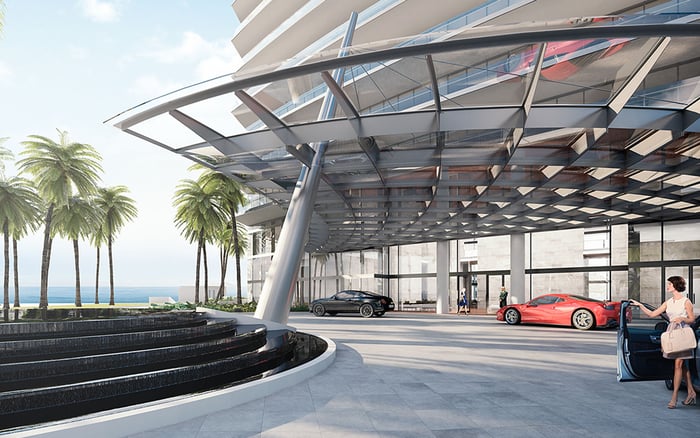
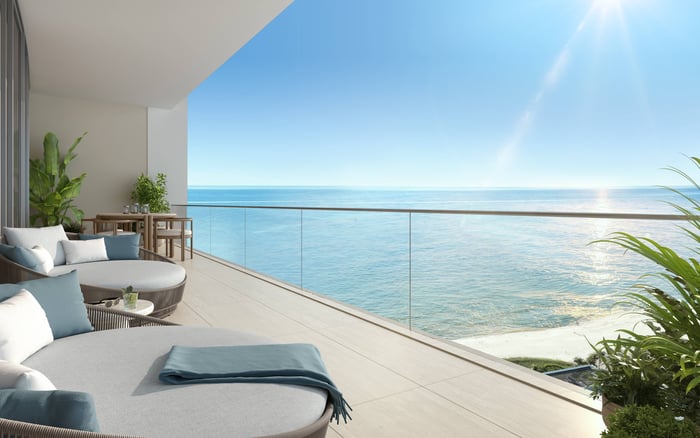
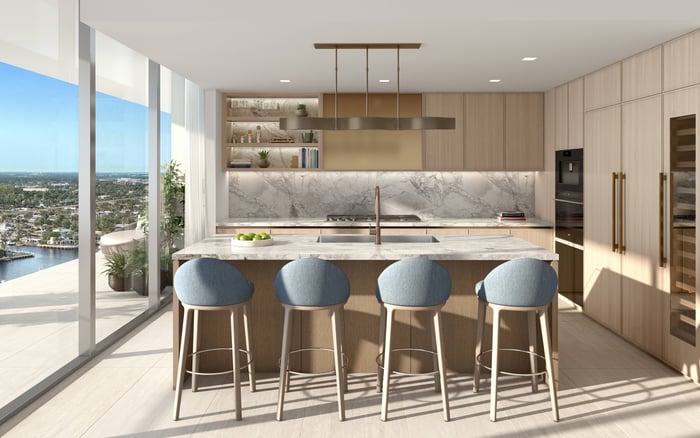
Ocean 580’s residential identity and limited leasing may appeal to luxury lenders, yet its 17-unit scale makes reserves, insurance, ownership concentration and early resale evidence especially consequential.
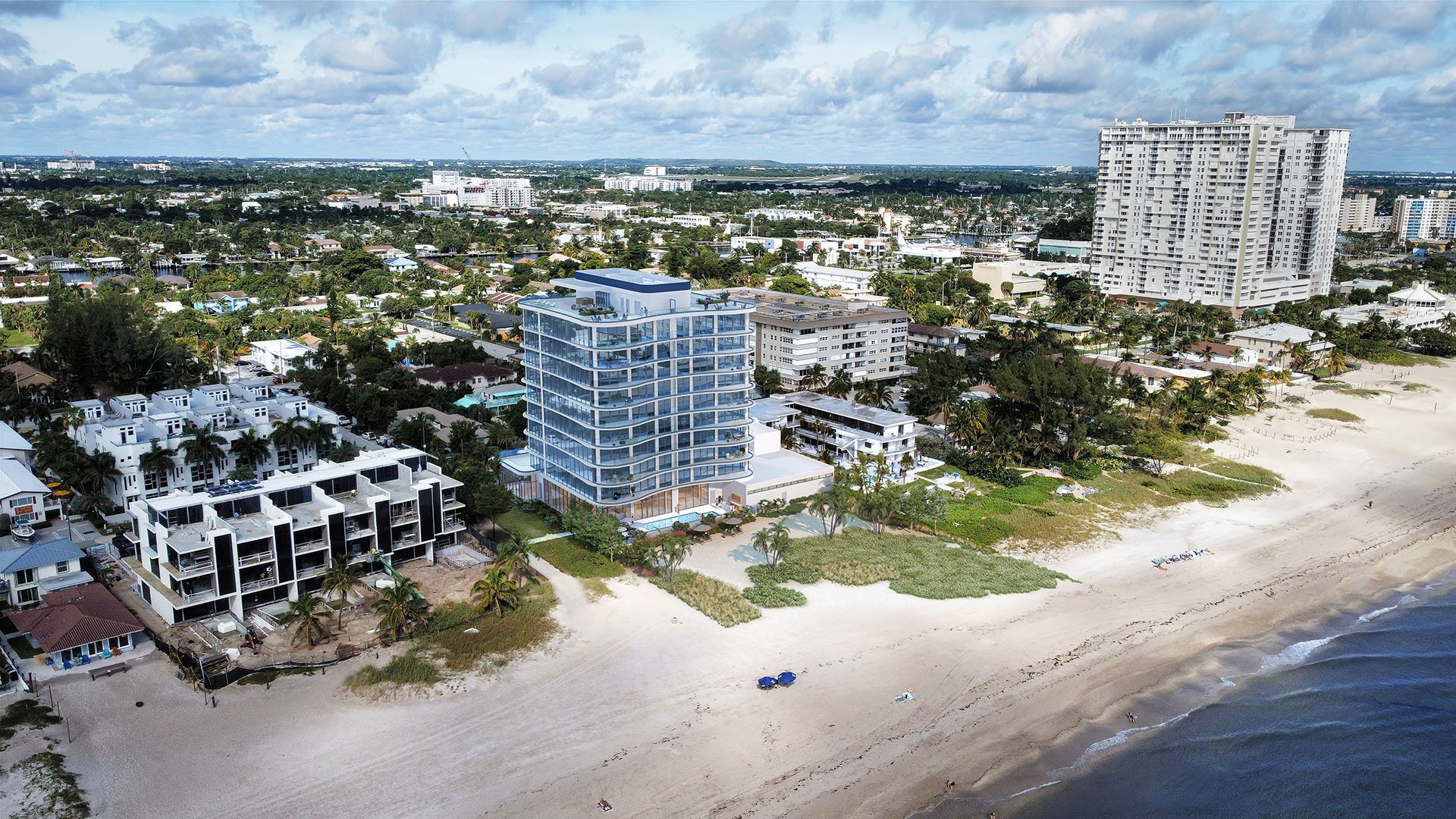
At Ocean 580 Pompano Beach, exclusivity is more than a design premise. It is embedded in the condominium’s ownership structure. Planned for 580 Briny Avenue, the 10-story building comprises just 17 oceanfront residences, establishing it as a boutique residential condominium rather than a hotel or transient-lodging property.
That distinction extends beyond lifestyle. For lenders, a conventional residential condominium can offer a cleaner review than a condo-hotel, particularly when leasing is controlled and the buyer base favors end users and second-home owners. For purchasers, however, the small association introduces another layer of analysis. Each residence represents roughly 5.9% of the ownership body, giving a single delinquency, disputed assessment, or concentrated ownership block an outsized effect.
At Ocean 580, scarcity strengthens the lifestyle proposition while magnifying association-level risk.
Within MILLION’s editorial taxonomy, the relevant lenses are Boutique, Oceanfront, Pre-Construction, and Resale. Together, they capture both the appeal and the underwriting tension: private scale, direct coastal positioning, an association still taking shape, and no mature record of same-building trades.
No completed lender condominium questionnaire has been identified for Ocean 580. The figures that ultimately determine project eligibility therefore remain unverified, including reserve funding, insurance terms, delinquency levels, pending litigation, owner occupancy, and ownership concentration.
The disclosed structure still offers useful signals. A six-month minimum lease and a limit of two leases per year discourage nightly, weekly, and high-frequency rental activity. If those provisions appear in the recorded declaration, lenders may view them more favorably than rules designed around transient occupancy. Buyers should not treat promotional or listing language as a substitute for the governing documents.
The residential classification is similarly constructive, but it does not constitute an approval. Jumbo and private-bank lenders commonly evaluate both the borrower’s strength and the condominium itself. Even a highly qualified purchaser can encounter a project-level objection if insurance, reserves, litigation, or concentration falls outside a lender’s standards.
A compact association can offer discretion, lower traffic, and genuine ownership scarcity. It can also distribute fixed operating obligations among very few households. At Ocean 580, one unpaid account or one owner resisting a special assessment carries proportionally greater weight than it would in a tower with hundreds of residences.
Monthly association fees for Units 201, 302, and 602 are each $4,954, while average maintenance is estimated near $1.52 per square foot. These figures frame the carrying costs, but they do not establish whether the initial budget is sufficiently conservative, how reserves will be funded, or how future insurance renewals could affect assessments.
A rigorous review should reconcile the proposed budget with the declaration, insurance package, reserve schedule, and responsibility matrix for windows, terraces, common elements, and other building components. For a pre-construction purchase, the essential question is not simply whether the first-year fee appears acceptable. It is whether the association’s financial architecture will remain durable after turnover and the onset of a normal operating history.
With pricing from $4.2 million, an earlier starting figure of $4.7 million, and Unit 201 listed at $4.35 million in June 2026, financed acquisitions generally fall within jumbo or private-bank territory rather than conventional conforming channels. The lender relationship may be more bespoke, but project scrutiny remains central.
Potential strengths include the residential-only positioning, limited rental frequency, large floor plans, and an expected audience of affluent primary and second-home purchasers. Potential friction lies in what cannot yet be tested through an operating association. Once the condominium is formed, the final questionnaire must document actual insurance, reserves, delinquencies, litigation, owner occupancy, and concentration.
Pompano Beach buyers evaluating the broader luxury corridor may also consider Armani Casa Residences Pompano Beach and The Ritz-Carlton Residences® Pompano Beach. The point is not to assume identical financing, but to evaluate each property’s legal use, rental rules, association scale, operating history, insurance, and closed-sale evidence on its own terms.
Ocean 580 remains pre-construction, with no mature same-building resale record or identified recent closed sales. Early sellers may therefore encounter appraisal friction because the cleanest comparables-completed transfers within the building-will initially be scarce.
Residence sizes span approximately 3,238 square feet for a standard plan to as much as 8,872 square feet across the broader offering, with average asking prices near $1,375 per square foot. That range can complicate direct comparisons: floor level, exposure, plan scale, and outdoor space may make one residence a poor proxy for another, even within a 17-unit property.
Liquidity is therefore more likely to be selective than high velocity. The natural resale audience consists of affluent end users and second-home purchasers drawn to oceanfront living, substantial interiors, and privacy. Scarcity can preserve distinctiveness, but it cannot guarantee a rapid sale. Buyers using leverage should ask how a lender would appraise the residence if only broader Pompano Beach coastal comparables were available.
Another nearby point of reference, Casamar, can broaden a purchaser’s review of new oceanfront inventory. Even so, asking prices are not interchangeable with closed comparables, and another building’s liquidity cannot substitute for Ocean 580’s eventual trading history.
Before contract deadlines expire, buyers should obtain the executed purchase agreement, proposed and recorded declaration, bylaws, rules, initial budget, reserve information, insurance materials, construction and completion provisions, and the lender’s full condominium questionnaire. The questionnaire should be read as a concise risk map, not as routine paperwork.
Several inconsistencies also warrant written resolution. The completion timeline was initially identified as winter 2027 and later as 2028. Size ranges vary. The pet policy is unresolved, with pets described as prohibited in some instances and permitted in others. None of these points should remain an assumption when timing, livability, or financing depends on the answer.
Buyers should also confirm the six-month lease minimum and two-lease annual maximum in the governing documents. If rental flexibility matters to a future exit, the precise language, approval process, waiting periods, and enforcement provisions can shape the breadth of the resale audience.
Ocean 580 presents a compelling form of coastal scarcity: 17 large residences, direct oceanfront positioning, and a conventional residential identity. Those qualities may support lender appetite and appeal to buyers who prioritize privacy over turnover. Yet the same intimacy concentrates association risk, while pre-construction status leaves lenders and appraisers without established operating or resale evidence.
The prudent acquisition thesis is therefore twofold. First, underwrite the residence for its intrinsic fit, price, carrying cost, and intended use. Then underwrite the condominium as carefully as the lender will, focusing on reserves, insurance, delinquencies, litigation, occupancy, concentration, and recorded leasing rules. For tailored guidance on South Florida’s most distinctive residential opportunities, connect with MILLION.
If branded residences are on your mind — as a home or as an allocation — we would be glad to share what we are seeing, privately.
Begin a quiet conversationNo. It is marketed and classified as a conventional residential condominium rather than a hotel or transient-lodging development.
Ocean 580 is planned with 17 residences across 10 stories at 580 Briny Avenue in Pompano Beach.
Each owner represents roughly 5.9% of the association, magnifying the potential effect of delinquencies, assessments, and ownership concentration.
No completed questionnaire has been identified, leaving reserves, insurance, delinquencies, litigation, occupancy, and concentration unverified.
Potentially. A reported six-month minimum lease and two-lease annual limit discourage transient use, though governing documents must confirm the restrictions.
Units 201, 302, and 602 each have a disclosed mandatory association fee of $4,954 per month.
At current multimillion-dollar pricing, buyers would generally require jumbo financing or a private-bank lending solution rather than a conforming mortgage.
Ocean 580 has no mature same-building sales record, so appraisers may initially have limited closed comparables within the property.
The disclosed timing is inconsistent, with winter 2027 appearing earlier and 2028 appearing later.
Available information conflicts on pet rules. Buyers should rely on the purchase contract, declaration, and final association rules for a definitive answer.