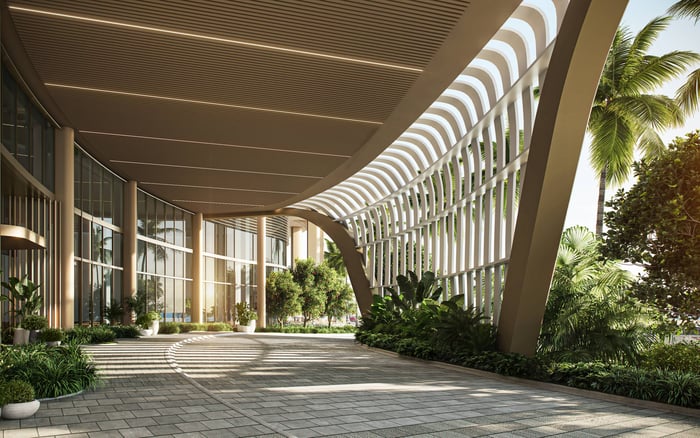
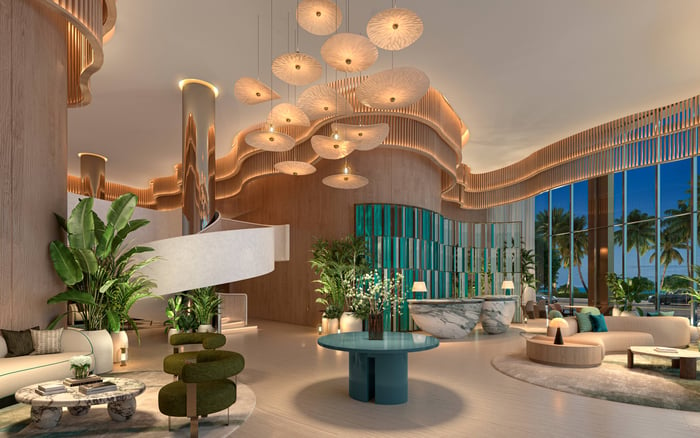
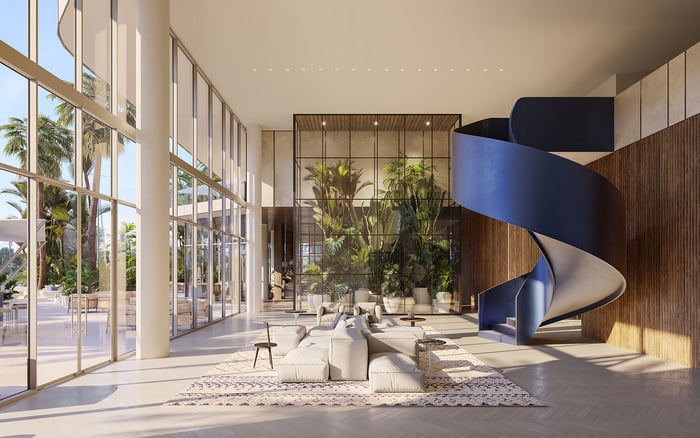
Casamar’s art-forward identity gives collectors a compelling design premise, but preserving art inside an oceanfront residence requires deliberate control of daylight, ultraviolet exposure, humidity, temperature, and display duration.
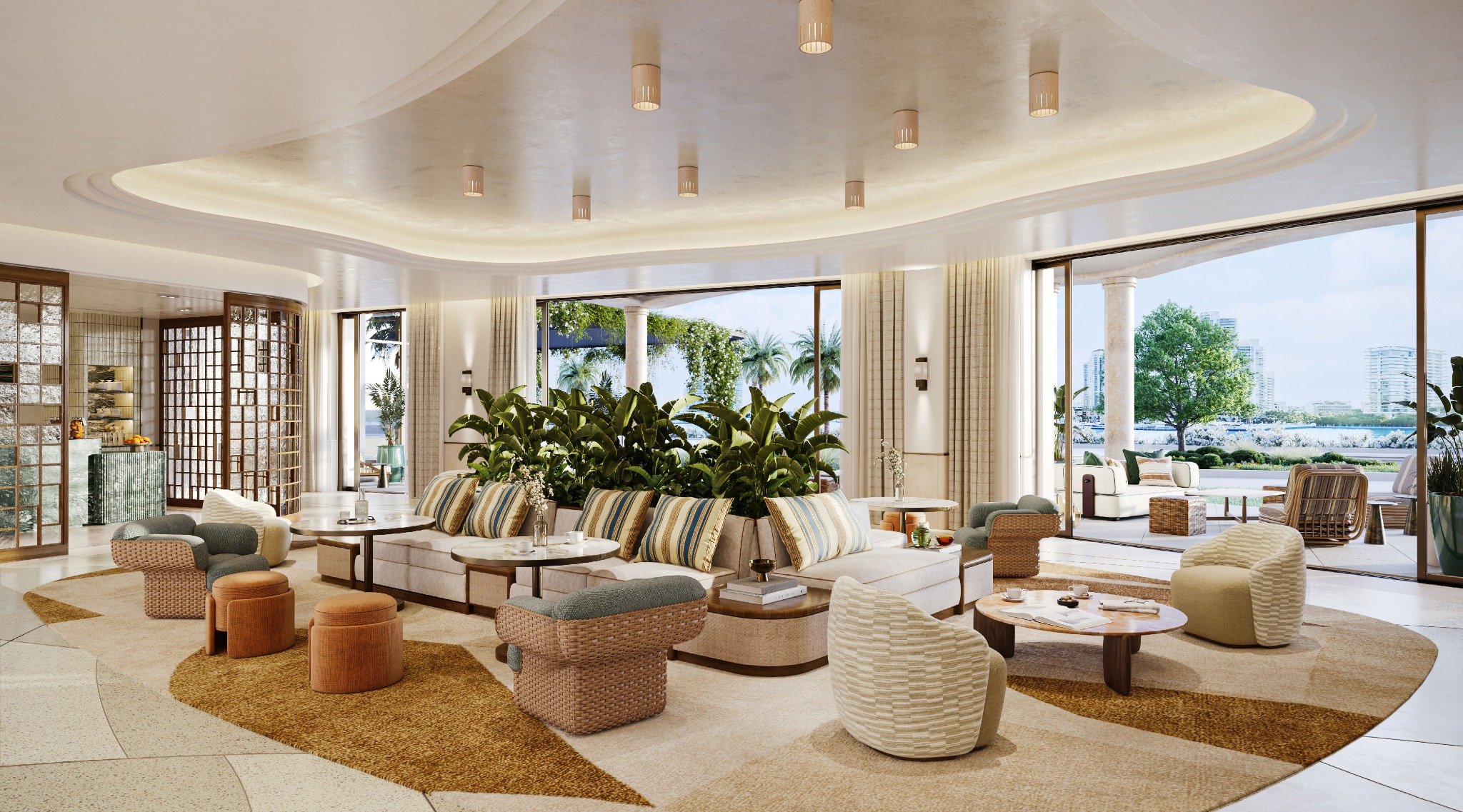
The curated contemporary art in Casamar’s amenity spaces establishes the development’s art-forward identity. For a collector considering Casamar, however, the ownership model extends beyond acquisition and interior decoration. It encompasses the day-to-day system for managing light, climate and display choices within the residence.
This distinction matters in Pompano Beach, where the appeal of oceanfront living is inseparable from abundant daylight. Glass can frame the water beautifully while exposing paintings, photography, works on paper and textiles to cumulative deterioration. Casamar’s public art positioning does not, by itself, establish museum-level environmental performance within individual residences. The collector’s task is to create a stable setting without suppressing the qualities that made the home desirable.
The most successful art-focused residence treats daylight as a condition to manage, not a neutral amenity.
Ultraviolet radiation is the highest-energy and most damaging portion of the light spectrum for collections. A common preservation target keeps UV levels below 75 microwatts per lumen, while paintings should ideally receive no UV from daylight or unfiltered lamps. UV-absorbing window film and low-UV artificial lighting are therefore sensible first measures.
Yet UV filtration is not a complete solution. Visible light also causes cumulative change, and a filtered window does not make a wall exposed to prolonged direct sun appropriate for sensitive art. Exposure is a function of intensity and time. Lowering one while ignoring the other leaves the collection vulnerable.
The practical response is hierarchical. Treat walls receiving direct sun as no-art zones. Favor interior walls or surfaces perpendicular to windows for valuable pieces. Place the most sensitive objects farthest from daylight, then use controlled artificial illumination to create visual emphasis. Watercolors, photographs, textiles and works on paper merit greater restraint than comparatively less-sensitive oil or acrylic paintings.
A collector’s shading specification should be developed as part of the architectural plan, not selected as a decorative afterthought. UV-blocking film and shades perform different functions and are most effective when paired. Film can reduce ultraviolet transmission, while shades reduce overall daylight and shorten exposure when views are not being actively enjoyed.
Motorized treatments make that discipline easier. They can close during periods of strong sun, protect rooms while an owner is away and maintain a consistent daily routine. Automatic light controls can likewise reduce unnecessary artificial exposure. UV-filtering frame glazing adds another layer of protection for photographs and works on paper, but it should supplement thoughtful placement rather than justify a hazardous display wall.
These principles apply across the regional waterfront market. A buyer comparing Casamar with Armani Casa Residences Pompano Beach should assess the residence’s actual glazing, shade integration and solar path rather than assume a prestige specification answers a conservation question. Design and architectural decisions become collection-management decisions once valuable art enters the room.
Temperature and relative humidity affect canvases, panels, paper, adhesives, frames and other materials differently. General collection environments often operate within 59 to 77°F and around 50% relative humidity. A more conservative range keeps the temperature no higher than 70°F and relative humidity between 30% and 50%, subject to the requirements of each material.
For paintings, a useful planning range is 59 to 77°F and 45% to 55% relative humidity, with 24-hour fluctuations limited to 4°C and five percentage points of relative humidity. Roughly 60% relative humidity represents a damage threshold, while daily temperature movement should remain at approximately plus or minus 2 to 3°C.
These figures are not a universal prescription for every collection. Their larger lesson is consistency. Repeatedly forcing a room back to an exact target after substantial swings can place physical stress on vulnerable materials. Air-conditioning, dehumidification and a well-maintained building envelope must operate as a coordinated system.
Independent HVAC zones can help where sensitive or valuable works are concentrated. A separately conditioned art room or storage space may be appropriate for pieces that cannot tolerate the conditions of an open living area. Lifestyle preferences still matter, but open doors, prolonged terrace use and seasonal absences should all factor into the operating plan.
Before finalizing millwork or lighting, map the residence by solar exposure, wall orientation and climate behavior. Reserve shaded interior walls for priority works. Use brighter perimeter areas for less-sensitive objects or leave them unoccupied. If a sensitive piece is central to the scheme, rotate it between display and dark or low-light storage rather than treating permanent exhibition as the default.
This exercise can also sharpen comparisons with The Ritz-Carlton Residences® Pompano Beach, Waldorf Astoria Residences Pompano Beach and W Pompano Beach Hotel & Residences. The relevant question is not which name sounds most art-conscious, but which particular residence can provide appropriate walls, controllable light and stable environmental zones for the owner’s actual holdings.
For a new-construction purchase, these requirements are easier to address before finishes are fixed. Lighting circuits, shade pockets, sensors, dedicated HVAC controls and art-storage locations can be coordinated early. The strongest due diligence connects technical review with curatorial intent rather than treating them as separate exercises.
A serious collector should request clear answers on unit-level HVAC zoning, dehumidification capability, glazing specifications and continuity of climate control. The review should also establish whether shades can be integrated without compromising key interiors, whether lighting can be dimmed and automated, and where sensitive works can be stored during absences or maintenance.
The preservation strategy should be material-specific. An environment acceptable for an oil painting may be too bright for a photograph or watercolor. Likewise, a visually protected wall can remain unsuitable if humidity is unstable. Conservators, lighting specialists, HVAC professionals and the interior design team should align before installation.
The result need not resemble a gallery. Done discreetly, conservation-minded ownership appears as composure: controlled light, carefully edited walls and rooms that remain comfortable without exposing the collection to unnecessary stress. At Casamar, that balance allows the ocean to remain the dominant view while art occupies the residence on terms designed for longevity.
For private guidance on evaluating an art-conscious residence at Casamar, connect with MILLION.
If branded residences are on your mind — as a home or as an allocation — we would be glad to share what we are seeing, privately.
Begin a quiet conversationYes. Its amenity spaces feature a curated collection of contemporary art, although this does not establish museum-level conditions inside individual residences.
Direct sunlight is unsuitable for valuable art because UV and visible light damage are cumulative. Walls receiving prolonged direct sun are best treated as no-art zones.
No. UV film reduces ultraviolet exposure, but visible light can still cause deterioration, so shades, careful placement and limited exposure time also matter.
Watercolors, works on paper, textiles and photographs generally require lower light levels than comparatively less-sensitive oil and acrylic paintings.
A useful paintings-care range is 45% to 55% relative humidity, with 24-hour movement limited to about five percentage points. Individual materials may require different conditions.
General collection guidance uses 59 to 77°F, while more conservative guidance often favors a stable temperature no higher than 70°F. Stability and material needs remain central.
Independent zones can maintain tighter conditions in rooms containing sensitive or valuable works. They can also support a separately conditioned art room or storage area.
Motorized shades can reduce daylight during strong sun or owner absences. They work best with UV filtration and automatic lighting controls.
Not necessarily. Light-sensitive pieces can be rotated between display and dark or low-light storage to reduce cumulative exposure.
Verify unit-level HVAC zoning, humidity-control capability, glazing specifications and climate-control continuity before finalizing an art-focused interior.