Alana Bay Harbor Islands offers the privacy of a 30-residence condominium, but its limited unit count does not guarantee modest monthly costs. The decisive questions concern how fixed building expenses are allocated, what the association fee includes, and whether reserves are sufficient for long-term capital needs.
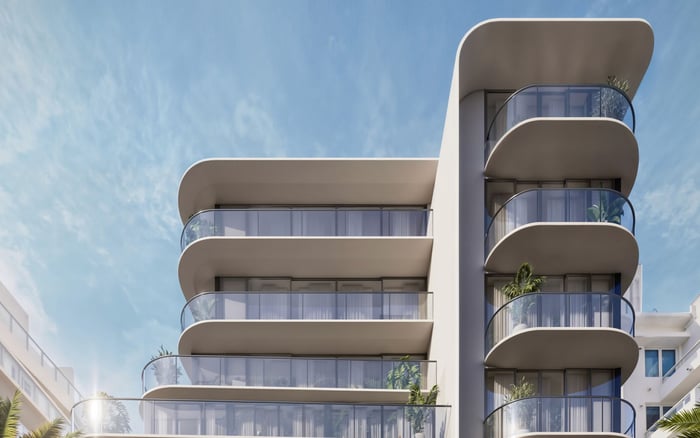
Alana Bay Harbor Islands is a seven-story, 30-residence condominium at 9901 W Bay Harbor Drive. Its scale is central to its appeal. Fewer residences can offer greater privacy, quieter common areas and a more intimate sense of arrival than a large coastal tower. Yet those lifestyle qualities do not, by themselves, determine the cost of ownership.
The building follows a conventional condominium model rather than a hotel-condo structure. Owners must therefore look primarily to the condominium association, its adopted budget and its reserve planning to understand recurring obligations. Insurance, management, accounting, common-area utilities and maintenance must still be funded, whether a property contains 30 residences or several hundred.
Low density can enhance privacy without reducing the building's fixed obligations.
For prospective owners exploring Alana Bay Harbor Islands, the relevant measure is not simply the number of neighbors. It is the relationship among the building's expenses, the allocation formula in its governing documents and the number of owners contributing to those expenses.
A condominium association serves as the financial steward of shared property. At Alana, that shared realm includes the roof, elevators, exterior components, parking areas and amenity spaces. Each carries operating requirements and, over time, potential capital needs. A limited residence count means those obligations are distributed across a comparatively small ownership base.
This distinction matters because many expenses are not proportional to density. A building still requires insurance coverage, professional management, accounting and care for essential systems. An elevator does not become inexpensive simply because fewer households use it. The same logic applies to exterior maintenance and the roof.
Boutique living can therefore produce a different cost profile, not automatically a lower one. The advantage is a more contained residential environment. The tradeoff is that each owner may bear a more meaningful share of expenses that a larger association could distribute among many more units.
This framework is useful when comparing Alana with nearby options such as Onda Bay Harbor and La Maré Bay Harbor Islands. A building's visual scale is only the opening question. Buyers should compare what each association maintains, which services are included and how responsibly future work is funded.
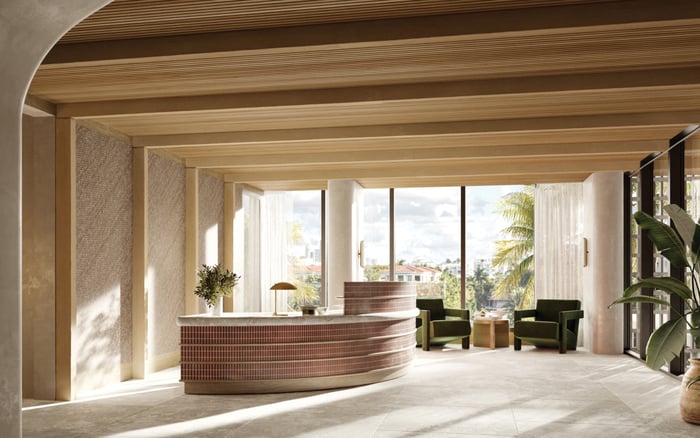
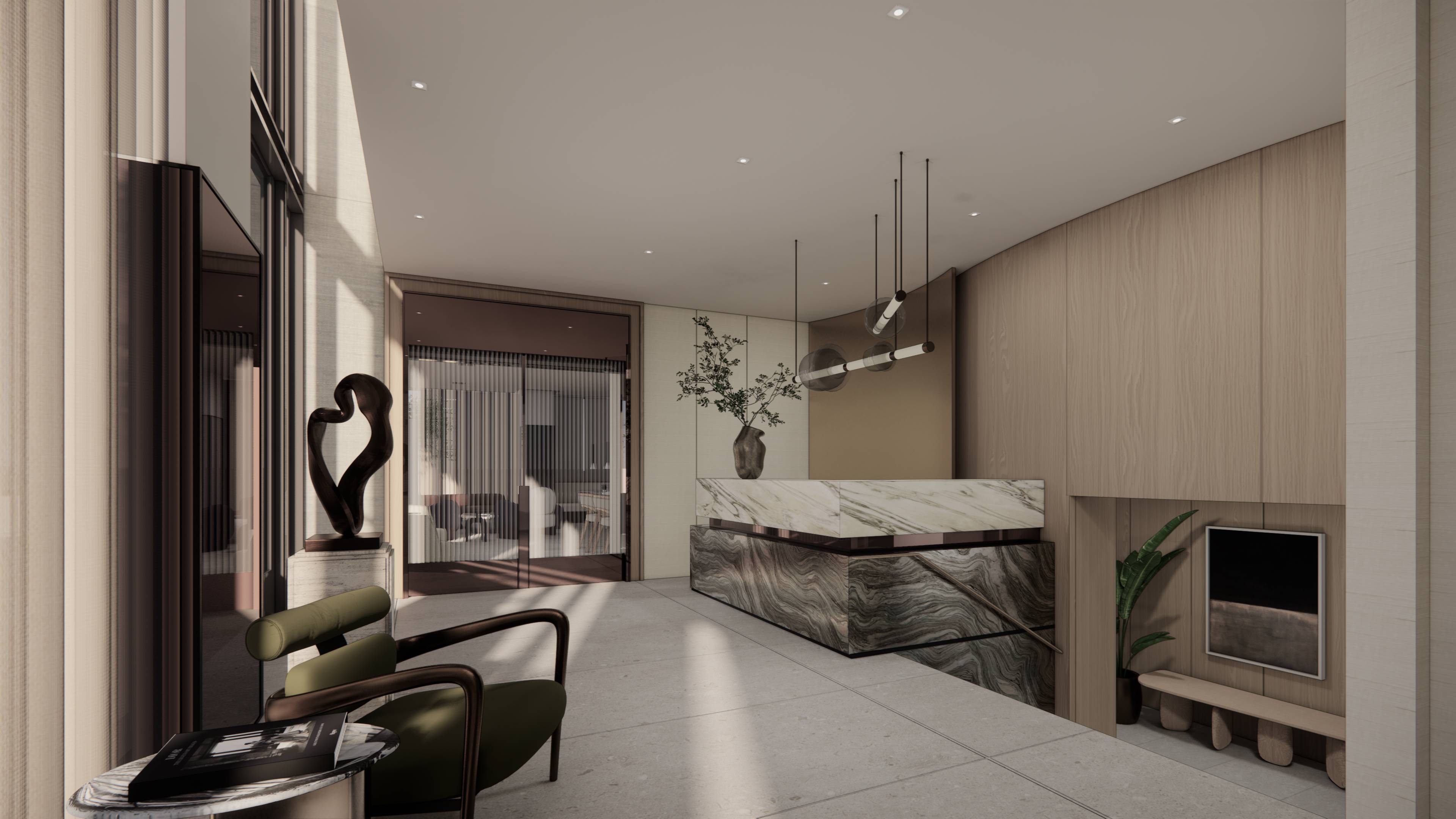
Alana's amenity program is concentrated rather than resort-like. The rooftop includes a swimming pool, an open-air Sky Lounge and outdoor leisure areas. The building also provides a fitness center and a residents' social room with television and lounge seating. Confirmed features include electric-car charging stations, bicycle racks and high-speed Wi-Fi in common areas.
A focused program may avoid the payroll and operational layers associated with extensive resort service. It does not make the shared spaces cost-free. Pool upkeep, rooftop finishes, fitness equipment, common-area connectivity and the systems supporting those spaces all require routine attention. Their eventual repair or replacement also belongs in long-range planning.
The residences are approximately 1,229 to 1,662 square feet. They include front-loading washers and dryers, with storage available on the same floor as each residence. Two covered parking spaces are also described for each residence. These details shape daily convenience, while the garage and common storage areas remain part of the broader maintenance picture.
Buyers considering the wellness orientation of The Well Bay Harbor Islands should apply the same discipline: identify the amenity promise, then examine the operating and reserve structure supporting it. Lifestyle and financial stewardship should be evaluated together.
Publicly available figures for Alana's monthly association charge are inconsistent. Estimates include approximately $1.07 per square foot, approximately $1.10 per square foot and an average near $1.72 per square foot per month. Given the available information, none should be treated as a definitive, current association disclosure.
The spread is material. It may reflect different moments, unit data, inclusions or calculation methods, but those explanations should not be assumed. A buyer should instead obtain the current association-issued schedule and determine the exact charge for the residence under consideration.
Even a verified price per square foot is only a starting point. The more consequential questions are what the charge includes, whether the operating assumptions are realistic and whether reserves are funded at an appropriate level. A low monthly number can be less attractive if it postpones necessary contributions or increases exposure to future assessments.
The distinction matters because headline fees can obscure the quality of a budget. Investment analysis should focus on the durability of the funding plan, not merely on whether the current charge appears competitive beside another condominium in Bay Harbor Islands or Bal Harbour.
Reserves are intended to prepare an association for future capital projects and deferred maintenance. Relevant categories can include roofs, elevators, exterior painting, concrete repairs, pool decks and parking structures. These components exist whether a building is intimate or expansive, and their costs can be substantial when major work becomes necessary.
In a 30-residence property, reserve adequacy warrants particular attention. If a major component is underfunded, fewer owners are available to absorb an assessment. Conversely, a disciplined reserve program may increase present contributions while creating a more orderly approach to long-term ownership.
The objective is not to seek the smallest possible reserve line. It is to understand whether the budget recognizes the building's actual components and anticipated obligations. A well-presented condominium should be evaluated both as a home and as a jointly owned physical asset.
Before closing, a buyer should request the current operating budget, reserve study, insurance declarations, estoppel, recent board minutes and information concerning pending or contemplated special assessments. These materials answer different questions and are most useful when reviewed together.
The operating budget shows current income and expected expenses. The reserve study addresses longer-horizon components and funding. Insurance declarations clarify the association's coverage, while the estoppel can confirm account-specific obligations. Board minutes may reveal active maintenance discussions, contract changes or capital planning that a single fee figure cannot convey.
Buyers should also reconcile the legal allocation of common expenses with the residence they intend to purchase. The size range does not establish how every charge is apportioned. Governing documents and current association records should control that analysis.
Basic plans and specifications can help establish what belongs to the residence and what serves the community, but they do not replace financial documents. The same principle applies when considering Bay Harbor Towers or another low-density property: architectural intimacy and budgetary strength are separate attributes.
Alana's proposition is refined and legible: 30 residences, a focused collection of shared spaces and a condominium structure without an extensive hotel-style program. Its low density may offer the discretion many South Florida buyers value. It should not be interpreted as a promise of low operating costs.
The strongest purchase decision will rest on verified current charges, clear inclusions, adequate insurance and credible reserve funding. When those elements align, the monthly fee becomes more than a price. It becomes evidence of how the building intends to preserve its shared environment over time.
For confidential guidance on evaluating Alana and South Florida's boutique condominium market, connect with MILLION.
If branded residences are on your mind — as a home or as an allocation — we would be glad to share what we are seeing, privately.
Begin a quiet conversationAlana Bay Harbor Islands is a seven-story boutique condominium containing 30 residences.
No. It follows a condominium ownership model, making the association budget central to recurring ownership costs.
No. Fixed expenses such as insurance, management, accounting and common systems are shared across only 30 residences.
Residences are reported to range from approximately 1,229 to 1,662 square feet.
The program includes a rooftop pool, open-air Sky Lounge, outdoor leisure areas, fitness center and residents' social room.
Public estimates range from approximately $1.07 to $1.72 per square foot per month. Buyers should verify the current amount through association documents.
The available figures may use different dates, inclusions or calculation methods. Those reasons are not confirmed, so the figures should not be treated as interchangeable.
Reserves can fund future work involving roofs, elevators, exterior painting, concrete repairs, pool decks and parking structures.
Buyers should request the current budget, reserve study, insurance declarations, estoppel, recent board minutes and information about possible special assessments.
Project information describes two covered parking spaces for each residence, which buyers should confirm for the specific unit.