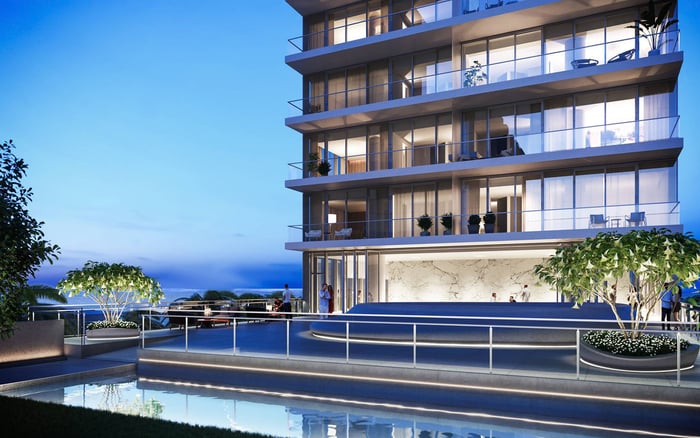
A diligence framework for yacht owners evaluating 2000 Ocean in Hallandale Beach, focused on written verification of the ownership structure, tender logistics, crew access, provisioning, parking, deliveries, and absentee-owner procedures.

Yacht owners evaluating 2000 Ocean Hallandale Beach should begin by confirming the residence’s legal ownership structure and the documents governing owners, guests, household employees, vendors, and contractors. Marketing language, concierge assistance, or waterfront positioning should not be treated as proof of a particular access right or operating procedure.
Before closing, request the current declaration, bylaws, rules and regulations, parking policy, delivery procedures, elevator rules, security requirements, and approved-vendor standards. Any answer affecting recurring yacht operations should be obtained in writing and reviewed for the specific residence.
Do not infer tender rights from beach access, an oceanfront setting, or proximity to the water. Ask management whether any tender pickup, landing, staging, or transfer procedure is permitted and what approvals or restrictions apply.
If an on-site transfer is not expressly authorized, identify an off-site marina or private dock that can support the intended tender, vehicle, passengers, luggage, and operating schedule. The practical route should cover departure from the residence, vehicle loading, road travel, dock entry, tender boarding, and the return trip.
For comparison, buyers may apply the same written-verification standard when reviewing Shell Bay by Auberge Hallandale, St. Regis® Residences Bahia Mar Fort Lauderdale, and Bentley Residences Sunny Isles. Each property should be assessed through its own current documents and operating procedures rather than by analogy.
Ask management to classify captains, stewards, household employees, drivers, provisioning teams, and marine contractors under the building’s current rules. Different classifications may trigger different registration, identification, insurance, parking, elevator, and access requirements.
The written protocol should address whether recurring personnel can remain on an authorized list, whether the owner must approve every visit, where crew members may enter, and what happens during early-morning or after-hours arrivals. If any crew member may stay in the residence, verify the rules governing occupancy, guest registration, employees, tenants, and overnight access.
Provisioning diligence should follow goods from the delivery vehicle to the residence and then from the residence to the yacht. Confirm where vehicles may stop, when deliveries may occur, which entrance and elevator may be used, whether carts are restricted, whether insurance is required, and whether staff may accept items without the owner present.
Next, document the transfer to the selected dock. Confirm vehicle access, loading space, dock-entry procedures, tender acceptance, operating hours, and the process for refrigerated goods, luggage, flowers, linens, or marine equipment. A concierge request should not be assumed to authorize bulk deliveries or resolve dock-side requirements.
Ask for the parking rights and restrictions attached to the specific residence. The review should cover owner vehicles, guest access, valet procedures, vehicle dimensions, temporary waiting, and short-duration entry for crew or delivery teams.
Absentee owners should also establish written authority for keys, access approvals, recurring personnel, contractors, and unattended deliveries. Any authorization should identify who may approve entry, how identity is checked, whether access can occur after hours, and how each visit is recorded.
Costs must likewise be confirmed for the selected home. Request the current association charges, parking-related costs, service charges, and any other unit-specific obligations directly from the appropriate transaction documents and representatives rather than relying on a figure associated with another residence.
A document review should be followed by a real-world test using the likely vehicle, route, dock, and timing. Check entry points, loading conditions, travel time, parking constraints, dock procedures, return access, and any after-hours complications.
The goal is an executable South Florida operating plan: who enters, who approves access, where goods are received, how passengers and supplies reach the tender, and what happens when the owner is away. Any unresolved point should remain a closing diligence item rather than an assumption.
What ownership information should a buyer verify at 2000 Ocean? Confirm the legal ownership structure, governing documents, and rules applying to owners, guests, employees, vendors, and contractors.
Should waterfront positioning be treated as proof of tender access? No. Tender pickup, landing, and staging rights should be confirmed separately in writing.
What should be checked if an off-site dock will be used? Review vehicle entry, loading space, dock access, tender acceptance, operating hours, and after-hours procedures.
How should captains and stewards be registered? Ask management how each role is classified and whether advance registration, identification, insurance, or owner approval is required.
Can recurring crew remain on an access list? Do not assume so. Obtain the current written rule for recurring personnel and individual visit approvals.
What must be verified for overnight crew stays? Review the applicable occupancy, guest-registration, employee, tenant, and overnight-access provisions.
Which provisioning procedures matter most? Confirm delivery hours, vehicle stopping points, permitted entrances, elevator use, cart rules, insurance, and unattended acceptance.
How should absentee-owner access be handled? Written authority should identify who may release keys, approve entry, admit recurring personnel, and authorize deliveries.
Are association costs safe to estimate from another residence? No. Verify all current charges and unit-specific obligations for the precise home under consideration.
Why conduct a live logistics test before closing? It can reveal practical issues involving loading, parking, road travel, dock entry, operating hours, and return access that documents alone may not show.
When you're ready to tour or underwrite the options, connect with MILLION.
If branded residences are on your mind — as a home or as an allocation — we would be glad to share what we are seeing, privately.
Begin a quiet conversation