A buyer-oriented framework for evaluating privacy, arrival sequence, resident flow, amenity access, and discreet service planning at The Estates at Acqualina in Sunny Isles Beach.
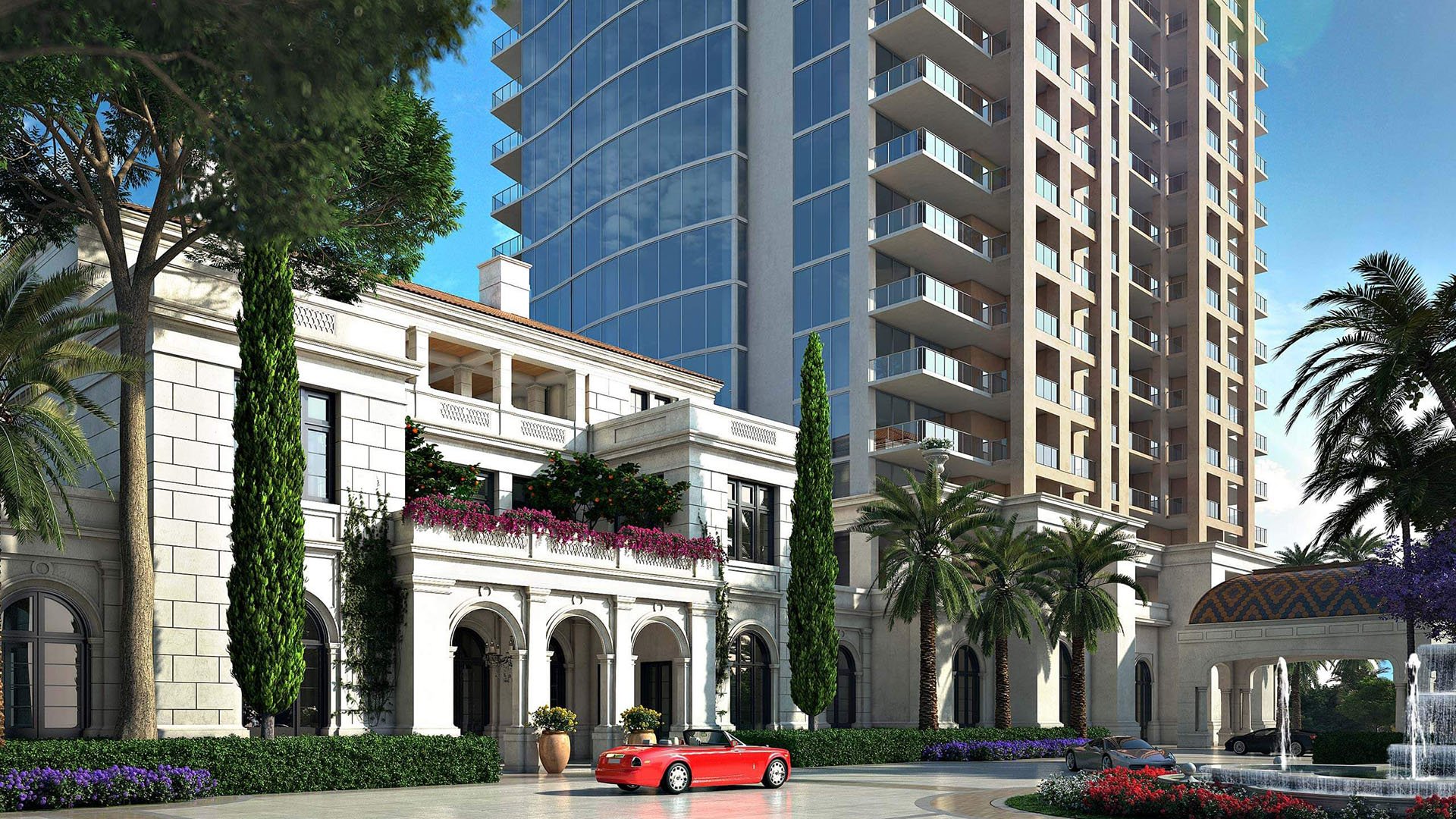
At the highest end of the Sunny Isles Beach conversation, privacy is not defined only by residence size, views, or a staffed front desk. It begins with choreography: how a car leaves the public realm, how a guest is received, how a resident moves from arrival to elevator, and how service remains present without becoming overly visible. That is the essential lens for understanding The Estates at Acqualina Sunny Isles as a private-residence experience rather than simply a luxury address.
For buyers, the distinction matters. Hospitality can feel generous, but without careful circulation, it can also feel busy. The strongest estate-style condominium environments are usually organized around layered transitions from the public realm into increasingly private residential zones, so the sense of retreat is established before one reaches the home.
This is why The Estates at Acqualina is relevant to a broader Sunny Isles Beach buyer conversation. Buildings compete on design, views, amenities, and finish quality, yet sophisticated owners increasingly ask a more operational question: how does the building actually live when residents, seasonal owners, invited guests, amenity users, and staff are all moving through it at once?
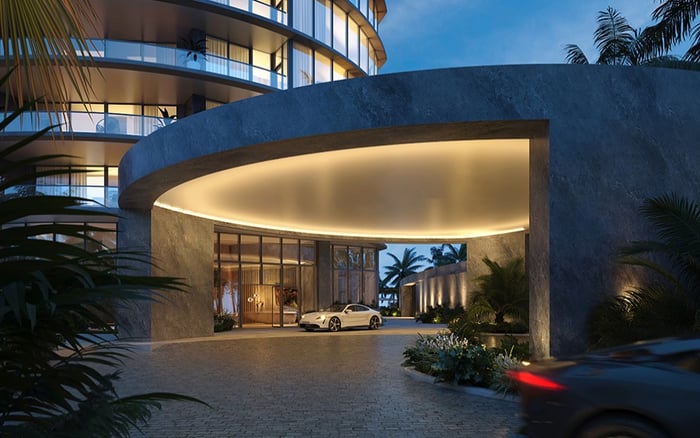
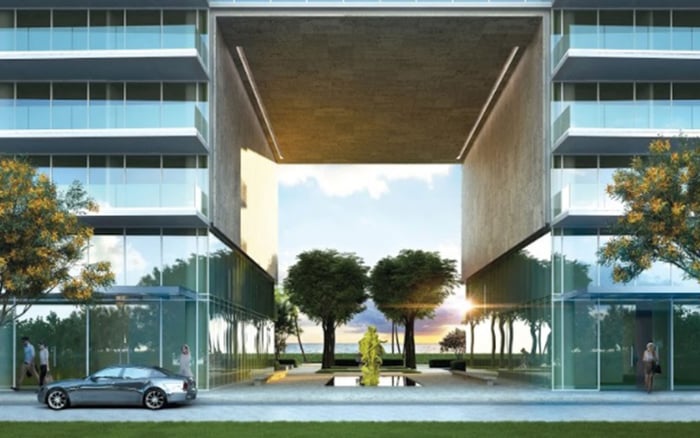
The arrival experience should make the shift from urban traffic to protected residential calm feel deliberate and controlled. Entries, internal approaches, and formal arrival moments are not merely visual flourishes in this tier of the market. They create time, distance, and discretion between the public edge and the residential interior.
That sequence is particularly important in Sunny Isles Beach, where Collins Avenue energy and private residential expectations sit close together. The best arrival planning does not deny the urban setting. It filters it. A controlled first threshold, a composed arrival area, and a clear reception path can help residents and guests feel received without feeling exposed.
For the buyer considering a primary home, seasonal residence, or family retreat, this type of arrival matters because it shapes daily life. Returning from dinner, welcoming family, receiving a driver, or arriving after a flight should feel composed. The arrival sequence should reduce unnecessary contact and uncertainty while preserving the sense that one is entering a protected residential world.
This is also why comparisons within Sunny Isles are often nuanced. Buyers may evaluate Bentley Residences Sunny Isles, St. Regis® Residences Sunny Isles, or The Ritz-Carlton Residences® Sunny Isles for different expressions of branded luxury, yet the most private-feeling building is often the one where movement has been most carefully separated.
Resident flow is the practical side of privacy. In a private-resort environment, residents, guests, children, staff, wellness users, and beach-bound movement can overlap quickly unless the building has a disciplined internal logic.
For full-time residents, the goal is frictionless routine. A resident should not feel as if every departure or return passes through an active social scene. For seasonal owners, the building must be intuitive enough to feel immediately familiar after time away. For invited guests, the experience should be gracious but guided. For staff, back-of-house planning allows service to remain responsive without overwhelming the atmosphere of residence.
This is the core difference between amenity quantity and amenity intelligence. A long amenity list may be impressive, but privacy depends on how those spaces are accessed. Dining, wellness, family, and beach-oriented uses all increase the importance of controlled circulation. If every amenity path intersects casually with the most private residential route, the building may feel active rather than serene.
Valet, lobby, and elevator transitions should therefore be understood as part of a privacy choreography. They are service conveniences, but they are also thresholds. Each transition can either preserve discretion or dilute it. The most refined buildings make these transitions feel natural, calm, and almost invisible.
The phrase private estate carries a specific expectation in South Florida. It suggests control, buffer, quiet, and a sense of personal domain. Translating that into a condominium requires more than large floor plans or dramatic views. It requires the building to protect the feeling of home despite vertical density.
For The Estates at Acqualina buyer, the key question is how the tower environment manages thresholds. Public street, controlled arrival, reception, elevator, and residence should feel like a sequence of narrowing exposure. The goal is not theatrical separation; it is daily comfort.
This is where branded residences at the ultra-premium level continue to evolve. A brand can provide service culture and emotional recognition, but the most compelling private residential product must also protect stillness. The building cannot feel like a hotel lobby with homes above it. It must feel like a residence with hospitality discreetly supporting it.
That distinction is important for families, executives, high-visibility owners, and international buyers who may use the home differently throughout the year. Some want directness and anonymity. Others want a staffed experience for visiting family. Many want both. A successful flow strategy allows the building to flex between these needs without making private life feel over-programmed.
Amenity-rich residences create a special privacy challenge. The more complete the internal lifestyle becomes, the more important access management becomes. Convenience should not come at the cost of constant exposure.
For a buyer, the question is not simply, “What amenities exist?” It is, “How do I reach them, who else is moving there, and what happens when the property is active?” The best amenity environments feel natural at peak times because movement has been anticipated. Residents should be able to move from home to wellness, from arrival to social space, or from outdoor areas back to residence without a sense of congestion.
This is especially relevant for the gated-community buyer mindset. In a traditional estate, privacy is often horizontal, shaped by lot size, gates, landscape, and distance. In a condominium estate, privacy is vertical and operational. Elevators, corridors, service paths, lobby planning, and amenity access become the new hedges, gates, and garden walls.
A similar privacy conversation appears across the highest tier of coastal South Florida, from Sunny Isles to Surfside and Bal Harbour. The deciding factor frequently comes down to how the building manages the resident experience after the marketing language fades into daily use.
A private showing should be read like a sequence, not a series of rooms. Begin before the entrance. Notice how the site receives vehicles, where waiting occurs, and whether the transition from street to arrival feels calm. Observe whether the arrival area feels ceremonial without feeling exposed.
Inside, focus on the lobby-to-elevator path. The most refined residential flow often feels simple, but that simplicity is usually the result of careful planning. Ask how resident, guest, amenity, and service movement are organized. Notice whether the building’s public-facing energy recedes as you move toward the residence.
Then consider the amenity journey. Shared spaces are valuable only if they support the lifestyle of the owner rather than compete with it. The right building should allow a resident to be social when desired and invisible when preferred.
Finally, think about service. Discreet back-of-house circulation is central to the promise of hospitality that is present but not intrusive. The more seamless the service experience feels, the more likely it is that operational privacy has been treated as a design priority rather than an afterthought.
The Estates at Acqualina is best understood through movement. Its luxury story is not only about a name or a setting, but about how the experience from public edge to private home can be organized. The value proposition centers on controlled access points, layered transitions, resident flow, and the careful separation of service from daily life.
For ultra-premium buyers, that is the future of privacy in Sunny Isles Beach. The most desirable residence is not simply the one with the longest amenity list. It is the one where arrival feels protected, elevators feel private, service feels discreet, and the home remains buffered from unnecessary activity.
What is the buyer focus at The Estates at Acqualina Sunny Isles? The focus is how privacy, arrival, resident flow, amenity access, and service circulation shape daily life in a luxury condominium setting.
Why is the arrival sequence important? Arrival establishes the first privacy threshold, moving residents from the public realm toward a more controlled residential environment.
Does privacy depend only on security? No. Privacy is also shaped by access points, lobby transitions, elevators, service planning, and amenity circulation.
How does resident flow affect daily living? Well-planned flow reduces friction, limits unnecessary exposure, and helps a building feel calm even when shared spaces and services are active.
What types of users should buyers consider? Buyers should consider full-time residents, seasonal owners, invited guests, amenity users, and staff moving through different zones.
Why do amenities make circulation more important? Amenities increase movement within a building, so access must be managed carefully to preserve the feeling of privacy.
What does discreet service mean in this context? It means service can be responsive while operational movement remains largely separated from the private residential experience.
How should buyers evaluate privacy during a showing? Buyers should study the full path from street arrival to elevator and residence, then assess how guest, amenity, and service routes are organized.
Is The Estates at Acqualina mainly about amenities? Amenities matter, but the stronger privacy story is how arrivals, services, elevators, and shared spaces are sequenced to protect the home environment.
Why does this matter in Sunny Isles Beach? Sunny Isles combines urban oceanfront energy with private residential expectations, making controlled transitions especially valuable.
For a tailored shortlist and next-step guidance, connect with MILLION.
If branded residences are on your mind — as a home or as an allocation — we would be glad to share what we are seeing, privately.
Begin a quiet conversation