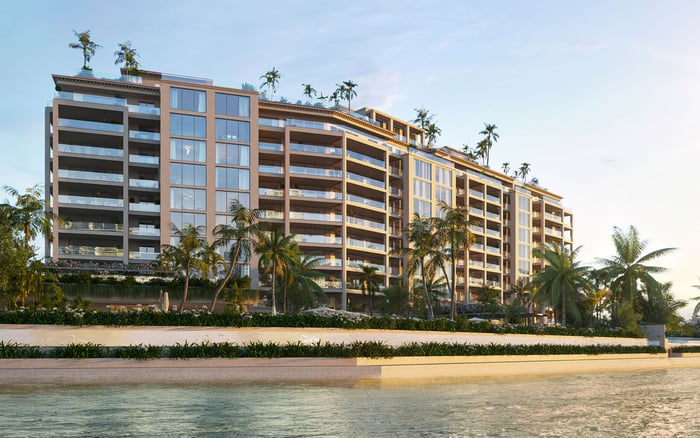
A buyer-focused editorial guide to the ownership questions that should be resolved before contract review at Palazzo del Sol on Fisher Island.

At Palazzo del Sol, the most important ownership questions arise before the contract reaches counsel. This is not simply a residence within a luxury condominium. It is ownership within Fisher Island, a private island enclave off Miami Beach where access, governance, amenities, staffing, transportation, and service delivery are all part of the value proposition.
That distinction matters. Palazzo del Sol Fisher Island belongs to the newer generation of high-service residential projects on the island, alongside Palazzo della Luna. Its appeal rests on large-format residences, elevated shared amenities, and the discreet rhythms expected by ultra-high-net-worth buyers. Yet the same qualities that make the building compelling also make diligence more layered.
Before legal review begins, a buyer should already be asking: what exactly is being acquired, what obligations follow ownership, and what controls the way the residence may be used? In this tier of the market, finishes and views are only one part of the evaluation. Privacy, governance quality, insurance, maintenance planning, and access logistics can shape the ownership experience just as much.
The first practical inquiry is the condominium regime itself. Buyers should understand the governing documents, association rules, use restrictions, reserve posture, insurance structure, and any rights or obligations that sit outside the unit deed. At Palazzo del Sol, that means looking beyond the private residence to the shared framework that supports the building’s service model.
High-service buildings carry high-service expectations. Association assessments may reflect staffing, amenities, maintenance, security, and capital obligations. That is not inherently negative. In the best buildings, the financial structure supports seamless ownership and long-term preservation. But it should be understood before price, contingencies, and closing assumptions are finalized.
A buyer should ask whether the association has adequate reserves, whether future special assessments appear foreseeable, and how capital maintenance is planned. The inquiry should be specific enough to address structural maintenance, façade and concrete plans, insurance coverage, and any required inspections or certifications. In a waterfront, storm-aware market, waterfront ownership is not only about the view. It is also about resilience, risk management, and the discipline of maintenance.
Title review should not stop with the legal description of the unit. The deeper question is whether the package being purchased includes all of the rights the buyer expects. Parking, storage, easements, association liens, use limitations, and club-related obligations may all affect the practical value of ownership.
For a buyer focused on privacy and control, these details are material. Are there restrictions embedded in governing documents that affect guests, staff, contractors, leasing, renovations, or transfers? Are any obligations tied to amenities or club participation? Are there encumbrances that a buyer would want cleared, clarified, or priced into the transaction?
These are not questions to save until the final week. They should shape the letter of intent, the contract review period, and the buyer’s walk-away rights. By the time counsel begins formal review, the commercial strategy should already reflect what the buyer needs to confirm.
Fisher Island is controlled-access by nature, which makes daily logistics part of diligence. Transportation, guest access, staff access, contractor access, and service delivery should be reviewed as ownership issues rather than lifestyle afterthoughts. The buyer is not only purchasing a private residence. The buyer is entering a managed environment with its own protocols and expectations.
That environment can be highly attractive for buyers who value discretion and separation from the mainland pace of Miami Beach. It can also require planning. Household staff, private chefs, medical providers, art handlers, designers, yacht crews, and visiting family may all need dependable access. Renovation work may require advance coordination. Deliveries may follow procedures that differ from those in a conventional urban tower.
The lifestyle promise of Fisher Island is strongest when the buyer understands the operating system behind it. A residence may be effortless once owned, but effortless ownership is built on rules, permissions, and service choreography.
Prospective buyers should examine how Fisher Island Club membership and island amenities interact with ownership of a Palazzo del Sol residence. The issue is not simply whether amenities exist. The better question is which amenities are tied to the building, which are tied to the broader island environment, and which may depend on separate arrangements or obligations.
This is why Palazzo del Sol should be evaluated within Fisher Island’s broader governance ecosystem, not only as a standalone building. A buyer comparing The Residences at Six Fisher Island or The Links Estates at Fisher Island should be asking how each ownership structure handles access, services, documents, association obligations, and island privileges.
The point is not to reduce the decision to a checklist. It is to understand the full architecture of ownership. In rarefied private-island settings, governance can be a luxury feature when it is well run. It can also become a friction point when expectations are not aligned before closing.
Many Palazzo del Sol buyers approach ownership through LLCs, trusts, family offices, or cross-border structures. Those decisions should be resolved before contract drafting, not after. The closing entity, title-holding plan, financing assumptions, and tax treatment can all influence how the contract is written.
Foreign buyers should raise U.S. tax, reporting, estate-tax, and FIRPTA-related questions early with counsel and tax advisors. Domestic buyers using trusts or entities should also confirm whether the proposed structure is compatible with title, association approvals, financing, and transfer planning.
Privacy is often a central objective in this market, but privacy must be coordinated with compliance, tax, and title requirements. The right structure can support discretion and estate planning. The wrong sequence can create delays, amendments, or closing uncertainty.
The strongest contract strategy is built from ownership questions, not boilerplate. If reserves, insurance, title, access, association rules, club-related obligations, or entity structure need further review, the contract should provide the time and rights to evaluate them. Document-review periods, contingencies, financing assumptions, closing entity language, and price negotiations should reflect the realities uncovered before signing.
At this level, the central principle is simple: luxury does not eliminate diligence. It raises the standard for it. Palazzo del Sol may offer the rare combination of scale, service, and Fisher Island privacy, but the buyer’s advantage comes from knowing exactly how that ownership works before emotion, scarcity, or timing compresses the process.
The best-prepared buyer enters contract review with a defined question set, a coordinated advisory team, and a clear view of the tradeoffs. In that posture, the contract becomes a tool for confirmation rather than discovery.
What is the first ownership question at Palazzo del Sol? Ask whether you understand the full ownership ecosystem, not just the residence, because Fisher Island access, amenities, services, and governance all affect use.
Why should diligence begin before contract review? Early diligence allows the buyer to shape contingencies, review periods, closing structure, and pricing strategy before the contract is drafted.
What condominium documents should a buyer focus on? Review the governing documents, association rules, reserves, insurance, use restrictions, assessments, and any obligations connected to shared services or amenities.
Why do reserves matter in a luxury building? Reserves help indicate how the association plans for capital maintenance and whether future special assessments may be a foreseeable concern.
What title issues can matter beyond the deed? Buyers should examine easements, parking and storage rights, association liens, club-related obligations, and restrictions embedded in governing documents.
How does Fisher Island access affect ownership? Transportation, guest access, staff access, contractor access, and service delivery are practical ownership considerations in a controlled-access environment.
Should club membership be reviewed separately? Yes. Buyers should clarify how Fisher Island Club membership and island amenities interact with ownership of a Palazzo del Sol residence.
What should foreign buyers address early? Foreign buyers should discuss U.S. tax, reporting, estate-tax, and FIRPTA-related questions with counsel and tax advisors before contract drafting.
Can an LLC or trust buy at Palazzo del Sol? Entity or trust ownership should be reviewed before drafting to confirm title, tax, financing, association, and closing requirements.
What should drive the final contract strategy? The contract should reflect answers on governance, insurance, title, access, reserves, use restrictions, closing entity, and any unresolved diligence items.
For a confidential assessment and a building-by-building shortlist, connect with MILLION.
If branded residences are on your mind — as a home or as an allocation — we would be glad to share what we are seeing, privately.
Begin a quiet conversation