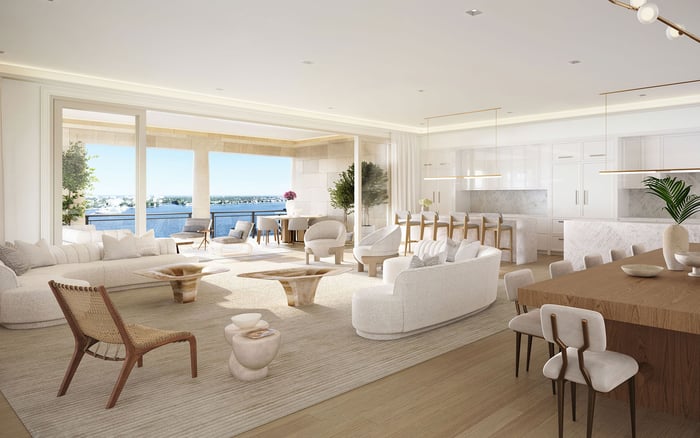
A disciplined buyer’s framework for assessing Edgeworth through privacy, service design, arrival choreography, and long-term operational quality.
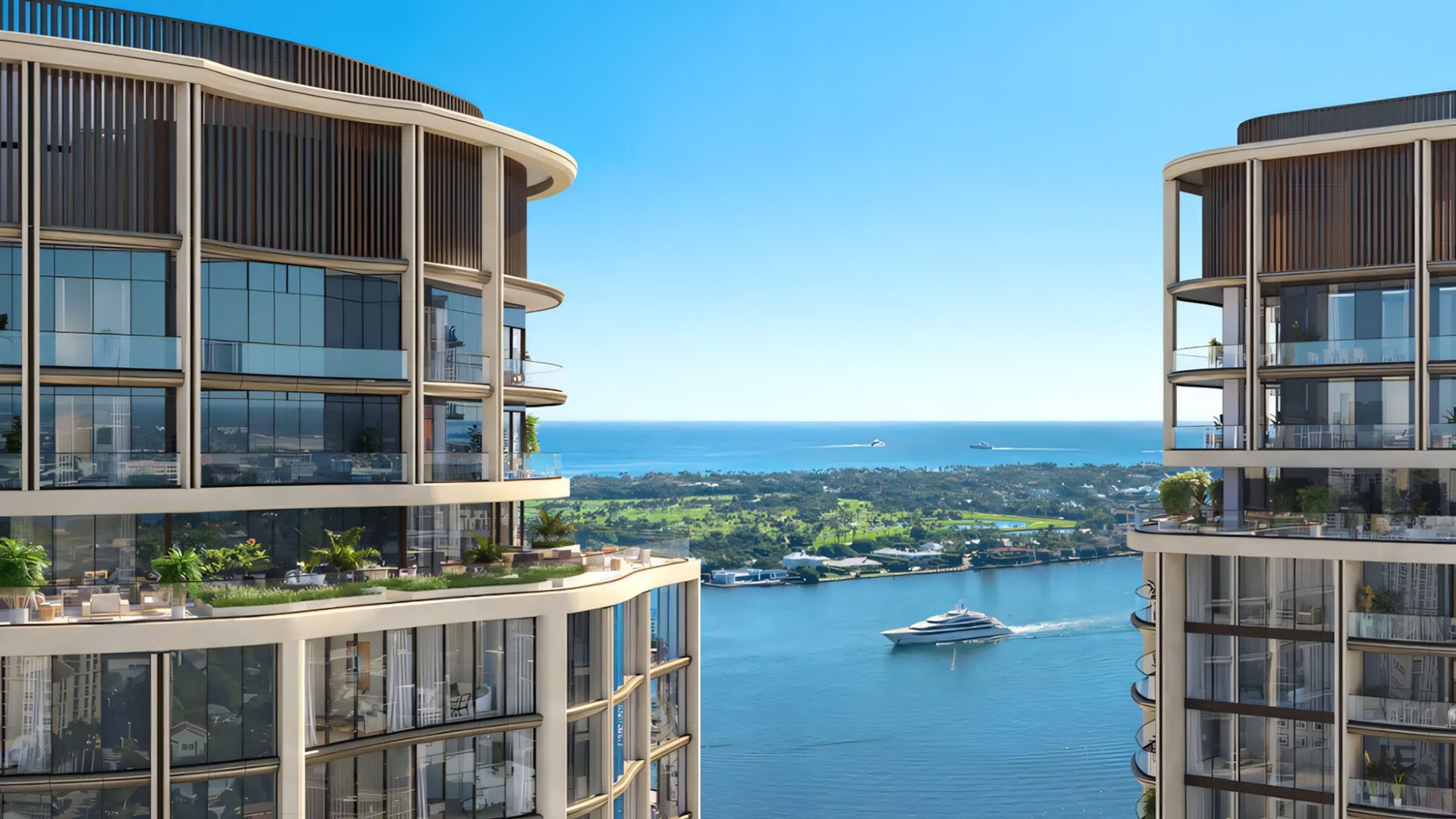
For buyers considering Edgeworth West Palm Beach, the most revealing questions center on how the property may function-from the moment a car approaches until a resident closes the front door. Privacy, service, and arrival are not abstract luxuries. They are operational systems, best assessed through circulation, staffing logic, access control, and daily usability.
Within the broader West Palm Beach market, a polished sales presentation can establish an atmosphere, but it cannot replace buyer diligence. Whether an opportunity is described as a New Project, New-construction, Waterfront, or Lifestyle offering, the essential test is the same: Does the building’s planned operation support how the buyer actually intends to live?
This perspective belongs in serious Buyer's Guides. Rather than assume exclusivity follows from materials or branding, buyers should examine the sequence of spaces and human interactions that creates discretion.
A successful arrival is not a single photogenic doorway. It is a chain of transitions that begins at the public edge and continues through vehicle reception, luggage handling, lobby access, elevator movement, and the residential threshold. Each transition should feel intuitive, without exposing residents to unnecessary waiting, visibility, or congestion.
Ask to walk through several scenarios: a resident arriving alone, a family returning with luggage, a guest visiting for dinner, and a household receiving a large delivery. Where does each person pause? Who grants access? Can vehicles queue without disrupting the entrance? Is there a protected place to wait during bad weather? The answers reveal whether the architecture and operating plan work in concert.
The garage route warrants equal attention. Buyers often focus on the formal entrance while using the private parking path far more frequently. Review the distance from parking to elevator, the number of controlled thresholds, sightlines into shared areas, and whether guest and service activity may intersect with resident circulation.
Privacy has several dimensions. Visual privacy concerns who can see a resident enter, wait, or move through the property. Acoustic privacy concerns conversations in lobbies, corridors, elevators, and vestibules. Digital and procedural privacy encompass access records, visitor authorization, package notifications, and the discretion expected of staff.
Buyers should ask who can enter each zone and under what circumstances. A secure perimeter is only the first layer. The more exacting question is whether access becomes progressively more selective from street to residence. Elevator controls, floor access, guest protocols, and delivery procedures should form a coherent system, not a collection of isolated features.
Residence entry matters as well. Examine the relationship among elevator doors, neighboring entrances, service access, and interior sightlines. A grand elevator experience may still feel exposed if the doors open directly toward active common areas or visitors can observe household routines.
Service should be evaluated as a set of responsibilities, not a mood. Ask which functions are planned, when they operate, how requests are submitted, and what happens when several residents need assistance at once. Buyers should distinguish among staff presence, hospitality gestures, security functions, property management, and household-level support.
The operating structure is as important as the service menu. Clarify which services are included in regular assessments, which may carry separate charges, and which depend on third-party providers. Ask how staffing levels may respond to occupancy patterns, seasonal demand, private events, and overnight needs. The objective is not maximal staffing, but reliable, discreet coverage aligned with residents’ expectations.
Consider service recovery as well. Delays, misplaced deliveries, guest confusion, and maintenance issues arise even in well-run buildings. A credible operation should have clear escalation paths, documented responsibility, and communication standards that preserve calm.
Circulation is where privacy and service converge. Request plans or explanations showing how residents, guests, vendors, deliveries, household employees, and building staff move through the property. Complete separation is not always necessary, but poorly managed intersections can compromise discretion and create bottlenecks.
Package handling is especially revealing. Ask where items are received, screened, stored, refrigerated if needed, and transferred to residents. For larger objects, understand loading access, elevator dimensions, permitted hours, and coordination procedures. Apply the same diligence to catering teams, florists, personal trainers, pet care, and household contractors.
A buyer who entertains should assess guest arrival differently from one seeking near-total seclusion. Determine whether visitors can be pre-authorized, how they are greeted, where they wait, and whether staff can direct them without broadcasting the resident’s movements.
The most useful comparison is not an amenity checklist, but a study of operating philosophies. Buyers can place Edgeworth alongside Banyan Tree Residences West Palm Beach when considering how identity and residential service are expressed. Mandarin Oriental Residences, West Palm Beach provides another relevant point of inquiry for buyers weighing expectations around hospitality-informed living.
Scale and atmosphere also merit consideration. A buyer may study Nora House West Palm Beach to sharpen questions about intimacy and shared-space behavior, then review South Flagler House West Palm Beach to test how another residential proposition frames arrival and daily life. These comparisons should not produce a universal winner. They should clarify which model best suits the buyer’s household, schedule, and tolerance for formality.
Before making a commitment, request precise explanations of access, staffing, circulation, deliveries, guest handling, parking, and operating costs. Revisit those answers as documents become available, and confirm that important representations appear in the materials governing the purchase and future operation.
A thoughtful buyer should also test the experience at different times, if access permits. Morning departures, evening guest arrivals, and high-volume delivery periods can impose different demands on the same spaces. The central question is simple: Will the property remain composed when daily life becomes complicated?
What should buyers examine first at Edgeworth? Begin with the complete route from street arrival to the residential door, noting every pause, handoff, access point, and shared space.
Why does the garage arrival matter so much? It may become the resident’s most frequently used entrance, making its security, convenience, and sightlines central to the daily experience.
How can a buyer evaluate privacy before completion? Review plans, access descriptions, circulation diagrams, and operating procedures, then ask how common real-life scenarios would be handled.
What is the difference between security and privacy? Security controls access and risk; privacy also encompasses visibility, noise, information handling, and discretion.
Which service questions are most important? Ask who performs each function, the expected hours, the request process, applicable charges, and the escalation path when service falls short.
Should buyers focus on the amenity count? No. The quality of access, maintenance, staffing, and scheduling may matter more than the number of spaces offered.
How should guest arrivals be tested? Follow authorization, greeting, waiting, wayfinding, elevator access, and departure as one continuous experience.
What delivery details deserve review? Examine receiving, screening, storage, refrigeration, notification, large-item handling, permitted hours, and final transfer to the residence.
How should buyers compare Edgeworth with other projects? Compare operating models, privacy thresholds, staffing logic, circulation, ownership costs, and fit with the household’s routines.
What should be confirmed before signing? Confirm material expectations through the applicable purchase, disclosure, association, budget, and operating documents with qualified advisers.
If you'd like a private walkthrough and a curated shortlist, connect with MILLION.
If branded residences are on your mind — as a home or as an allocation — we would be glad to share what we are seeing, privately.
Begin a quiet conversation