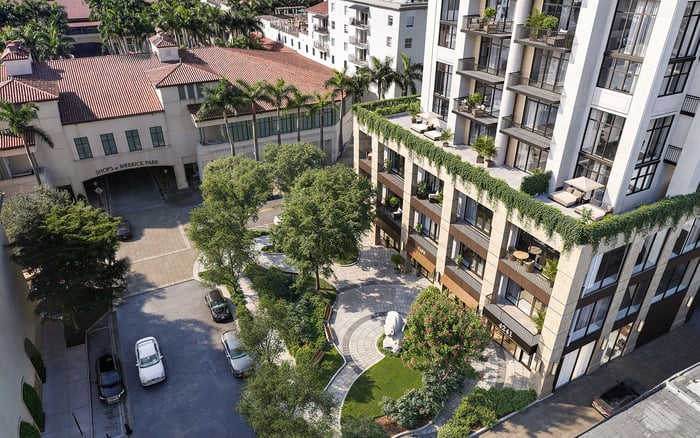
A buyer-focused examination of how Cora Merrick Park handles the transition from an active Coral Gables district to the private residential experience.
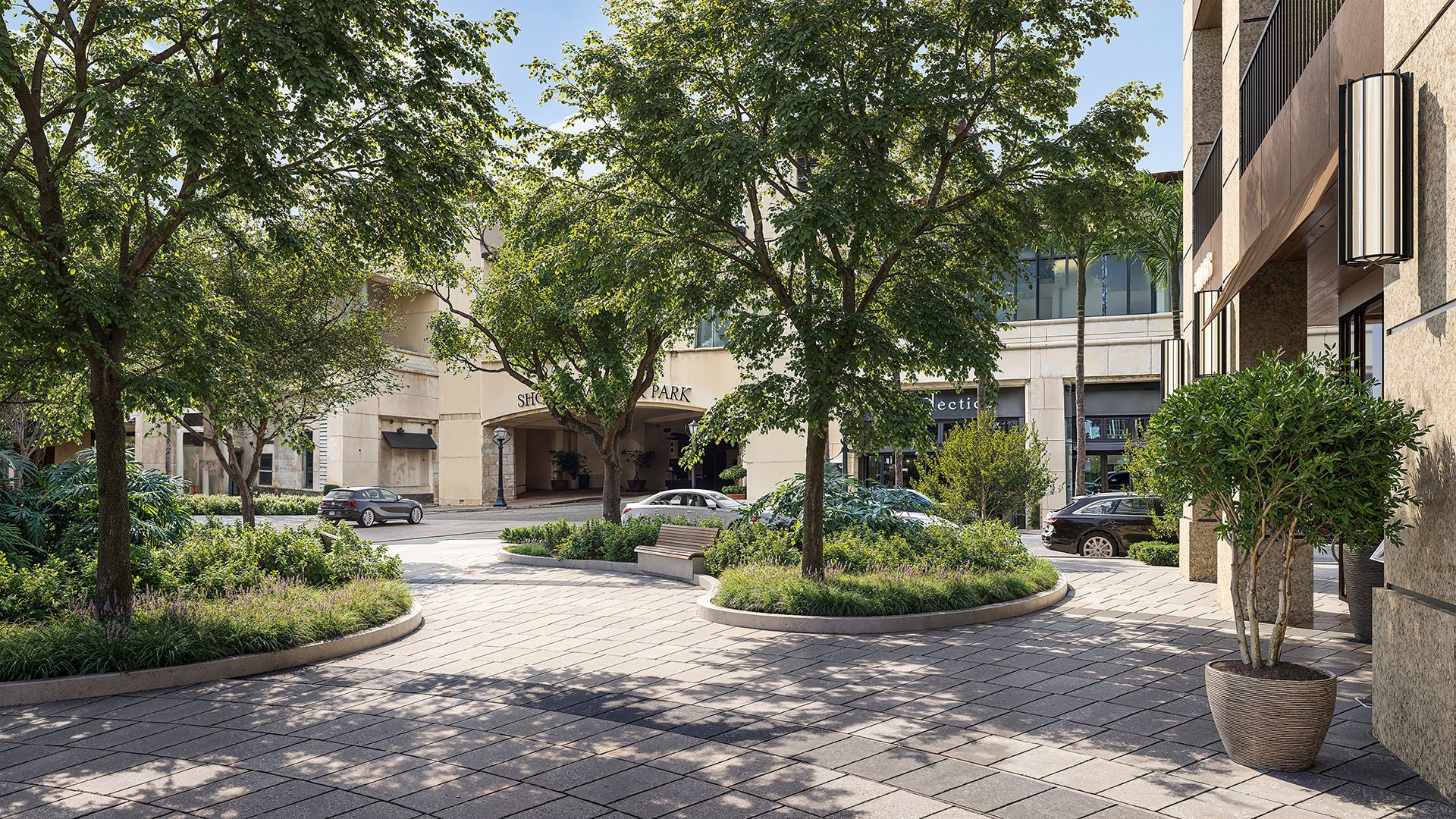
At Cora Merrick Park, buyers should examine how the transition from the surrounding Coral Gables district to the residential experience works in practice. The essential question is how effectively the property creates a sense of privacy throughout that transition.
Privacy should be evaluated as a sequence. Begin at the public street or garage entrance, continue through the lobby and elevator, and end at the residence. At each point, observe who can see a resident, who can follow the same route, and where guests, delivery personnel, and service staff are redirected.
Polished presentation materials are only the beginning. A complete review should consider operations alongside design and architecture because discretion depends on both.
A formal entrance should perform on an ordinary day, not merely photograph well. Arrive by private car and rideshare. Look for conflicts among vehicles, pedestrians, bicycles, and service traffic. Note whether the approach is legible without making residents conspicuous and whether the entry geometry creates a measured transition from public space to private address.
Weather protection and luggage handling matter in South Florida. Observe where a car pauses, how bags can be transferred without blocking traffic, and how directly a resident can reach the lobby. The practical test is whether the arrival remains composed when the surrounding district is busiest.
The garage may deliver a materially different experience from the formal entrance. Drive the complete route rather than assessing a parking space in isolation. Evaluate access control, lighting, wayfinding, pedestrian crossings, elevator proximity, and the time spent visible in shared areas.
Determine whether residents, visitors, deliveries, and service vehicles converge at any point. A polished lobby cannot compensate for a garage journey that feels confusing or overly exposed. This daily entrance deserves equal weight because it may become the route an owner uses most.
Inside, examine how resident authentication and visitor screening work in practice. Consider where guests wait, how long residents remain exposed near doors or elevator banks, and whether access to residential floors appears appropriately controlled.
The objective is calm separation without needless friction. Notice whether staff can see the entrance, visitors receive clear direction, and elevator movement limits casual access to residential floors. Seamlessness has value only when it remains disciplined.
Judge service by consistency, staffing coverage, package handling, guest management, and responsiveness rather than broad promises. Ask management to explain what happens when a guest arrives before the resident, a package requires attention, or a maintenance professional needs access.
Circulation is equally revealing. Deliveries, move-ins, maintenance visits, and waste removal should follow routes that minimize contact with principal resident spaces. Request a walkthrough of those paths, and ask where packages wait, how large deliveries are scheduled, and which elevators support service activity. Confirm exact staffing, procedures, access technology, and operating hours in writing through governing documents, budgets, management interviews, and service policies.
A single quiet appointment cannot establish privacy. Visit during a busy period, in the evening, and on a weekend. Observe traffic queues, curb behavior, lobby staffing, elevator waits, acoustics, and access control. Listen near the entrance and throughout the route to the residence, not only inside a model home.
Repeat the exercise using different modes of arrival. Walk from the surrounding area, use a rideshare, and enter through the garage. The comparison will reveal whether the property offers one coherent residential experience or several routes of uneven quality.
The same framework can sharpen comparisons elsewhere in South Florida. Buyers considering Ponce Park Coral Gables or The Village at Coral Gables can repeat the curb-to-residence test rather than compare presentation materials alone. A broader Miami-Dade search could apply it to Ziggurat Coconut Grove as well.
The arrival sequence is a concise test of broader design quality. It shows how architecture, security, circulation, and service operations work together. For Cora Merrick Park, the decisive issue is whether proximity and privacy feel complementary in practice.
Before committing, document every route with the same rigor applied to the residence itself. Verify operating claims, revisit at demanding hours, and distinguish an elegant first impression from a dependable daily system. In an active district, discretion is created through carefully managed transitions.
What is the central privacy question at Cora Merrick Park? Buyers should assess how effectively the property separates residents from guests, delivery personnel, service staff, and surrounding activity.
Where should a privacy review begin? Begin at the public street or garage entrance, then follow the complete route to the residence.
Why should the street and garage arrivals be tested separately? They may create materially different experiences in visibility, access control, convenience, and circulation.
What should buyers observe at the curb? Review traffic conflicts, weather protection, luggage handling, pedestrian movement, and access to the lobby.
Which lobby controls deserve attention? Examine resident authentication, visitor screening, guest waiting areas, and access to residential floors.
How should service quality be evaluated? Focus on consistency, staffing coverage, package handling, guest management, and responsiveness.
Why do service routes matter? They help buyers assess whether deliveries, move-ins, maintenance, and waste removal intrude on principal resident spaces.
When should prospective buyers visit? Visit during busy periods, evenings, and weekends to observe traffic, staffing, noise, and access control under different conditions.
Which operational details require written confirmation? Confirm staffing, procedures, operating hours, service routes, and access policies through the appropriate property documents and management.
What does a successful arrival sequence reveal? It indicates that architecture, security, circulation, and service can function as a coherent daily experience.
To compare the best-fit options with clarity, connect with MILLION.
If branded residences are on your mind — as a home or as an allocation — we would be glad to share what we are seeing, privately.
Begin a quiet conversation