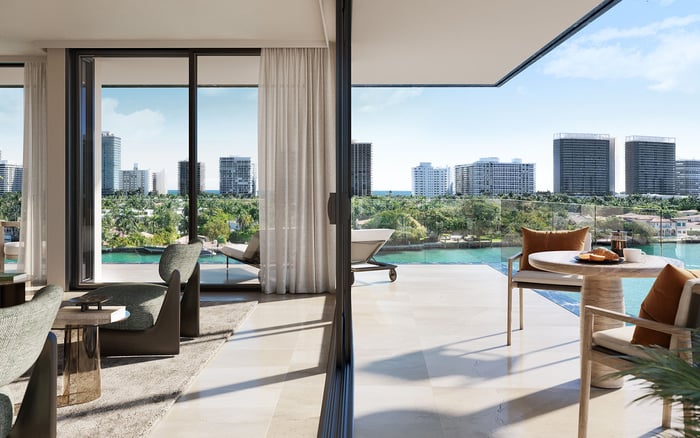
For yacht owners, a Bay Harbor Islands condo search extends beyond views and finishes. Dockage rights, vessel compatibility, navigational constraints, marina operations, and building rules can all shape whether a residence truly supports life on the water.

Yacht ownership changes the hierarchy of a luxury condominium search. A buyer without a vessel may begin with architecture, exposure, floor plan, amenities, and interior finishes. An owner who expects the residence to support regular boating should begin with a more exacting question: Can the property, its dockage structure, and the surrounding waterway accommodate the yacht and the way it is actually used?
That distinction is central to a Bay Harbor search. A broad waterfront label or polished marina photograph may establish atmosphere, but neither confirms operational fit. A useful search brief begins with the vessel’s length, beam, draft, height, shore-power needs, tender arrangements, and expected departure frequency. It should also account for captain or crew access and whether the loading provisions suit the owner’s routine.
The result is a different kind of luxury brief. The residence and yacht are not parallel purchases; they form one connected lifestyle system.
A waterfront address does not, by itself, establish the right to keep a vessel. Buyers should distinguish among a deeded interest, an assigned space, a revocable license, a lease, and access subject to availability. Each structure may affect control, cost, transferability, and resale differently.
The essential documents should identify who controls the space, whether it transfers with the residence, which vessel limits apply, and whether the association can reassign or regulate its use. The search should also clarify recurring fees, utilities, insurance obligations, guest access, maintenance responsibilities, and rules governing captains, contractors, provisioning, and overnight activity.
A boat slip should never be treated as a decorative amenity. It is a functional asset whose legal status and practical usability deserve the same scrutiny as title, parking, storage, or a private elevator.
A berth can appear suitable even when the route beyond it creates constraints. The yacht’s dimensions should be evaluated against the entire journey, including bridge clearance, water depth, channel conditions, turning room, and the geometry of approaching and leaving the dock. Conditions can vary, so a single observation should not substitute for a vessel-specific review.
Maneuverability matters at both ends of the trip. Buyers should consider whether the yacht can turn comfortably, whether neighboring vessels affect access, and whether wind or current could make routine docking more demanding. Even the most elegant residence may be an imperfect match if departures require unusual coordination or the owner’s preferred vessel cannot navigate the route with an appropriate margin.
A prudent buyer can ask the captain, a marine professional, the association, and relevant authorities to examine the same route independently. That process turns an attractive possibility into an operationally tested decision.
The local search should remain broad at first, narrowing only after the dockage and navigation questions have been answered. A buyer might review Onda Bay Harbor as one residential option while separately confirming every marine requirement through current project and governing materials. The same discipline applies to La Maré Bay Harbor Islands: The relevant question is not simply whether the setting feels nautical, but whether the ownership structure fits a specific vessel and usage pattern.
Other candidates, such as Origin Bay Harbor Islands and Bay Harbor Towers, warrant the same two-part analysis. First, assess the home using conventional luxury criteria. Then conduct a separate marine review covering rights, dimensions, route, services, policies, and costs. Keeping those reviews distinct reduces the risk that a compelling residence obscures an unsuitable boating arrangement.
The best yachting residence makes transitions feel effortless, but that ease depends on details. Buyers should walk the route from residence to dock, considering security checkpoints, elevator access, loading areas, storage, deliveries, and the movement of luggage, provisions, water toys, and equipment. Privacy may also depend on how crew and service personnel enter the property.
Building policies deserve close attention. Rules may address work hours, contractor access, fueling, maintenance activity, noise, guest vessels, commercial use, and equipment handling. Buyers should confirm current provisions directly rather than assume past practices will continue.
Service access is equally important. The practical question is whether cleaning, repairs, inspections, and provisioning can be managed without disrupting the residence or creating repeated logistical friction. For an owner who travels frequently, management and emergency protocols may matter as much as the dock itself.
A yacht-oriented condo comparison should extend beyond the purchase price and association dues. The relevant budget may include dock-related charges, utilities, insurance, maintenance allocations, access controls, and off-site services when the building cannot support a particular need. Buyers should identify which expenses are fixed, which vary by vessel, and which can change through association decisions.
Resale deserves equal care. A specialized marine arrangement may be highly valuable to the right purchaser, yet its appeal depends on clear documentation and practical usability. Rights that are transferable and easy to explain may be simpler to present than informal access or arrangements subject to reassignment. This is not merely a lifestyle preference; it is part of the property’s future positioning.
The most effective buyer’s guides therefore treat the yacht, dock, building, and residence as a single acquisition framework. Luxury lies not only in the quality of each component, but in the absence of friction between them.
Marine compatibility sits at the intersection of real estate, association governance, navigation, insurance, and vessel operations. A buyer may need coordinated input from real-estate counsel, a marine professional, an insurance adviser, the yacht’s captain, and the building’s management team. Each participant addresses a distinct risk.
Questions should be asked in writing, and important answers reconciled with governing documents and current conditions. The aim is not to complicate the purchase, but to protect the ease and spontaneity yacht ownership is meant to provide.
Should a yacht owner choose the condo or the dock first? Define the vessel requirements first, then evaluate the residence and dockage together.
Does a waterfront condo automatically include dockage? No assumption should be made. Confirm the legal right, assignment method, availability, and transfer terms.
Which yacht dimensions matter during the search? Length, beam, draft, and height are central, along with power and service requirements.
Why does bridge clearance matter? A bridge can limit whether a vessel can complete the intended route, regardless of berth size.
What should buyers confirm about channel depth? They should test the yacht’s draft against the route and seek vessel-specific professional guidance.
Why is turning radius important? Adequate maneuvering room can determine whether docking is practical under routine conditions.
Can a dock assignment transfer with the condo? Transfer depends on the governing arrangement, so buyers should verify it in current documents.
Which building rules deserve special attention? Review policies governing crew, contractors, maintenance, provisioning, guests, noise, and dock use.
Should yacht operating costs affect the condo comparison? Yes. Include dock charges, utilities, insurance obligations, services, and possible off-site support.
Who should review marine suitability before closing? Relevant counsel, marine specialists, insurance advisers, management, and the yacht’s captain can each contribute.
For a discreet conversation and a curated building-by-building shortlist, connect with MILLION.
If branded residences are on your mind — as a home or as an allocation — we would be glad to share what we are seeing, privately.
Begin a quiet conversation