A buyer-focused guide to evaluating private dining rooms as a meaningful luxury amenity across Miami, Fort Lauderdale, and Palm Beach, with attention to privacy, service, atmosphere, and long-term lifestyle fit.
Private dining rooms have become one of the more revealing amenities in South Florida luxury real estate. Not because every owner plans to host formal dinners, but because the room quietly answers a larger question: how does this building understand privacy, service, and occasion?
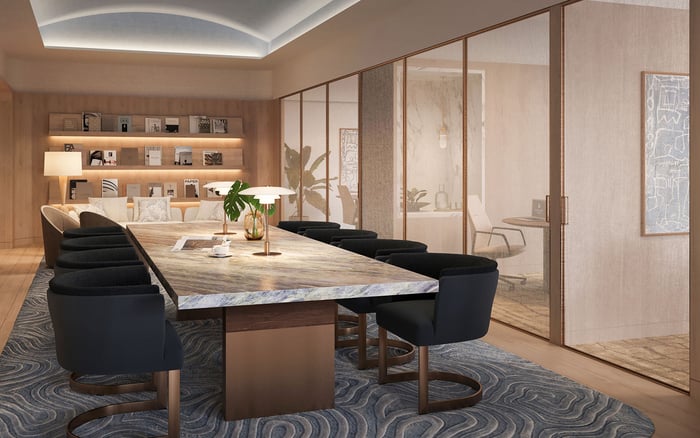
Across Miami, Fort Lauderdale, and Palm Beach, buyers should look beyond the polished table setting and consider how the room actually functions. Is it a graceful extension of the home, a club-like setting for milestone dinners, or a flexible salon for tastings, board meetings, family celebrations, and visiting guests? The best private dining rooms are not merely photogenic. They feel calm, controlled, and easy to use.
At the broadest level, Brickell, Miami Beach, Fort Lauderdale, Palm Beach, West Palm Beach, and new-construction searches reveal how differently buyers define hospitality. A room that feels ideal for a high-energy Miami evening may not satisfy a Palm Beach owner seeking quiet formality. A Fort Lauderdale buyer may care less about visual drama and more about whether guests can arrive comfortably after a day on the water.
In Miami, private dining often belongs to a broader culture of entertaining. Buyers are not only evaluating a room for dinner. They are evaluating the entire sequence: arrival, aperitif, table, lounge, terrace, and departure. A successful room supports that arc without making residents feel as though they are hosting in a public venue.
The questions should be practical. Can guests reach the room without crossing overly exposed amenity areas? Is there enough separation from louder lounges or pool decks? Does the room have a distinct visual identity without competing with the skyline or water views that often define Miami living?
Miami buyers should also consider flexibility. A private dining room may need to accommodate a chef-led dinner one evening and a small family birthday the next. Lighting should be adjustable, seating should feel generous rather than ceremonial, and the room should provide enough acoustic softness for conversation. In the most successful versions, glamour is present but disciplined.
Fort Lauderdale buyers often evaluate private dining through the lens of relaxed sophistication. The city’s luxury rhythm can be highly social, but it is frequently anchored by boating, waterfront living, and longer-form entertaining. A private dining room should therefore feel easy to access and effortless to operate.
Service logic matters. Where does food staging happen? Is there a discreet route for staff? Can residents host without turning the evening into a logistical project? These questions may sound unromantic, yet they determine whether the amenity becomes part of daily life or remains a brochure image.
For owners who entertain visiting family, yacht guests, or business contacts, the best room is one that can shift tone without feeling generic. It should be polished enough for a formal dinner, relaxed enough for a post-cruise meal, and private enough for conversation to unfold without distraction. Fort Lauderdale buyers should also pay attention to valet movement, lobby pacing, and how guests transition from arrival to table.
In Palm Beach, private dining is often less about display and more about confidence. The room should not try too hard. Proportion, material quality, service discretion, and quiet acoustics carry more weight than theatrical styling. A buyer who entertains in Palm Beach is often seeking the feeling of a private club or well-run residence, not a restaurant simulation.
West Palm Beach can invite a slightly different calculus. Buyers may want the ease of a more connected urban setting while preserving the privacy associated with established Palm Beach expectations. A private dining room in this context should offer both convenience and composure: easy to reserve, dignified in atmosphere, and insulated from amenity traffic.
The most important distinction is tone. Palm Beach entertaining tends to reward restraint. A private dining room should support beautiful flowers, careful service, and a relaxed sense of order. If the design is too loud, too bright, or too dependent on novelty, it may age quickly for this audience.
A private dining room can add meaningful lifestyle value, but only when it is designed and managed well. Buyers should begin with privacy. If the room is visible from a busy corridor or shares sound with an active lounge, its usefulness may be limited. True privacy is architectural, not just procedural.
Next, consider acoustics. Marble, glass, and high ceilings can be beautiful, but conversation is the luxury that matters at dinner. Soft finishes, thoughtful spacing, and controlled music levels can make the difference between an elegant evening and a tiring one.
Reservation policy is equally important. A spectacular room with difficult access may have less practical value than a simpler room residents can use consistently. Buyers should ask how bookings are handled, whether food and beverage support is available, what outside chef policies apply, and whether cleanup is included.
Finally, evaluate emotional fit. If the room feels too formal for your style, you may rarely use it. If it feels too casual for your guests, it may not serve its purpose. The right room should make hosting feel more natural, not more complicated.
Private dining rooms appeal because they suggest a building understands the rituals of ownership. For resale, that can be powerful, particularly among buyers who value service, entertaining, and the ability to host beyond the walls of the residence.
Still, the amenity should not be considered in isolation. It is strongest when paired with a coherent overall lifestyle: gracious arrival, attentive staffing, elegant common spaces, strong security, and a resident culture that respects privacy. A private dining room in an otherwise poorly managed building will not carry the same weight as one within a refined, well-orchestrated environment.
The most durable rooms avoid trend dependency. They rely on proportion, comfort, lighting, and service access rather than novelty finishes. Buyers should imagine the room five or ten years from now. If it still feels calm, useful, and appropriate, it is more likely to support both personal enjoyment and future market appeal.
What is the main purpose of a private dining room in a luxury residence? It gives residents a controlled setting for hosting beyond the home, with more privacy and polish than a typical amenity lounge.
Is a private dining room more important in Miami or Palm Beach? It depends on the buyer. Miami often emphasizes social energy, while Palm Beach tends to reward discretion and quieter formality.
What should Fort Lauderdale buyers prioritize? They should focus on flow, service access, arrival comfort, and whether the room suits waterfront or post-boating entertaining.
Does a beautiful dining room always add value? Not necessarily. Value depends on usability, reservation access, acoustics, privacy, and the quality of building management.
Should buyers ask about reservation policies? Yes. Booking rules, guest limits, food policies, fees, and cleanup procedures can determine how often the room is actually used.
Are acoustics really that important? Yes. A dining room that photographs well but makes conversation difficult will rarely feel luxurious in practice.
What design style ages best? Restrained, well-proportioned rooms with quality materials, adaptable lighting, and comfortable seating tend to age more gracefully.
Can private dining replace entertaining at home? It can supplement it, especially for larger dinners, chef-led events, or occasions when residents want service without using their own kitchen.
How should seasonal owners think about this amenity? Seasonal owners should value ease. The room should allow them to host beautifully without managing every operational detail themselves.
What is the best way to shortlist comparable options for touring? Start with location fit, delivery status, and daily lifestyle priorities, then compare stacks and elevations to validate views and privacy.
If you'd like a private walkthrough and a curated shortlist, connect with MILLION.
If branded residences are on your mind — as a home or as an allocation — we would be glad to share what we are seeing, privately.
Begin a quiet conversation