A discreet guide for ultra-prime buyers evaluating Coconut Grove penthouses beyond the first visual impression, with emphasis on privacy, planning, terraces, services, and long-term ownership quality.
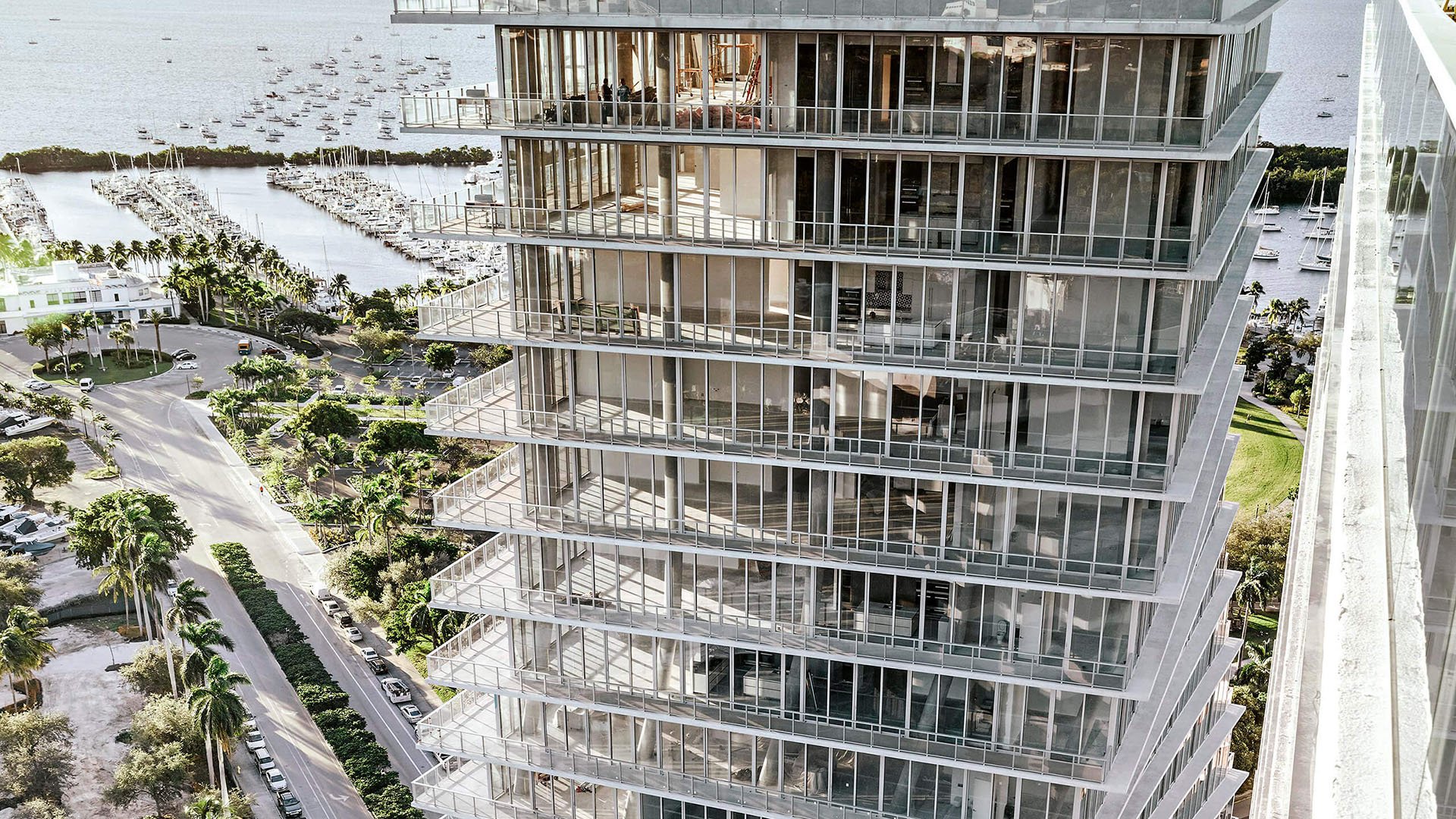
A trophy penthouse in Coconut Grove can disarm even the most disciplined buyer. The bay, the canopy, the low horizon, and the feeling of being above Miami without being consumed by it create a rare emotional pull. That emotion matters. It is part of the asset. But it is not the whole asset.
The strongest penthouse decisions begin after the first moment of admiration. A serious buyer should ask how the residence performs when the doors close, when the sun shifts, when guests arrive, when service staff move through the home, and when resale scrutiny eventually replaces romance. A view can introduce the residence. It cannot compensate for weak planning, compromised privacy, shallow terrace depth, or an ordinary arrival sequence.
In Coconut Grove, the evaluation is especially nuanced. The neighborhood’s appeal rests on contrast: lush, established, quiet, and close to the water, yet still connected to the city. The best penthouses preserve that balance rather than overwhelming it.
Privacy is the first test of any true trophy residence. At the penthouse level, privacy is not simply a matter of height. It depends on sightlines from adjacent towers, neighboring terraces, rooftop amenity decks, service areas, and even the approach from elevator to front door.
A buyer should stand in every principal room and look out, then look back in from the terrace where possible. If the living room is fully exposed to nearby residences, the view may become less usable over time. If the primary suite requires constant window coverings, the glass becomes decoration rather than lifestyle.
Coconut Grove rewards subtler forms of privacy. Tree canopy, setbacks, and building orientation can create a more intimate feeling than elevation alone. In this market, discretion is often more valuable than drama.
A penthouse should not feel like a larger apartment. It should feel like a private home in the sky. That distinction is made through circulation, proportion, storage, service access, and the separation of public and private zones.
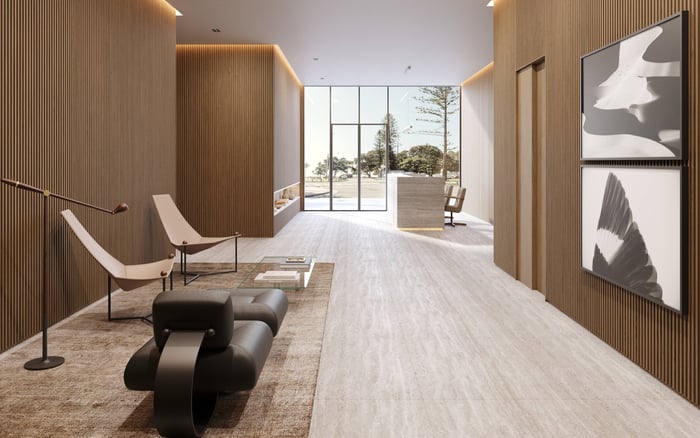
Begin with the arrival. Does the elevator open into a gracious, controlled threshold, or does the home reveal itself too quickly? Is there a place for art, a pause, a sense of ceremony? Then study the path from entry to living areas, from kitchen to dining, from bedrooms to terraces, and from service areas to back-of-house spaces.
A true trophy plan allows different modes of living at once. One person can entertain while another retreats. Staff can prepare without crossing the main social axis. Guests can move naturally without being directed through private corridors. The floor plan should make elegance feel effortless.
The word terrace is used freely in luxury listings, but not every outdoor space deserves equal weight. A penthouse terrace should be deep enough to furnish properly, sheltered enough to use often, and connected to the rooms where outdoor living actually makes sense.
Ask whether the terrace supports dining, lounging, planting, and circulation without becoming crowded. Consider wind, shade, drainage, privacy glass, and furniture placement. A narrow balcony with an extraordinary view may photograph beautifully, but a livable terrace changes the daily rhythm of the residence.
The best Coconut Grove penthouses understand outdoor space as a continuation of the home. The experience should move from kitchen to dining to terrace without friction, and from primary suite to morning light without spectacle.
No penthouse can fully separate itself from the building beneath it. Services, staffing, maintenance culture, elevator performance, valet choreography, and resident density all shape ownership quality. A trophy buyer should evaluate the residence and the vertical community together.
This is where comparing Grove properties can be useful. Buyers studying Four Seasons Residences Coconut Grove may frame service expectations differently than those drawn to the architectural character of Park Grove Coconut Grove. The point is not to crown a single model. It is to understand how each building’s character supports, or limits, the penthouse experience.
Pay attention to the quiet details. How does the lobby feel at peak hours? Is the parking experience calm? Are amenity spaces proportionate to the number of residences? Does the staff culture feel polished without becoming theatrical? Trophy ownership is often defined by what never becomes inconvenient.
The first showing often happens at the most flattering hour. A serious evaluation requires more imagination. Morning light, afternoon heat, western exposure, reflections, glare, and evening privacy all matter.
In Coconut Grove, light interacts with canopy and water in unusually specific ways. A bay-facing room may glow beautifully, while another exposure may require shading for long portions of the day. High glass walls can be magnificent, but only if the home remains comfortable and livable.
Walk the rooms slowly. Look at where art would hang, where screens would sit, where dining would happen, and where the sun will be when the home is actually used. A trophy penthouse should be luminous without forcing daily compromise.
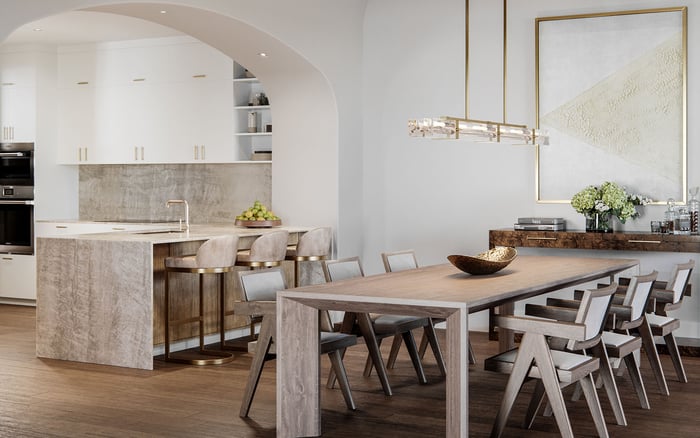
Luxury kitchens can seduce through stone, appliances, and cabinetry, but penthouse kitchens must be judged operationally. Can the kitchen support formal entertaining and quiet family living? Is there adequate pantry space? Does the layout allow catering or staff support without disrupting guests?
The best kitchens are both beautiful and discreet when required. They can anchor a family breakfast, then recede during a dinner party. If the kitchen is too exposed, too small, or too disconnected from service areas, its finishes will not solve the problem.
The same logic applies to wet bars, outdoor kitchens, secondary prep spaces, and wine storage. In a true trophy residence, hospitality is designed, not improvised.
Coconut Grove offers several versions of luxury, and buyers should be honest about which one suits them. Some prefer branded service and a more formal ownership environment. Others want wellness, boutique scale, or a quieter architectural identity.
A buyer drawn to a more wellness-oriented conversation may naturally study The Well Coconut Grove, while someone focused on a smaller residential expression might compare Arbor Coconut Grove. These comparisons help clarify priorities before the view takes over.
The question is not only, “Which penthouse is most impressive?” It is, “Which penthouse allows me to live exactly as I intend?” That difference is central in the Grove, where lifestyle is often quieter, more personal, and less performative than in other waterfront markets.
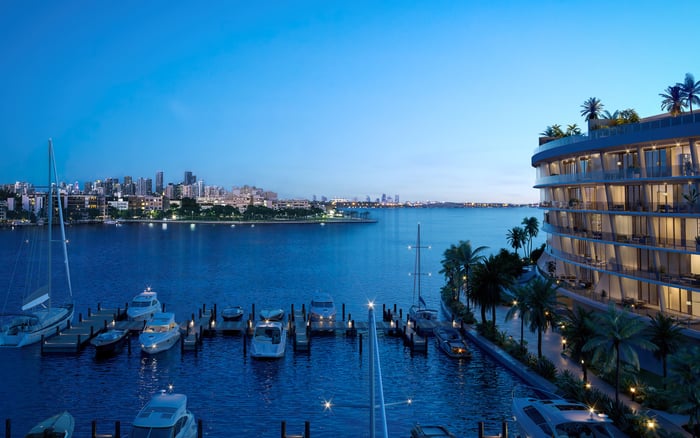
Waterfront appeal is powerful, but buyers should separate direct water exposure from broader water orientation. In the Grove, some of the most compelling residences draw value from layered views: bay, marina, canopy, skyline, and sky. A pure water view is not automatically superior if the plan, privacy, or building experience is weaker.
A trophy buyer should ask whether the view has permanence, whether surrounding development could alter the visual field, and whether the main rooms are oriented toward the strongest outlook. The view should be integrated into the architecture, not treated as a poster behind glass.
The most enduring penthouses are not the ones that shout the loudest. They are the ones whose view, plan, materials, and services feel inevitable together.
Ultra-prime buyers often pay for scarcity, but scarcity must be real. True scarcity may come from a singular floor plate, exceptional outdoor space, superior privacy, unusually graceful proportions, or a building culture that cannot be easily replicated.
Theatrical features deserve more caution. Double-height volume, dramatic stairs, show kitchens, oversized glass, and decorative finishes can be valuable, but only when they improve how the residence lives. If a feature is difficult to maintain, hard to furnish, or more compelling in photographs than in use, it should not carry trophy pricing on its own.
The disciplined buyer asks one final question: if the view were slightly less breathtaking, would this still be an exceptional home? If the answer is no, the residence may be a beautiful lookout rather than a true penthouse.
What is the first thing to judge in a Coconut Grove penthouse? Start with privacy and plan quality. The view matters, but it should not distract from how the home functions every day.
Is the highest floor always the best choice? Not always. Orientation, terrace usability, privacy, and building experience can matter as much as elevation.
How important is terrace depth? Very important. A terrace should live like an outdoor room, not simply provide a place to stand for the view.
Should buyers prioritize bay views? Bay views are highly desirable, but the strongest homes combine outlook with proportion, comfort, and discretion.
What makes a penthouse feel like a private home? A private arrival, clear circulation, separated bedroom areas, service access, and generous storage all contribute.
How should buyers assess building services? Observe the lobby, valet, staff presence, elevator flow, and amenity scale during realistic daily conditions.
Can a dramatic view hide design problems? Yes. Awkward room shapes, glare, poor storage, and weak service planning can remain after the initial emotion fades.
Is Coconut Grove different from other Miami luxury markets? Yes. Its appeal is quieter and more residential, with value often tied to canopy, privacy, and neighborhood character.
What should be reviewed before making an offer? Review the floor plan, terrace usability, exposure, privacy, building operations, maintenance expectations, and resale logic.
When is a penthouse truly trophy grade? It is trophy grade when the view, architecture, privacy, services, and daily livability all support one another.
To compare the best-fit options with clarity, connect with MILLION.
If branded residences are on your mind — as a home or as an allocation — we would be glad to share what we are seeing, privately.
Begin a quiet conversation