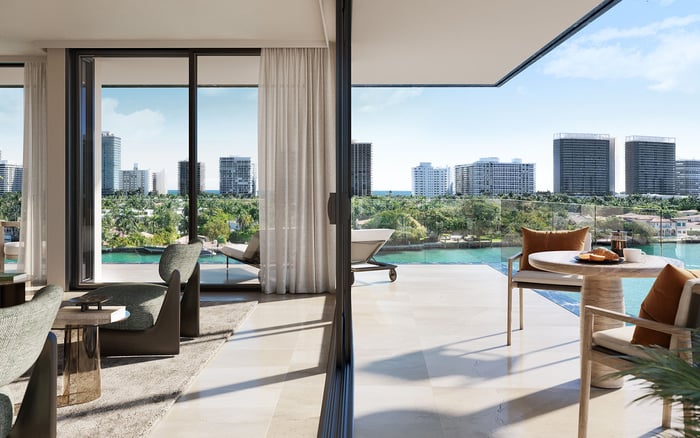
A disciplined framework for weighing wind coverage, flood designation, deductibles, building finances, and future marketability when purchasing an Edgewater condominium.

An Edgewater purchase is often framed by architecture, bay views, private amenities, and proximity to Miami’s cultural core. A more durable analysis also considers how the residence and its condominium association manage wind exposure, flood considerations, deductibles, and financial responsibility after a loss.
These questions are not a final administrative hurdle. They influence annual carrying costs, liquidity needs, financing conversations, and the confidence of a future buyer. Waterfront appeal may command attention, but disciplined documentation helps preserve optionality.
The objective is not to eliminate every uncertainty. It is to understand which risks belong to the association, which belong to the owner, how the two policies interact, and whether the building’s financial structure can absorb stress without compromising the ownership experience.
Request the association’s current insurance declarations, coverage summaries, deductible schedule, and any available explanations of insured property. Then compare those documents with a proposed owner’s policy for the specific residence.
The essential exercise is defining the boundaries. Determine which interior components, finishes, improvements, personal property, temporary living expenses, and liability exposures would fall to the owner. In a customized residence, the cost of replacing interiors may differ materially from a generic allowance, so coverage should reflect the actual specification rather than a convenient estimate.
When evaluating Aria Reserve Miami or another Edgewater opportunity, obtain answers in writing and have qualified insurance and legal advisers reconcile any ambiguity. A polished summary is useful, but policy language and condominium documents warrant direct review.
Consider a deductible in dollars, not merely as a percentage or label. Ask the insurance adviser to illustrate the building-level amount, the unit-level amount, and the circumstances under which each could apply. Then model the owner’s potential obligation if the association allocates an uninsured expense or deductible through an assessment.
This is where balance-sheet strength matters. Review cash reserves, applicable assessments, pending claims, recent insurance renewals, and the board’s approach to funding large obligations. The aim is to determine whether the building appears prepared to withstand a difficult event without relying on an unexpectedly large owner contribution.
For EDITION Edgewater, as with any candidate, compare the projected premium and deductible structure with the total annual cost of ownership. A lower premium is not automatically preferable if it shifts more exposure to the insured or the association.
Balcony enclosures, upgraded millwork, specialty stone, art installations, and integrated technology also merit specific discussion with an adviser. Do not assume a building policy recognizes the value or replacement requirements of owner-selected enhancements.
Do not infer a property’s flood designation from its neighborhood, water view, or the experience of a nearby building. Confirm the applicable designation for the precise property, then ask the insurer, lender, and closing professionals which documents they require.
Next, examine practical building considerations: where essential equipment is located, how water intrusion is addressed, which emergency procedures exist, and whether prior incidents or open claims warrant further inquiry. These are due-diligence prompts, not substitutes for engineering, insurance, or legal advice.
New-construction buyers comparing Lilli Miami Edgewater should also ask when final insurance terms will become available and which assumptions appear in projected budgets. If terms are not yet fixed, model a range rather than treating an early estimate as permanent.
Insurance cannot be evaluated apart from the association’s broader finances. Review the current budget, reserve information, assessment history, litigation disclosures, meeting materials, and available records concerning repairs or capital work. Ask whether insurance costs have changed and how future increases would be managed.
A luxury building may offer exceptional service while still presenting a complex cost structure. Separate recurring operating expenses from event-driven obligations, then calculate a personal liquidity reserve for both. This creates a clearer investment view than monthly dues alone.
For a residence at The Cove Residences Edgewater, the appropriate comparison is not simply price per square foot against another tower. It is the combined proposition of acquisition price, recurring costs, policy structure, reserves, physical condition, and likely ease of explanation to the next purchaser.
Resale begins with the file assembled at acquisition. Retain policy declarations, inspection materials, association responses, renovation approvals, invoices, and evidence of completed work. Organized records can help a future buyer understand the residence without having to reconstruct its history under contract deadlines.
Consider how a lender-dependent purchaser may view the building, even if the current acquisition is in cash. Future marketability can be influenced by questions surrounding insurance availability, association finances, deductibles, claims, and building condition. The strongest position remains intelligible to buyers with different financing and risk preferences.
Before signing, create a one-page risk summary with five lines: building coverage, unit coverage, wind deductible, flood verification, and potential assessment exposure. Add the professionals responsible for confirming each item. This turns a stack of documents into a decision framework while preserving the nuance behind it.
Should a cash buyer still investigate insurance requirements? Yes. Carrying costs, loss exposure, association obligations, and future buyer financing remain relevant even without a current lender.
Is the association’s policy enough for a condominium owner? Do not assume so. Ask an insurance adviser to define the boundary between association coverage and the owner’s responsibilities.
How should I compare wind deductibles? Convert each deductible into a potential dollar obligation, then model direct owner exposure and possible association assessments.
Can I rely on a nearby building’s flood designation? No. Verify the designation and related requirements for the exact property under consideration.
What association documents deserve priority? Begin with insurance declarations, deductible schedules, budgets, reserve information, assessment records, claims disclosures, and relevant meeting materials.
Why do interior upgrades affect the review? Custom finishes may require a more tailored replacement-cost estimate and a clear understanding of policy boundaries.
How should pre-construction insurance estimates be treated? Treat them as assumptions until final terms are available, and test ownership costs across a reasonable range.
Could a deductible result in an assessment? Ask counsel and the association how uninsured costs or deductibles may be allocated under the governing documents and circumstances.
What matters most for long-term resale? Clear records, understandable coverage, credible association finances, and manageable ownership costs can support buyer confidence.
Who should review the insurance package? Engage qualified insurance, legal, lending, inspection, and financial professionals appropriate to the residence and transaction.
For a tailored shortlist and next-step guidance, connect with MILLION.
If branded residences are on your mind — as a home or as an allocation — we would be glad to share what we are seeing, privately.
Begin a quiet conversation