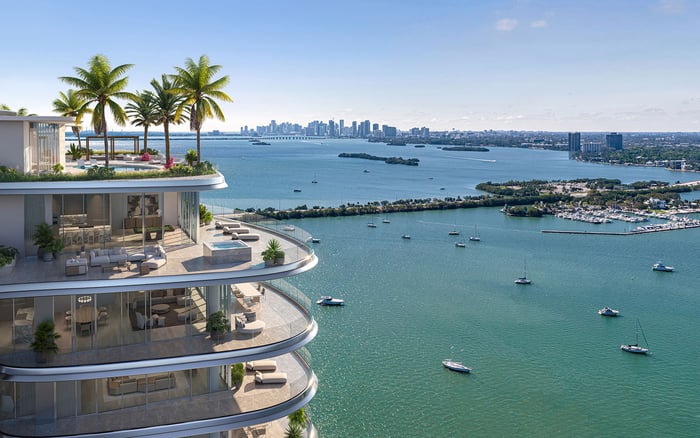
A disciplined framework for assessing seasonal staffing, storm preparation, governance, costs, and resale considerations before purchasing in Bay Harbor Islands.

A seasonal residence should feel effortless when occupied and remain carefully supervised when vacant. Evaluating that promise requires more than admiring finishes or hearing assurances of attentive service. A buyer must understand who is present, what each person is authorized to do, and how the property is secured as severe weather approaches.
This buyer’s guide treats staffing and storm preparation as components of the same operating system, while keeping resale firmly in view. The objective is not simply to find the most elaborate service model, but to identify one that is documented, financially intelligible, and likely to remain persuasive to a future buyer.
Begin with your own pattern of use. A second-home owner who arrives periodically may prioritize arrival preparation, package handling, vendor access, routine visual checks, and a clear path for urgent decisions. Ask management which tasks are performed by building employees, which require an outside vendor, and which remain entirely the owner’s responsibility.
Request staffing schedules by role rather than accepting broad statements about coverage. Clarify overnight and weekend arrangements, escalation procedures, and who may enter a residence while the owner is away. Determine whether authorization must be granted in advance and how each entry is recorded.
The most revealing question is practical: What happens when the regular employee is unavailable? A credible model should provide backup responsibility, not merely a familiar face. Continuity matters because a service culture dependent on one individual can be difficult to sustain.
A storm plan should be a written sequence of decisions, not an informal assurance. Ask what triggers preparation, who communicates with owners, when outside vendors lose access, and what building personnel will and will not do inside private residences. The distinction between common-area and owner obligations should be unambiguous.
For each residence under consideration, create an inventory of vulnerable exterior and interior elements. Then establish who secures them, what access is required, where removable items may be stored, and how completion is documented. Do not assume that a service described as assistance includes labor, storage, inspection, or post-event reporting.
Examine the return-to-normal procedure as closely as the lock-up plan. Who evaluates access, communicates conditions, coordinates approved vendors, and confirms that an individual home has been checked? The value lies in the complete chain of responsibility, from preparation through reopening.
Operational quality is easier to trust when it leaves a paper trail. Review the governing documents, current budget, meeting materials available for buyer review, staffing arrangements, vendor agreements, and written emergency procedures. Have appropriate legal, insurance, inspection, and financial advisers assess matters within their expertise.
Determine whether seasonal services are included in regular charges, billed individually, or handled directly between owners and vendors. Identify approval procedures and cancellation terms. An attractive service can become a point of friction if its cost is difficult to forecast or its scope changes without clear oversight.
For an investment-minded buyer, consistency matters more than theatricality. Look for repeatable processes, documented accountability, and understandable expenses. These characteristics can be explained during diligence and are less dependent on sales language.
A focused Bay Harbor comparison should apply the same questions to every candidate. Buyers might examine Alana Bay Harbor Islands alongside Onda Bay Harbor, then use the identical operational checklist for Origin Bay Harbor Islands and The Well Bay Harbor Islands.
These links establish a practical consideration set, not a conclusion about service quality. Current documents and direct diligence should govern the assessment. Compare staffing scope, access protocols, storm duties, storage rules, communication standards, and cost allocation line by line. Waterfront appeal may attract attention, but operational clarity determines how comfortably an absentee owner can hold the residence.
Future buyers may use the home differently than you do. A staffing model tailored too narrowly to one owner’s habits may be less compelling than a flexible system with clear boundaries. Consider whether the building can explain its procedures succinctly and produce records that support those explanations.
Preserve your own documentation as well. Keep approvals, vendor contacts, service records, access authorizations, and evidence of completed preparation together. At resale, orderly records can help a prospective purchaser understand how the residence has been managed.
The final decision should balance four elements: service coverage, storm readiness, recurring cost, and transferability of appeal. Score each separately. A beautiful residence with vague procedures warrants further questions, while a less conspicuous operating model may merit attention when responsibilities are precise and verifiable.
What is the first staffing question a seasonal buyer should ask? Ask who is physically available while the residence is vacant and what that person is authorized to do.
Should verbal assurances about storm preparation be accepted? Treat them as a starting point. Request written procedures, responsibilities, and exclusions before relying on them.
Who should secure items belonging to an individual owner? Confirm the answer in building rules and service agreements; private-property duties should never be assumed.
How should buyers evaluate after-hours coverage? Ask for the escalation chain, backup personnel, response boundaries, and communication method.
Why does vendor access matter during storm preparation? Access may become restricted, so owners should understand authorization requirements and operational cutoffs in advance.
Which costs deserve special attention? Separate recurring building charges, individually billed services, outside-vendor expenses, storage, and optional assistance.
Can abundant staffing guarantee better service? No. Defined roles, supervision, backup coverage, and documented execution are more informative than headcount alone.
How does storm planning relate to resale? Clear procedures and understandable obligations can make ownership easier for a future buyer to evaluate.
What records should an owner retain? Keep service authorizations, vendor information, communications, approvals, and completion records in an organized file.
What should determine the final purchase decision? Weigh lifestyle fit, operational clarity, professional diligence, cost visibility, and future marketability together.
To compare the best-fit options with clarity, connect with MILLION.
If branded residences are on your mind — as a home or as an allocation — we would be glad to share what we are seeing, privately.
Begin a quiet conversation