A practical framework for furnishing a South Florida luxury residence, from square-foot planning allowances and designer fees to custom pieces, condominium approvals, and phased personalization.
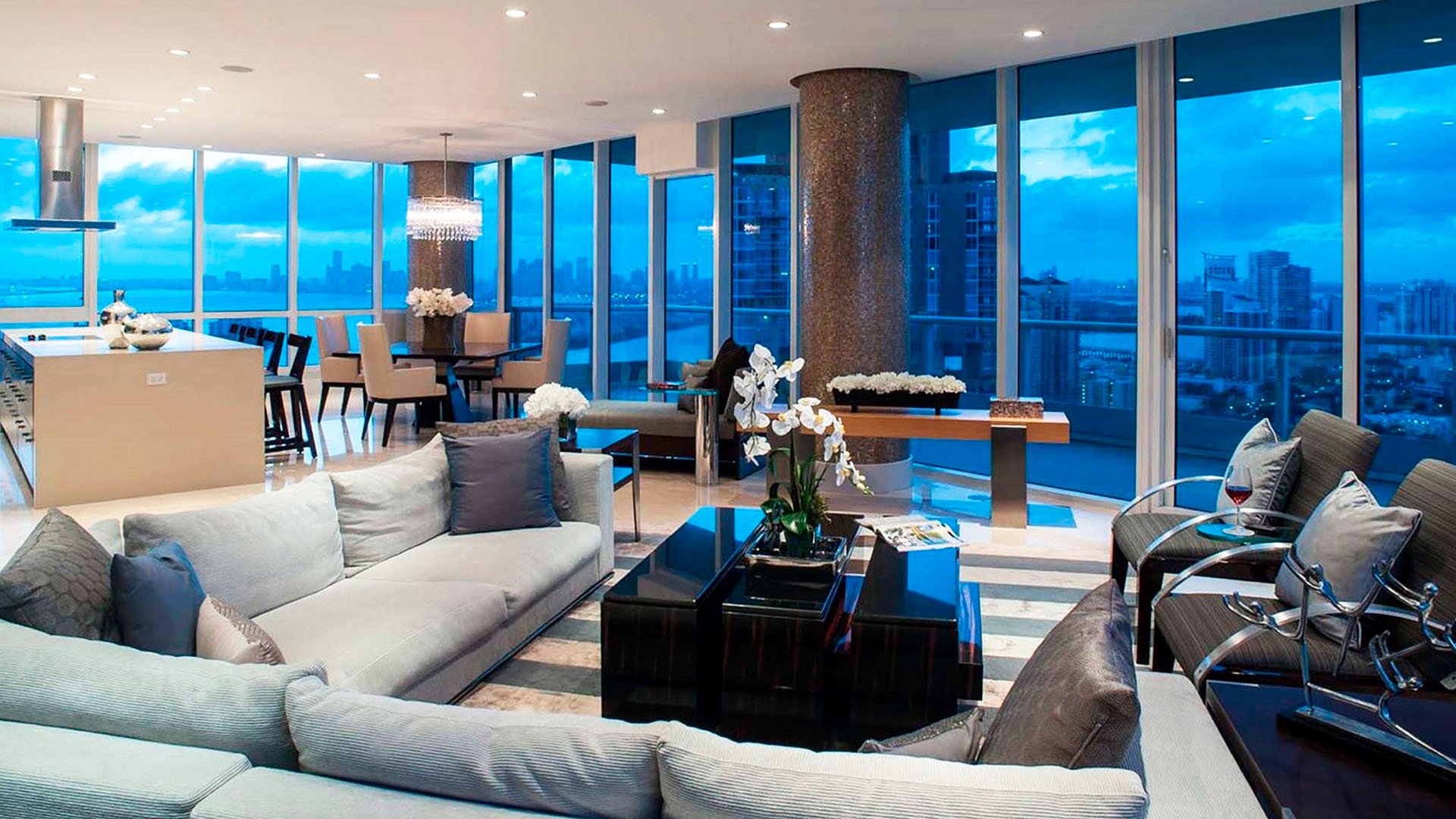
A beautifully furnished South Florida residence begins with a clear brief, not a shopping list. Before selecting a sofa or commissioning cabinetry, decide how the home should function: a full-time address, a seasonal retreat, or a setting for extended family gatherings. Those choices should guide which rooms receive immediate investment and which can evolve.
A useful budget separates the cost of making a residence comfortable from the cost of making it unmistakably yours. Essential seating, beds, lighting, and privacy belong in the first conversation. Art, collectible furniture, and highly specific custom work deserve a deliberate second pass.
An indicative luxury furnishing allowance is $100-$200+ per square foot, encompassing furniture, rugs, lighting, window treatments, art, and delivery. Treat it as a planning reference, not a South Florida-wide average or a guaranteed quotation. Major construction and architectural work require separate allowances.
Applied consistently, the arithmetic provides an initial framework:
A 2,000-square-foot residence: $200,000-$400,000+.
A 3,000-square-foot residence: $300,000-$600,000+.
A 4,000-square-foot residence: $400,000-$800,000+.
A broader benchmark for comprehensive design, procurement, and management, including the goods themselves, is approximately $200-$350 per square foot. For 3,000 square feet, that implies $600,000-$1.05 million. These benchmarks describe different scopes. Do not add them together or assume their inclusions are interchangeable.
For a buyer considering The Residences at 1428 Brickell, the useful question is not simply what furnishing in Brickell costs. It is which rooms, services, and finishing layers the proposed allowance actually covers.
Create a worksheet with separate lines for indoor furnishings, outdoor furnishings, design services, receiving and storage, freight, installation, tax, renovations, and contingency. Ask each provider to identify what is included, excluded, or still provisional.
Delivery already appears in the furnishing benchmark above, so avoid counting the same service twice. Reconcile that allowance with the actual logistics proposal. Treat receiving, storage, final placement, and additional handling as questions to resolve, not assumptions buried in a furniture total.
Keep renovations separate. An indicative custom kitchen redesign allowance of $85,000-$200,000+ belongs in a construction budget, not tucked into the furnishing number. Likewise, establish whether proposed lighting work is a fixture purchase or a broader alteration requiring additional professional input.
Set a contingency with your design team based on unresolved selections and scope. An explicit reserve is more useful than committing every dollar before measurements, approvals, and specifications are settled.
Designer compensation can be hourly, fixed-fee, or percentage-based. Indicative luxury-design figures for planning include approximately $150-$400 an hour, initial project fees of $5,000-$15,000, and high-end percentage fees of roughly 15%-30%, depending on scope and market. These are alternative pricing references, not charges every project necessarily incurs together.
Ask what a percentage applies to, whether initial fees are credited, and whether procurement and installation supervision are included. Some full-service practices require minimum project budgets of approximately $30,000-$100,000+, making engagement size another point to clarify early.
Request proposals against the same room schedule and service brief. A lower stated fee does not necessarily mean a lower total if substantial services fall outside it.
Allocate by use rather than dividing the budget equally among rooms. A primary suite can account for approximately $45,000-$110,000, including the bed, nightstands, seating, rugs, lighting, window treatments, and styling. That range is a reminder that a finished room is a composition, not a single important purchase.
For a seasonal residence, prioritize sleeping comfort, privacy, practical lighting, and enough seating to enjoy the home immediately. For frequent entertaining, consider how dining and living areas work together before committing to statement pieces.
When planning a home at Four Seasons Residences Coconut Grove, apply the same discipline: define the household's routines before deciding where customization matters. Coconut Grove is the setting; the owner's way of living should determine spending priorities.
Personalization is most persuasive when scale, proportion, and function are resolved first. Before approving custom furniture, request measured layouts, dimensions, finish samples, and a clear review of how each piece will enter the residence.
The financial stakes can be considerable: an indicative estimate for replacing unsuitable custom furniture is $25,000-$75,000 per room. That is a reason to scrutinize specifications, not a prediction that every replacement will cost that amount.
For an owner considering The Perigon Miami Beach, a Miami Beach address is no substitute for a room-by-room brief. Separate indoor and outdoor allowances, and ask the designer to justify material choices for each intended location. Leave room in the budget for pieces selected after living in the space.
Distinguish movable furnishings from alterations that may be subject to building rules or affect shared property. Under Florida's 2025 condominium statute, material alterations or substantial additions to common elements or association real property generally follow the declaration's approval process. If it specifies none, approval generally requires 75% of total voting interests, subject to statutory exceptions. This is not a blanket voting requirement for furnishing an individual unit.
The same statute prohibits owner work that adversely affects the safety or soundness of common elements or association property. Boards must also adopt building-specific hurricane-protection specifications, which may address appearance, including color and style. Responsibility for windows, doors, and shutters can depend on the declaration and statutory provisions.
Before budgeting changes, verify current law, the declaration, alteration rules, and delivery procedures. For a purchase at Alba West Palm Beach, make that review part of the West Palm Beach ownership budget rather than an afterthought. Obtain building-specific guidance before placing noncancelable orders.
Approve an overall palette and spending ceiling, then sequence purchases around occupancy. Begin with essential comfort and privacy; follow with secondary rooms, art, collectibles, and custom accents. Track commitments against the full budget, including fees and logistics, rather than furniture prices alone.
The objective is not to complete every room at once. It is to create a residence that feels resolved while leaving space for taste to develop.
For a considered approach to choosing your next South Florida residence, explore MILLION.
If branded residences are on your mind — as a home or as an allocation — we would be glad to share what we are seeing, privately.
Begin a quiet conversationAn indicative luxury furnishing benchmark is $100–$200+ per square foot. It is a planning reference, not a regional average or guaranteed quote.
It includes furniture, rugs, lighting, window treatments, art, and delivery. Major construction and architectural work need separate allowances.
The furnishing benchmark produces $300,000–$600,000+. A separate comprehensive-service benchmark produces $600,000–$1.05 million, including goods, design, procurement, and management.
No. They describe different scopes and should be compared by their inclusions rather than combined.
Designers may use hourly, fixed-fee, or percentage-based compensation. Clarify the fee basis, included services, and treatment of initial fees before comparing proposals.
An indicative allowance is approximately $45,000–$110,000. That includes the bed, nightstands, seating, rugs, lighting, window treatments, and styling.
A kitchen redesign should have a separate renovation allowance. An indicative custom kitchen redesign estimate is $85,000–$200,000+.
Unsuitable custom pieces can be costly to replace, with an indicative replacement estimate of $25,000–$75,000 per room. Confirm measurements, finishes, layouts, and delivery access before ordering.
No; the 2025 statutory threshold generally concerns certain common-property alterations when the declaration specifies no approval process, subject to exceptions. Verify current law and building documents before committing funds.
Prioritize beds, essential seating, practical lighting, and privacy. Add secondary rooms, art, collectibles, and custom accents within an overall design plan.