A disciplined pre-closing audit of a Key Biscayne condominium should connect visible coastal wear with engineering records, waterproofing history, warranty terms, association responsibilities, reserves, and prospective repair exposure.
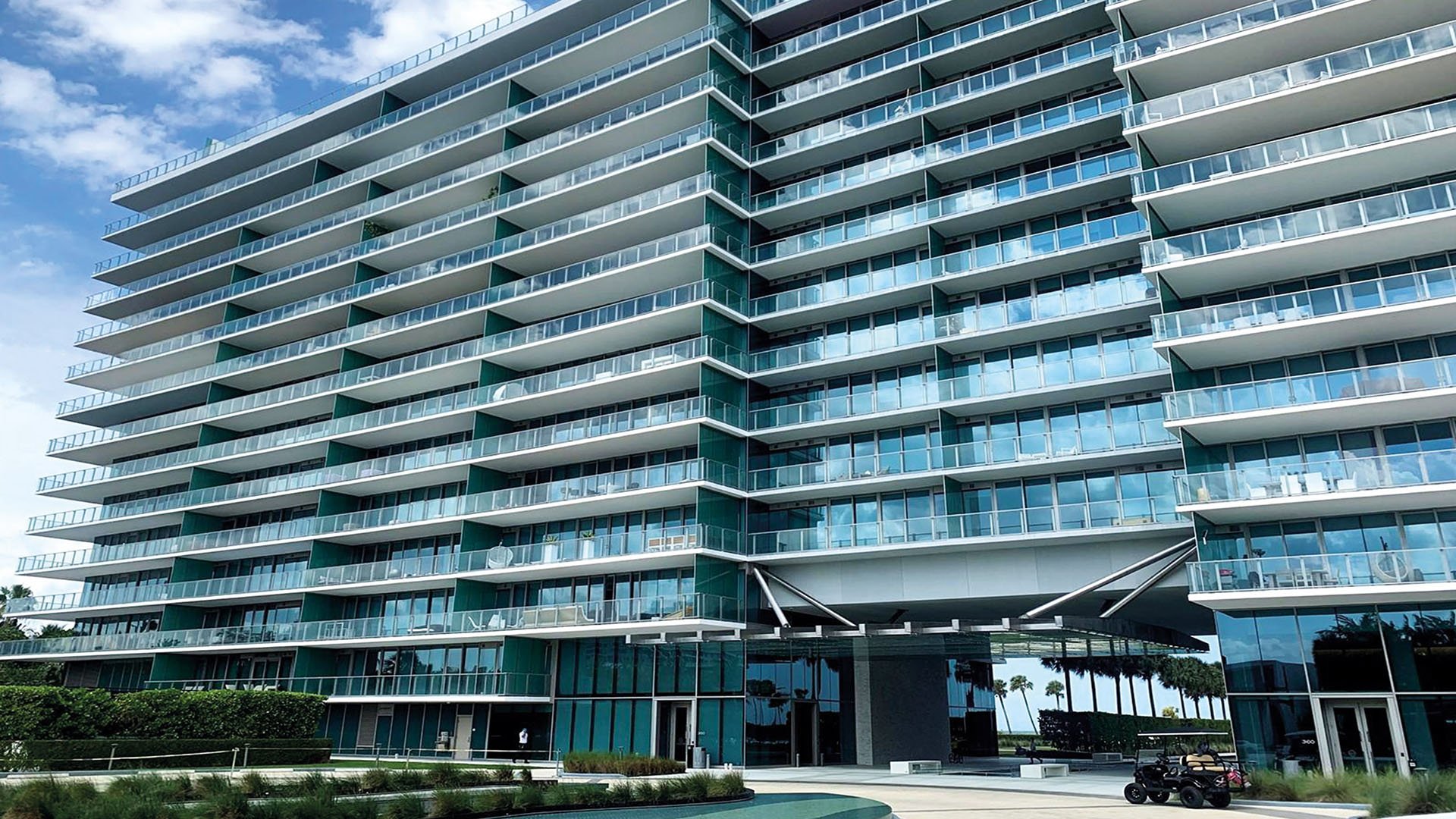
A polished residence can conceal exposure elsewhere in the building. In Key Biscayne, salt, wind-driven rain, balcony drainage, sealants, and moving window components operate as a single envelope system. The pre-closing review should therefore extend beyond the unit’s finishes, connecting physical observations with engineering records, association responsibilities, reserves, and warranties.
That discipline is especially important in a boutique condominium, where the cost of a major exterior project may be divided among fewer owners. A waterfront address warrants a correspondingly exacting audit. Whether the candidate property is Oceana Key Biscayne or another coastal residence, the objective is not simply to identify blemishes. It is to determine what is deteriorating, why it is happening, who must correct it, and how the work will be funded.
The most revealing defect is often the gap between a visible condition and the building’s records.
Florida requires milestone structural inspections for condominium and cooperative buildings of at least three habitable stories at age 30, or at age 25 when they are within three miles of the coast. Licensed engineers or architects conduct these inspections to identify deterioration, required repairs, and anticipated timelines. In Miami-Dade, accessible elements may include columns, beams, slabs, load-bearing walls, balconies, walkways, parking areas, and roofs.
Request the latest milestone or recertification report, follow-up engineering letters, repair schedules, and available cost estimates. Never read a report in isolation. Compare its observations with the reserve study, current budget, recent meeting minutes, concrete-restoration history, waterproofing projects, roof work, window discussions, water-intrusion complaints, and potential special assessments.
Look for continuity. If an engineer identified deterioration, the file should show what was repaired, what remains open, and whether subsequent letters accepted the completed work. If the scope is still being priced, counsel and the buyer’s engineer should evaluate both timing and reserve exposure before the contingency period expires. This Buyer’s Guides principle is straightforward: documents establish whether a visible concern is isolated, recurring, or already part of a larger capital program.
Salt exposure can oxidize and pit aluminum window frames, leaving chalky, white, or rough surfaces. Aluminum does not rust like iron, but scratches, failed coatings, and sustained exposure can produce pitting and finish deterioration. On steel, red or brown rust is the more familiar signal. Bubbling or peeling paint can indicate corrosion progressing beneath the coating.
Inspect frames, balcony railings, anchors, fasteners, dividers, brackets, and hardware at close range. Record pitting, coating failure, looseness, rust streaks, mismatched replacement parts, and staining beneath connections. Replacement components should be marine-rated stainless steel, properly coated aluminum, or another code-approved, corrosion-resistant material.
Photography should capture both detail and context. A close image records pitting or a failed sealant joint; a wider image locates it relative to the slab edge, railing post, window opening, or drainage path. Together, they make remote review by a structural engineer, envelope consultant, or specialty contractor far more useful.
Coastal comparisons such as Arte Surfside and 57 Ocean Miami Beach may sharpen a buyer’s expectations, but every association has its own maintenance history, governing documents, and allocation of responsibility. Condition and documentation must be evaluated building by building.
A balcony inspection should not stop at tile or coating. Ask the inspector to evaluate accessible connections and slab undersides, where corrosion-related deterioration may be more visible than on the finished walking surface. Warning signs include cracks, concrete spalling or delamination, rust staining, exposed reinforcement, and previous patch repairs.
Then examine how water moves. Review pitch, drains, scuppers where present, waterproofing, thresholds, coatings, perimeter joints, and sealants. Ponding, staining, cracks, voids, failed joints, or residue around drains can indicate that water is not leaving the surface as intended. At sliders, inspect the transition among the balcony finish, threshold, frame, and adjacent interior flooring.
Request records for prior balcony restoration and concrete repair, including available scopes, completion documentation, and reserve allocations for future work. A recent cosmetic coating does not, by itself, establish that the membrane, slab, connections, or drainage were corrected. Match the physical condition with the documented scope.
Interior evidence often provides the clearest map of an exterior problem. Inspect finishes around windows and sliders, balcony thresholds, ceilings, baseboards, and exterior-facing walls. Stains, warped materials, repaired drywall, uneven texture, recurring paint damage, and swollen trim may indicate water intrusion even when the surfaces are currently dry.
Ask when the condition appeared, what testing was performed, what was repaired, and whether it returned after heavy rain or a storm. Obtain records of any open, denied, or temporarily resolved warranty claims involving windows, waterproofing, or leaks. A clean repaint shortly before marketing should prompt a request for documentation, not an assumption.
The investigation should distinguish among possible pathways without guessing. Window perimeter sealants, blocked drainage, balcony membranes, thresholds, roofs, and exterior joints may all warrant review. Reconcile moisture observations with association complaint logs and meeting minutes to determine whether adjacent units or stacked lines have reported similar symptoms.
Obtain the window and door manufacturer, model, installation date, installer records, and warranty documents. Separate coverage for glass, frame finish, hardware, and moving parts, as the terms may differ. Confirm whether coverage transfers to a purchaser, what notice is required, and whether a claim is already open.
Read exclusions and maintenance conditions closely. Salt buildup, blocked drainage, neglected hardware, or improper cleaning can weaken a corrosion-related claim. Inspect tracks, sills, weep holes, rollers, locks, and handles for salt deposits, retained water, stiffness, pitting, and obstructed drainage. Fresh-water rinsing helps remove accumulated salt, particularly around tracks, weep holes, and hardware, but the association’s actual protocol should be documented.
Request a written coastal-maintenance schedule covering window cleaning, weep-hole clearance, balcony and railing inspections, exterior coatings, sealants, and post-storm checks. Compare that schedule with invoices, maintenance logs, and observed conditions. A warranty is most valuable when the installed product, maintenance record, claim procedure, and responsible party align.
The declaration and association rules should establish whether windows, sliders, balcony membranes, railings, and exterior sealants belong to the unit owner or the association. Do not infer responsibility from who arranged a previous repair. Have counsel reconcile the governing documents, warranty language, engineering recommendations, and any pending assessment.
Build sufficient inspection and document-review time into the contract for specialist evaluation. Before closing, reduce each concern to four answers: the observed condition, the recommended next step, the responsible party, and the probable funding source. If the repair scope or cost remains unresolved, the buyer can assess the exposure clearly rather than relying on a pristine interior or a general assurance.
For discreet guidance on evaluating Key Biscayne and South Florida residences, connect with MILLION.
If branded residences are on your mind — as a home or as an allocation — we would be glad to share what we are seeing, privately.
Begin a quiet conversationRequest the latest milestone or recertification report, follow-up engineering letters, repair schedules, cost estimates, reserve study, budget, and recent meeting minutes.
For condominium and cooperative buildings of at least three habitable stories, the threshold is age 30, or age 25 when located within three miles of the coast.
Look for white powder or pitting on aluminum, red or brown rust on steel, bubbling paint, coating failure, rust streaks, and loose hardware.
Corrosion-related deterioration may be more visible beneath the finished walking surface, particularly around slab edges and accessible connections.
Review pitch, drainage, thresholds, coatings, membranes, and sealants for ponding, stains, cracks, voids, or evidence of failed water movement.
Stains, warped finishes, repaired drywall, swollen trim, uneven texture, and recurring paint damage near windows, sliders, ceilings, or thresholds warrant investigation.
Confirm the manufacturer, model, installation date, installer, transferability, claim procedure, and separate terms for glass, frame finish, hardware, and moving parts.
Yes. Salt buildup, blocked drainage, neglected hardware, and improper cleaning may undermine a claim, depending on the warranty terms.
Responsibility must be confirmed through the declaration and association rules because windows, sliders, membranes, railings, and exterior sealants may be allocated differently.
Adequate time lets engineers and counsel evaluate repairs, warranties, governing documents, reserve funding, and potential assessment exposure before closing.