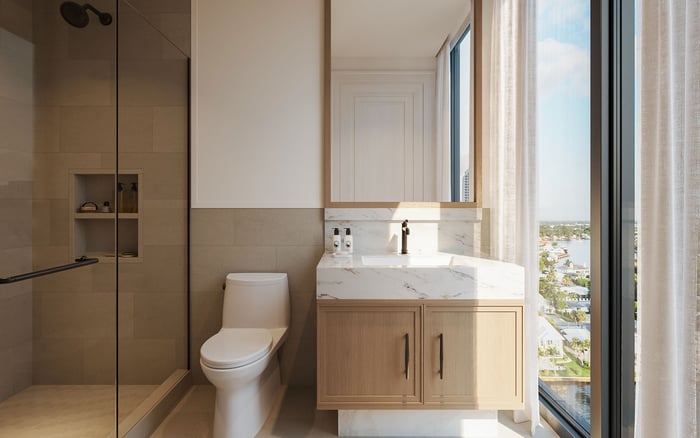
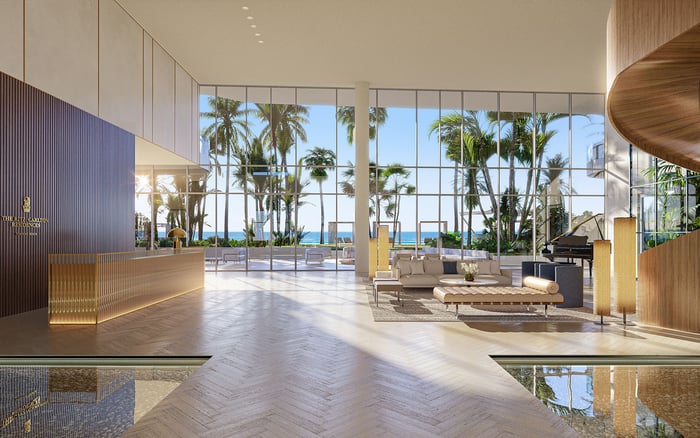
A 2026 buyer’s framework for comparing privacy, service, setting, and residential character at two Ritz-Carlton-branded residences in South Florida.
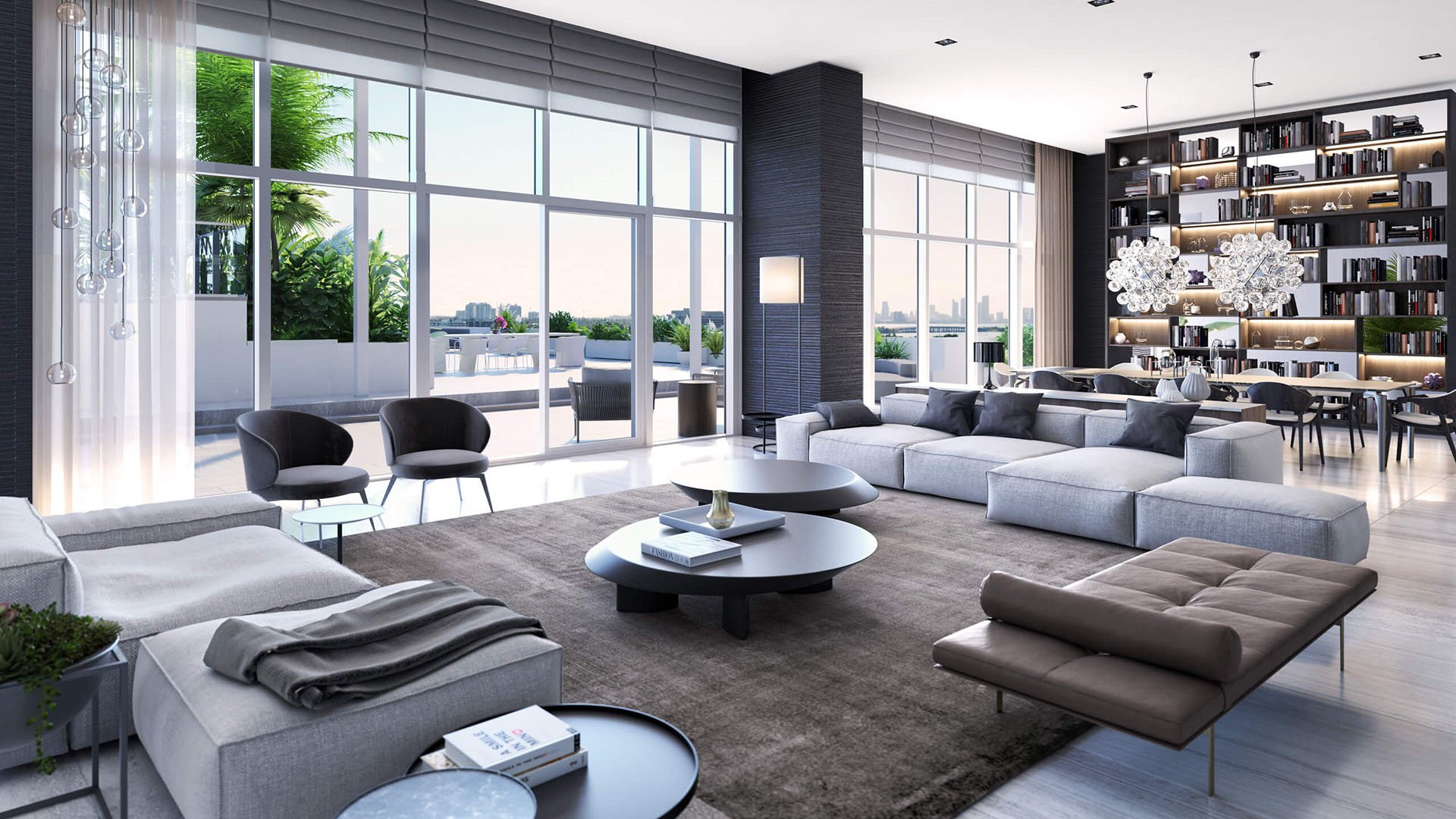
For a luxury buyer in 2026, privacy is best treated as an ownership experience rather than a single feature. The relevant questions extend from arrival and circulation to guest handling, service requests, shared spaces, and the transition from public areas to the home.
That framework provides a disciplined way to consider The Ritz-Carlton Residences® Miami Beach alongside The Ritz-Carlton Residences® Fort Lauderdale. A shared brand may establish expectations, but it should not replace project-specific review. Buyers still need to determine how each residence fits their preferred balance of attentive hospitality and personal discretion.
The central issue is not whether service is available in the abstract. It is whether the complete residential environment supports the owner’s routines without making the home feel overly public or operationally intrusive.
Privacy means different things to different owners. One household may prioritize discreet arrivals and straightforward guest access, while another may focus on service communication, time spent in shared areas, or the separation of personal and staff routines.
Before comparing properties, buyers can define the situations that matter most. These may include arriving at different times, hosting family, receiving deliveries, requesting assistance, leaving a residence unoccupied, or maintaining a predictable experience across repeated stays. This personal profile turns an abstract preference into a practical set of questions.
The same exercise can clarify service expectations. Some buyers want frequent interaction and proactive assistance; others prefer support to remain largely in the background. Neither preference is inherently more luxurious. The stronger fit is the residence whose documented operations and everyday atmosphere align with the owner’s desired level of engagement.
A privacy review should follow the path an owner and guest would actually take. During a visit, observe the transition from the surrounding area into the property, the sequence through shared spaces, and the final approach to the residence. Consider where interactions occur and whether each stage feels compatible with the household’s expectations.
Repeat that review under more than one scenario. The ideal experience for an owner arriving alone may differ from what is needed when family, guests, deliveries, or service providers are involved. Buyers can ask how each situation is handled and then verify material answers through the applicable project documents.
This method keeps the comparison focused on use rather than image. It also prevents a buyer from assuming that two residences associated with the same hospitality brand necessarily deliver the same rhythm of ownership.
Residential hospitality is most persuasive when assistance reduces effort while respecting boundaries. Buyers can explore how requests are initiated, how preferences are communicated, which interactions require direct coordination, and what procedures apply to visitors or third parties.
Questions should be specific. Which services are included, and which are arranged separately? How are requests documented? What rules govern access, leasing, guests, or residence use? The answers should come from current primary materials and qualified advisers where appropriate, not from general impressions about a brand.
The goal is to understand whether service supports the household’s routines. A polished presentation may be appealing, but the lasting ownership experience depends on documented terms, consistent execution, and compatibility with the buyer’s expectations.
Additional South Florida projects can help a buyer refine the questions asked during diligence. Four Seasons Hotel & Private Residences Fort Lauderdale can serve as a Fort Lauderdale comparison point, while The Ritz-Carlton Residences® Pompano Beach offers another branded-residence reference in Broward County.
These comparisons should be used to identify preferences, not to infer one project’s terms from another. Each residence requires independent review. A buyer may find that visiting several properties makes it easier to articulate preferences concerning arrival, shared-space atmosphere, communication, and service visibility.
The most useful comparison is therefore not a simple ranking. It is a process for determining which environment best matches the buyer’s intended use of the home.
Marketing language cannot answer every privacy question. Buyers should review the current governing, ownership, service, and cost materials relevant to the purchase. Any issue that affects access, use, staffing, leasing, security, technology, or recurring obligations should be confirmed directly in the appropriate documents.
A careful review also separates personal preference from contractual reality. If a particular service protocol or use condition is essential, the buyer should establish whether it is documented, discretionary, subject to change, or separately charged. Legal, financial, tax, and technical questions should be directed to appropriately qualified professionals.
This approach is especially important when comparing branded residences. The brand may shape the buyer’s initial interest, but the purchase decision should rest on the specific residence, project structure, applicable documents, and suitability for the household.
The choice between Miami Beach and Fort Lauderdale should begin with how the buyer plans to live. Consider the desired South Florida location, frequency of occupancy, approach to entertaining, service expectations, and tolerance for interaction in shared environments.
A privacy-minded decision does not require rejecting hospitality. It requires identifying the form of hospitality that feels natural in a private residential setting. The better fit is the property where the owner’s preferred boundaries, routines, and expectations can be reconciled with verified project terms.
What does residential hospitality mean for this comparison? It refers to the relationship between private ownership and service. Buyers should evaluate how that relationship works in practice at each residence.
Does shared Ritz-Carlton branding mean the two residences are identical? No. Each property should be assessed independently through visits, direct questions, and current project documents.
How should a buyer define privacy before touring? Identify the routines and interactions that matter most, including arrivals, guests, deliveries, service requests, and time in shared spaces.
Why should buyers follow the full arrival sequence? The route from the surrounding area to the residence can reveal where interactions occur and whether the experience suits the household.
What service questions belong in due diligence? Ask what is included, what is arranged separately, how requests are handled, and which rules affect access, guests, leasing, or use.
Can another branded residence be a useful comparison? Yes. It can help clarify personal preferences, but it cannot establish the terms or operations of a different project.
Should buyers rely on marketing descriptions of privacy? No. Material expectations should be tested against current primary documents and advice from qualified professionals where appropriate.
Is more service always better for a privacy-focused owner? Not necessarily. The right level of service depends on how much interaction the owner wants and how assistance fits daily routines.
What should a 2026 buyer verify about project policies? Confirm any provisions relevant to access, residence use, guests, leasing, services, costs, security, and technology in current materials.
What is the central choice between the Miami Beach and Fort Lauderdale residences? It is a question of fit: which location and verified residential experience best support the buyer’s preferred balance of service and discretion.
If you'd like a private walkthrough and a curated shortlist, connect with MILLION.
If branded residences are on your mind — as a home or as an allocation — we would be glad to share what we are seeing, privately.
Begin a quiet conversation