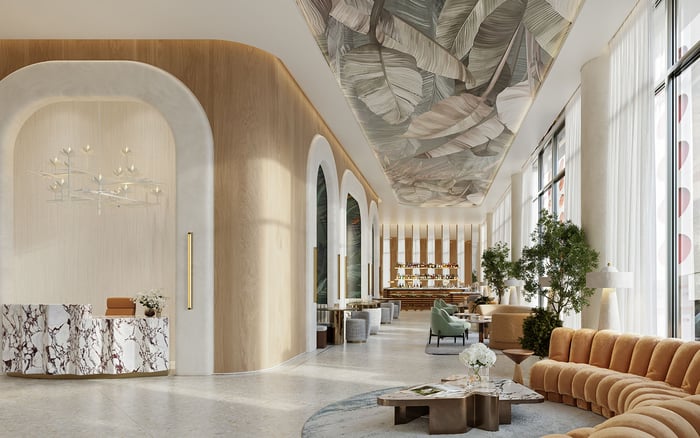
Two branded-residence models offer distinct answers to privacy-minded Miami buyers: residential-only hospitality on the Brickell waterfront, or private ownership within a full Downtown Miami hotel ecosystem.
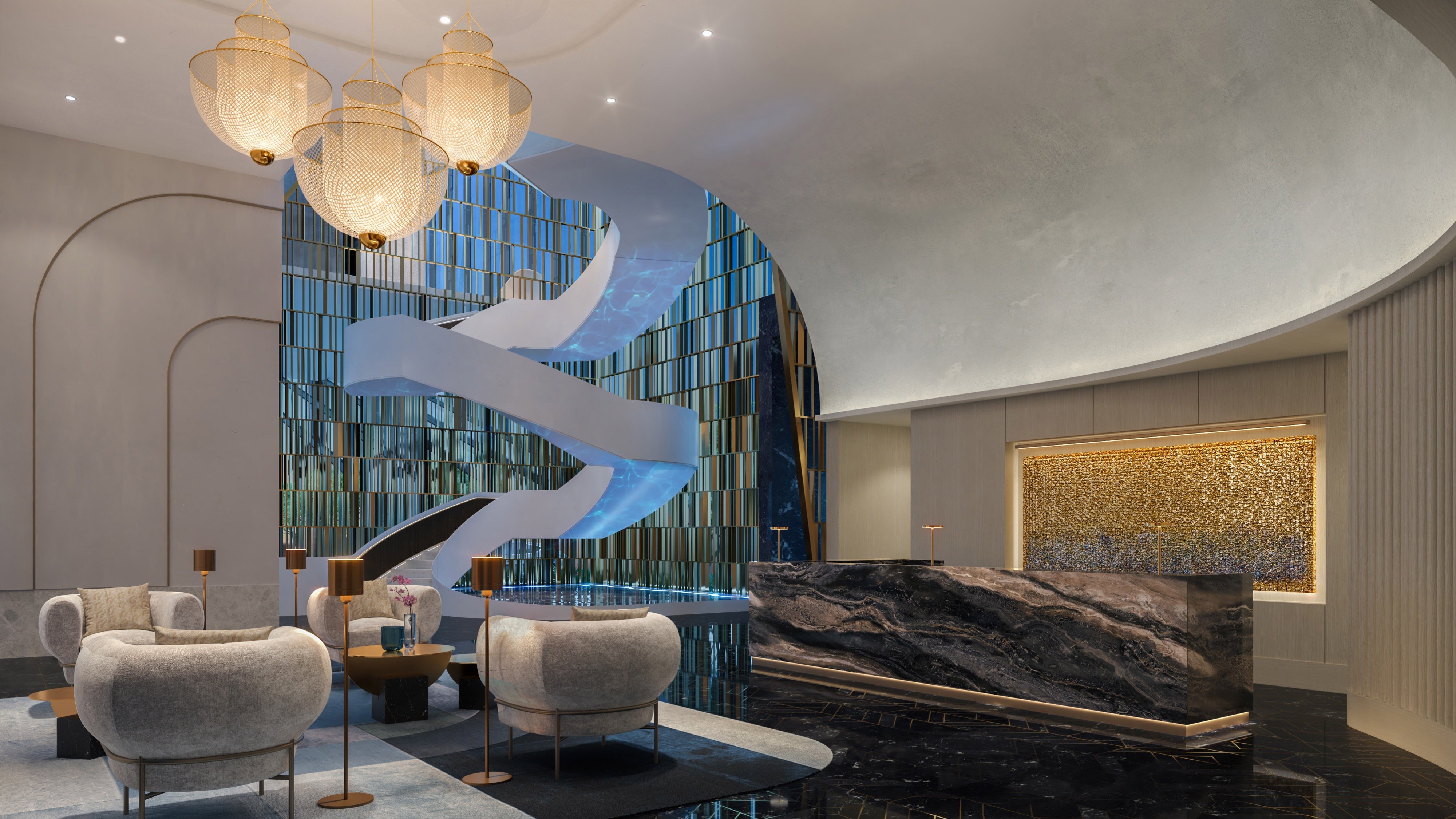
For buyers evaluating Miami’s branded residences in 2026, privacy is no longer defined solely by a guarded entrance or discreet lobby. It is also shaped by who shares the building, how residents move through it, and whether hospitality is delivered in a residential setting or within an operating hotel.
That distinction makes St. Regis® Residences Brickell and Waldorf Astoria Residences Downtown Miami a particularly useful comparison. Both frame the home through the language of luxury hospitality, yet they organize that promise differently. One removes the hotel component; the other integrates residences into a broader hotel ecosystem.
The decision, then, is not simply between two celebrated names. It is between two operating philosophies-and two interpretations of personal space.
St. Regis® Residences Brickell is presented as a purely residential waterfront development. Its service model pairs St. Regis standards with a private-home environment rather than placing owners alongside an active hotel.
For a privacy-focused buyer, that distinction is consequential. Without hotel guests, the property can reduce contact with transient visitors and the public-facing activity associated with hotel arrivals, departures, dining, and events. Privacy is expressed through a limited public interface and a private, club-like residential experience.
The waterfront setting reinforces that mood. Within an urban neighborhood, it brings an estate-style dimension to daily arrival and residence. Service remains central, but the hospitality is directed toward homeowners and their guests-not a continuously changing hotel population.
This model is likely to resonate with buyers who want recognition, assistance, and polish without feeling that their home is attached to a public destination.
Waldorf Astoria Residences Downtown Miami takes the alternate approach. The mixed-use tower combines private residences with a Waldorf Astoria hotel and is architecturally distinguished by its vertically stacked composition of glass cubes.
Here, residential hospitality is defined by proximity to a complete luxury-hotel environment. Owners gain access to Waldorf Astoria services while living within a building that serves both residential and hospitality functions. Privacy does not come from removing the hotel; it depends on effective separation through zoning, circulation, and daily operations.
That model can be compelling for an owner who considers immediate hotel access an advantage rather than a compromise. The relevant question is whether residential movement and service feel distinct even as the wider property remains active.
For buyers surveying the Downtown Miami landscape, Aston Martin Residences Downtown Miami can provide further context for assessing how different luxury identities frame arrival, ownership, and urban presence.
The contrast is best understood as residential-only hospitality versus hotel-integrated hospitality. At St. Regis, discretion begins with fewer reasons for the general public to enter the property. At Waldorf Astoria, discretion must be preserved within a more complex environment.
Neither model makes privacy automatic. A residential-only building can still have active amenity spaces, guests, staff, vendors, and deliveries. A mixed-use tower can still create a highly private owner experience if residential and hotel functions remain convincingly separate. The buyer’s task is to look beyond brand language and study how the property is intended to operate during ordinary hours, at periods of peak activity, and while entertaining.
In Brickell, a broader tour might include Baccarat Residences Brickell, allowing buyers to compare the tone of arrival and service at another branded offering without assuming that every hospitality-led residence follows the same model.
Marketing can describe atmosphere, but documents and plans define the ownership experience. Buyers should examine current condominium documents, management agreements, floor plans, and rental restrictions before deciding which model better protects their preferred rhythm of life.
At Waldorf Astoria, scrutiny should center on the practical separation of residential and hotel activity. Buyers should seek clarity on circulation, access points, shared spaces, service delivery, and the operational boundaries between owners and hotel guests. These details require direct verification because broad project descriptions do not fully establish final protocols.
At St. Regis, the absence of a hotel is a meaningful structural advantage for those seeking minimal public interface. Even so, purchasers should review how visitors, staff, deliveries, amenities, and rentals are governed. Residential-only does not eliminate activity; it changes its source and expected frequency.
Privacy-sensitive buyers should also measure the documents against their own use case. A primary resident, frequent host, and seasonal owner may interpret convenience and exposure differently.
The strongest choice depends on how the buyer wants hospitality to feel. St. Regis offers a more residentially contained proposition: branded service, a private-home emphasis, and no active hotel component. Waldorf Astoria offers a more connected proposition: private ownership with convenient access to a complete hotel setting.
Buyers seeking the lowest possible public interface may naturally prefer the Brickell model. Those who value the energy, service access, and convenience of an integrated luxury hotel may find Downtown Miami more aligned with their expectations.
The essential question for the 2026 buyer is precise: Should hospitality remain quietly behind the residence, or should the residence sit within hospitality’s full orbit?
What is the principal privacy difference between the two developments? St. Regis is residential-only, while Waldorf Astoria combines residences with a hotel. The latter relies more heavily on operational separation between owners and hotel activity.
Does St. Regis® Residences Brickell include a hotel? No. It is presented as a purely residential waterfront development without an active hotel component.
Why might a residential-only building feel more private? The absence of hotel guests can reduce transient traffic and public-facing activity, creating a more private, club-like environment for residents.
Does Waldorf Astoria Residences Downtown Miami offer privacy? Its model presents privacy as compatible with hotel-level service. The owner experience will depend on how effectively residential and hospitality functions are separated.
What distinguishes the Waldorf Astoria tower architecturally? Vertically stacked glass cubes give the Downtown tower a recognizable sculptural profile.
Which development better suits buyers seeking minimal public interface? St. Regis may appeal more directly because it excludes a hotel. Buyers should still verify provisions governing visitors, amenities, deliveries, and rentals.
Which model better suits buyers who prioritize hotel access? Waldorf Astoria may be the more natural fit because the residences are integrated into a broader luxury-hotel ecosystem.
What documents should privacy-focused purchasers review? Buyers should review current condominium documents, management agreements, floor plans, and rental restrictions. These materials can clarify how the building’s privacy proposition translates into practice.
Are detailed elevator and guest-vetting procedures established here? Project descriptions do not specify detailed layouts or final operating protocols. Buyers should request and verify the latest information directly.
Is brand reputation enough to compare residential hospitality? No. Buyers should distinguish service standards from building structure, circulation, public interface, and operating rules before selecting a residence.
For a tailored shortlist and next-step guidance, connect with MILLION.
If branded residences are on your mind — as a home or as an allocation — we would be glad to share what we are seeing, privately.
Begin a quiet conversation