A discreet buyer’s guide to how second-home tax questions shape acquisition strategy, ownership structure, usage plans, and long-term confidence in Sunny Isles Beach.

In Sunny Isles Beach, the second-home conversation rarely begins with tax treatment, but it often becomes the discipline that shapes the purchase. The initial pull is clear: oceanfront privacy, resort-caliber amenities, international access, and the rare ability to live between city energy and open water. For sophisticated buyers, however, the elegance of the decision depends on whether the home’s financial profile supports the way it will actually be used.
A second-home purchase differs from a primary residence in both psychology and planning. The buyer may be acquiring a winter retreat, a family gathering place, a future retirement base, or a long-hold asset with selective rental potential. Each intention can raise different questions for tax, legal, lending, and estate advisors. The property itself may be beautiful, but the ownership plan must be equally composed.
That is why tax treatment is less a single answer than a framework. It can influence whether the buyer prioritizes immediate occupancy or future flexibility, whether title is held personally or through another structure, whether rental use belongs in the plan, and how carrying costs are understood over time. In a market where residences such as Bentley Residences Sunny Isles are selected as much for identity and experience as for square footage, the quiet work behind the acquisition can matter as much as the view.
Before discussing deductions, residency, or rental treatment, the buyer should define use with precision. Will the residence be occupied only by the owner and family? Will friends use it? Will it be offered for lease during periods of absence? Is the plan seasonal, occasional, or eventually full time? These are not merely lifestyle details. They are the facts advisors use to shape guidance.
Sunny Isles Beach attracts owners who often divide time among several cities or countries. For that reason, the calendar matters. A residence held as a private retreat can be viewed differently from one operated with an income objective. A buyer does not need to decide every future possibility before writing an offer, but ambiguity can create friction. It is easier to structure the purchase around a clear primary intent than to retrofit the plan later.
This is especially relevant in buildings where the amenity culture encourages long stays. A residence at St. Regis® Residences Sunny Isles may appeal to a buyer who wants hotel-level service without treating the home as transient lodging. Another buyer may be more focused on flexibility, guest access, and the ability to step away for months at a time. The tax conversation should reflect the lived pattern, not the brochure fantasy.
At the luxury level, buyers do not simply ask whether they can afford the residence. They ask whether the annual ownership profile feels rational. Taxes, insurance, association dues, maintenance, financing costs, and service expectations all shape the carrying-cost picture. Tax treatment may affect how some of those costs are viewed, but it should not be used to justify a purchase that works only under ideal assumptions.
The most resilient buyers treat after-tax analysis as a stress test. They look at the home as a lifestyle asset first, then consider whether any available tax attributes improve the picture. This is more durable than buying for a perceived tax advantage and hoping the use pattern fits afterward.
Investment thinking still has a role. Investment discipline can help a buyer compare two residences with similar design appeal but different operating profiles. A larger terrace, a higher service standard, or a more private arrival sequence may be worth the premium if the home will be used extensively. If the residence will sit vacant for long stretches, the buyer may give more weight to security, management, liquidity, and simplicity.
In South Florida’s upper tier, ownership structure is often discussed alongside architecture, privacy, and succession. Buyers may ask whether the home should be acquired personally, through a trust, through an entity, or in another arrangement recommended by counsel. Those decisions can affect financing, privacy, estate planning, liability, and administration.
This is not a place for casual assumptions. The right structure depends on the buyer’s domicile, family plan, lending needs, intended use, and broader balance sheet. For international buyers, the conversation may also involve cross-border planning. For domestic buyers, it may involve how the home fits into long-term residency goals or family governance.
The essential point is simple: structure should be addressed before contract momentum takes over. Once deposits, financing, and closing timelines are in motion, changing course can become more complicated. A residence such as The Ritz-Carlton Residences® Sunny Isles may represent a highly personal lifestyle choice, but the way it is owned should be intentionally designed.
Some buyers want no rental exposure at all. They value privacy, predictability, and the feeling that the residence is always ready for family arrival. Others want the option to lease the home when not in use, especially if the holding period is long or the calendar is seasonal. This is where the second-home tax discussion becomes more technical and must be coordinated with building rules, local requirements, insurance, lender expectations, and advisor guidance.
The key is not to blur categories. A residence acquired for private enjoyment may be planned differently from one acquired with meaningful rental expectations. The owner’s personal use, the frequency of rental activity, and the nature of the leasing program can all affect the analysis. Buyers should also consider whether rental use is compatible with the building’s culture. In the ultra-premium segment, the wrong rental strategy can be more costly to privacy and resale perception than to the spreadsheet.
Waterfront buyers in Sunny Isles Beach often choose the city because it feels residential while still offering access to Miami’s broader social and commercial orbit. That balance is part of the value proposition. Any rental plan should respect it.
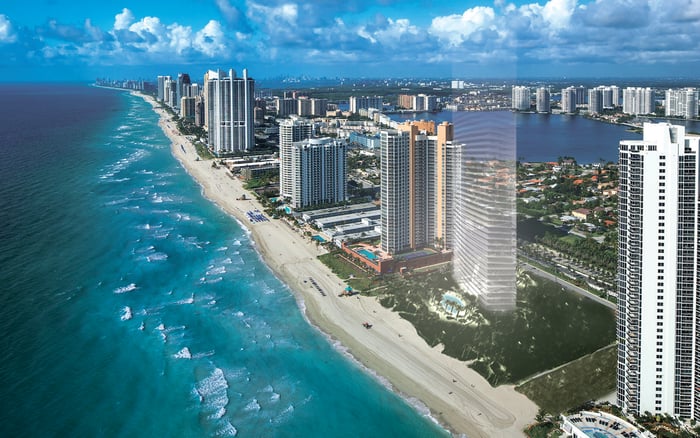
Sunny Isles Beach is not a generic second-home market. It is vertical, coastal, international, and intensely lifestyle-driven. Many buyers compare it not only with other Miami-area addresses, but also with resort markets, private islands, and global city residences. In that context, tax treatment becomes one layer in a larger decision about permanence.
The buyer is often asking: will this home simplify life or add complexity? Will the property be easy to maintain from afar? Will the ownership plan remain flexible if family needs change? Will the residence feel relevant in ten years? The strongest purchases answer those questions before the closing dinner.
This is why brand, service, and building culture matter. At Armani Casa Sunny Isles Beach, the appeal is not only the tower or the shoreline. It is the idea of a complete residential environment that can support intermittent ownership with grace. That kind of setting can make second-home use feel natural rather than improvised.
The most effective buyers keep the process calm. They identify the intended use, ask advisors to evaluate tax and ownership considerations, confirm building policies, model annual carrying costs, and decide whether rental flexibility is necessary or merely tempting. They also consider the exit. A home acquired with clean documentation, coherent ownership, and a rational use pattern is easier to explain to the next buyer.
None of this diminishes the romance of Sunny Isles Beach. It protects it. The most beautiful second home is one that can be enjoyed without recurring uncertainty. When tax treatment is addressed early, the buyer can return attention to the essentials: light, proportion, service, privacy, and the emotional charge of arriving at the ocean.
Should tax treatment be the first issue when buying a second home in Sunny Isles Beach? It should be an early issue, but not the only one. The best decisions align tax planning with actual lifestyle use.
Does personal use matter for a second-home purchase? Yes. How often the owner, family, or guests use the residence can influence the planning conversation.
Can a second home also be rented? It may be possible, but rental plans should be reviewed with advisors and checked against building rules before purchase.
Should buyers decide ownership structure before signing a contract? Ideally, yes. Title structure can affect financing, privacy, estate planning, and closing logistics.
Are branded residences relevant to tax planning? Not directly in a universal way, but the service model, rules, and intended use can influence the broader ownership plan.
Do international buyers need different guidance? They often do. Cross-border ownership, estate planning, and tax considerations should be reviewed before closing.
Is buying for a tax advantage a good strategy? A residence should first work as a lifestyle and financial decision. Any tax benefit should be treated as part of the analysis.
How should carrying costs be evaluated? Buyers should model the full annual profile, including taxes, insurance, association dues, upkeep, and financing if applicable.
Can tax questions affect resale planning? Yes. Clear use, ownership, and records can make a future sale or transfer more orderly.
What is the most important step before committing? Define the intended use of the property, then have qualified advisors align the structure and tax approach around that plan.
If you'd like a private walkthrough and a curated shortlist, connect with MILLION.
If branded residences are on your mind — as a home or as an allocation — we would be glad to share what we are seeing, privately.
Begin a quiet conversation