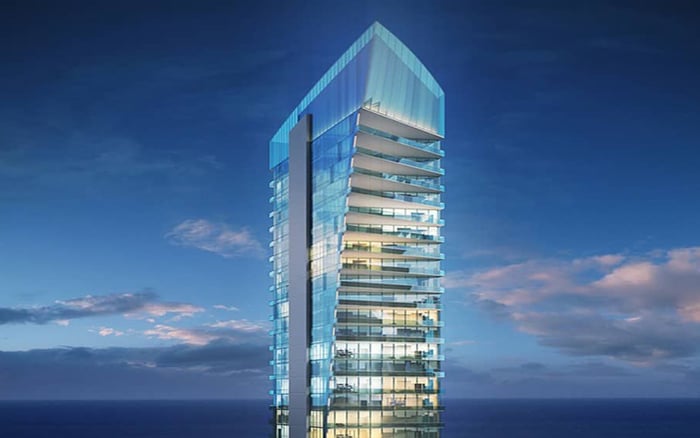
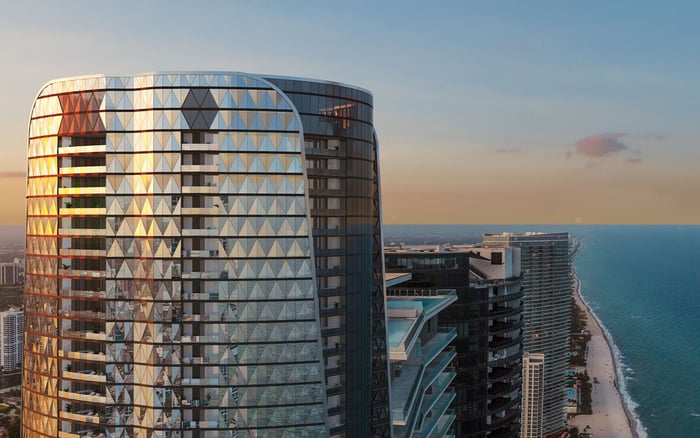
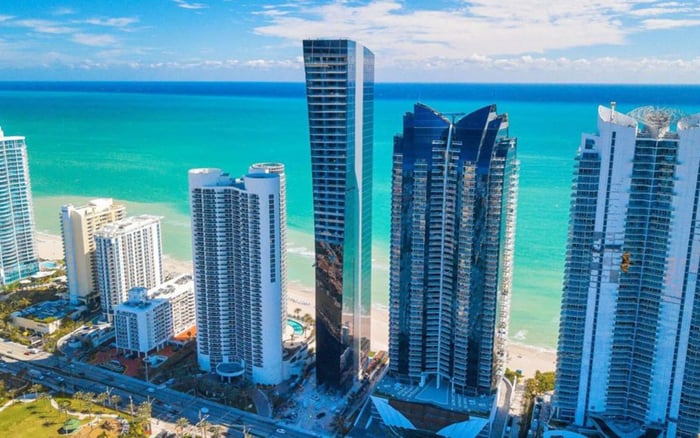
Muse Residences Sunny Isles Beach is a case study in a quieter luxury thesis: privacy, service, technology, circulation, and design can matter as much as amenity scale or visual spectacle.
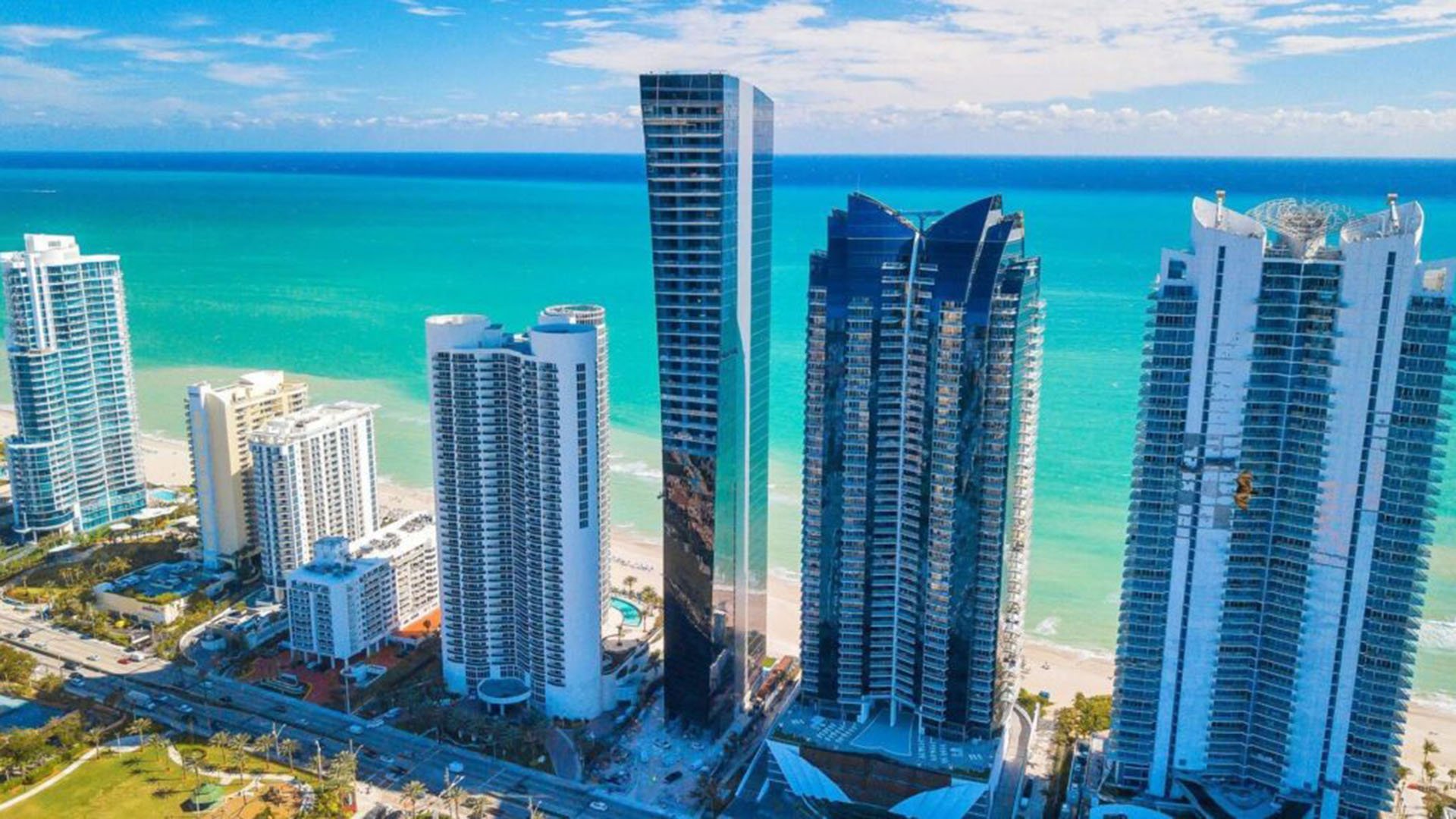
In Sunny Isles Beach, luxury is often read first through its clearest signals: height, glass, water, arrival, and the drama of oceanfront architecture. Yet the more revealing question for today’s ultra-premium buyer is quieter: what disappears from daily life once a residence works as it should? That is where Muse Residences Sunny Isles Beach becomes a useful case study.
Muse sits within the Collins Avenue oceanfront condominium corridor, but its editorial relevance is not simply its place in the Sunny Isles Beach skyline. Its value lies in how it frames luxury through ease, privacy, technology, service, and design. In other words, Muse belongs in the conversation around low-friction living: the kind of ownership experience in which fewer transitions, fewer delays, and fewer small irritations become part of the premium.
The buyer vocabulary is familiar: Oceanfront, Boutique, Ultra-modern, and private. Within internal buyer shorthand, Sunny Isles often describes this particular stretch of high-end coastal condominium life. But Muse suggests that the next layer of discernment is not only about being on the water. It is about how gracefully a building manages the resident’s day.
Privacy is often treated as an emotional amenity, but in a condominium it is also operational. The more a building can protect the resident from unnecessary exposure, crowding, and repeated points of contact, the more seamless it feels. Muse’s boutique posture matters here because a relatively intimate resident population can reduce the everyday friction that tends to accumulate in larger, resort-style environments.
This does not make scale inherently undesirable. For some buyers, a larger amenity program and a more theatrical presence are part of the appeal. Sunny Isles Beach includes several towers that speak fluently in that language. A buyer considering Bentley Residences Sunny Isles or The Ritz-Carlton Residences® Sunny Isles may be evaluating a different expression of branded or visually assertive condominium living. Muse, by contrast, sharpens the question of whether the most valuable amenity is the absence of daily drag.
For globally mobile owners, privacy is especially practical. A residence may be used intensively during certain seasons, left quiet at other times, and expected to function without drama upon return. The real luxury is not merely having services available. It is having them coordinated with enough discretion that the owner does not feel the building’s complexity.
Low-friction luxury is easiest to understand through circulation. How does one arrive? How many thresholds are crossed? How exposed does the route feel between car, lobby, elevator, and residence? Muse’s direct-to-residence circulation is central to its positioning because it translates a hospitality instinct into private condominium life. It implies that the path home should feel composed, efficient, and personal rather than public and procedural.
That matters more than it may appear on a floor plan. In the ultra-premium market, buyers are not only purchasing square footage or views. They are purchasing time, predictability, and control over transitions. Parking, deliveries, access for guests, service coordination, and maintenance are not secondary details. They are where luxury either becomes effortless or starts to feel overmanaged.
This is also where Muse can be compared with other Sunny Isles Beach choices without reducing the conversation to a simple hierarchy. Jade Signature Sunny Isles Beach and Turnberry Ocean Club Sunny Isles sit within a market where views and amenity narratives carry real weight. Muse’s distinctive contribution is to make the buyer ask how much of the premium should be assigned to usability itself.
Smart-home infrastructure can be marketed loudly, but its best use is quiet. In a low-friction residence, technology should not feel like a showroom feature. It should reduce manual effort, help the home respond more naturally, and simplify the owner’s relationship with lighting, climate, access, and everyday routines.
Muse’s technology positioning aligns with this more discreet definition. The point is not gadgetry for its own sake. It is the integration of systems into the residential experience so that the home is easier to live with, especially for owners who may divide their time across multiple cities or countries. When a property serves as both primary residence and seasonal base, consistency becomes a luxury attribute.
This is one reason the low-friction lens is increasingly persuasive in South Florida. The region attracts buyers sophisticated enough to separate visual impact from lived performance. A dramatic building can impress during a tour. A frictionless building continues to prove itself after move-in.
Muse’s art-driven interiors are another part of its boutique identity. In this context, design is less about accumulation and more about editing. The project’s curated approach helps position it away from the idea that luxury must always be expansive, maximal, or program-heavy.
For the right buyer, that restraint is meaningful. A residence can feel valuable because it has been considered, not because every possible amenity has been added. Flow, proportion, privacy, arrival, material atmosphere, and the relationship between interior space and water all contribute to the sense that the home is reducing noise rather than adding it.
The Terrace and Balcony conversation also belongs here, but not as a checklist. In oceanfront living, outdoor space is most compelling when it supports the rhythm of the residence rather than functioning only as a view platform. Waterview living is at its best when the view becomes part of daily composure, not simply a backdrop for spectacle.
Muse helps define a quieter form of Sunny Isles Beach luxury, one in which convenience and service matter as much as views and amenities. That does not make it universally superior to larger towers. It makes it more specific. The ideal Muse buyer is likely someone who values privacy, design discipline, and the operational polish of a building that aims to make life easier.
The trade-off between scale and convenience is one of the most important decisions in this market. Larger buildings can deliver breadth, energy, and a stronger resort cadence. More boutique buildings can offer a calmer ownership experience, fewer shared moments, and a more direct relationship between residence and service. Muse belongs to the latter conversation.
For high-net-worth buyers, the most refined question may be simple: does the building create more life outside the residence, or does it make the private residence itself feel more complete? Muse’s relevance is that it points toward the second answer. It suggests that in Sunny Isles Beach, the future of luxury may be measured not only by what a tower adds, but by what it removes.
What is low-friction luxury in the context of Muse Residences Sunny Isles Beach? It is an editorial way to describe luxury focused on ease, privacy, service, technology, and daily usability rather than spectacle alone.
Is Muse Residences Sunny Isles Beach positioned as an oceanfront condominium? Yes. Muse is positioned within Sunny Isles Beach’s Collins Avenue oceanfront luxury condominium corridor.
Why is privacy central to the Muse conversation? Privacy supports both discretion and convenience, especially for owners who want fewer unnecessary interactions and smoother daily transitions.
How does direct-to-residence circulation affect the living experience? It can make arrival feel more private and efficient by reducing the number of public thresholds between entry and home.
Does Muse emphasize technology? Yes. Integrated smart-home infrastructure is part of its low-friction positioning, with technology framed as a tool for easier living.
How is Muse different from larger resort-style condominium towers? Muse is framed as a more curated boutique interpretation, with a relatively intimate resident population and a focus on reduced daily friction.
Are art-driven interiors part of the Muse identity? Yes. Art-driven interiors support the project’s curated design approach and its quieter interpretation of luxury.
Who is the likely buyer for this kind of residence? The fit is strongest for affluent, globally mobile owners who value privacy, convenience, service, and design discipline.
Does low-friction luxury mean fewer amenities? Not necessarily. It means the residential experience is judged by how well it simplifies daily life, not only by how many amenities it offers.
Why does Muse matter within the Sunny Isles Beach market? It helps clarify the trade-off between scale and convenience, showing how quiet usability can be as important as views or visual impact.
For a tailored shortlist and next-step guidance, connect with MILLION.
If branded residences are on your mind — as a home or as an allocation — we would be glad to share what we are seeing, privately.
Begin a quiet conversation