Mr. C Tigertail and St. Regis® Residences Bahia Mar present two distinct expressions of service-led private living. For 2026 buyers, their relevance lies in treating privacy not as isolation, but as control over access, attention, and the rhythm of daily life.
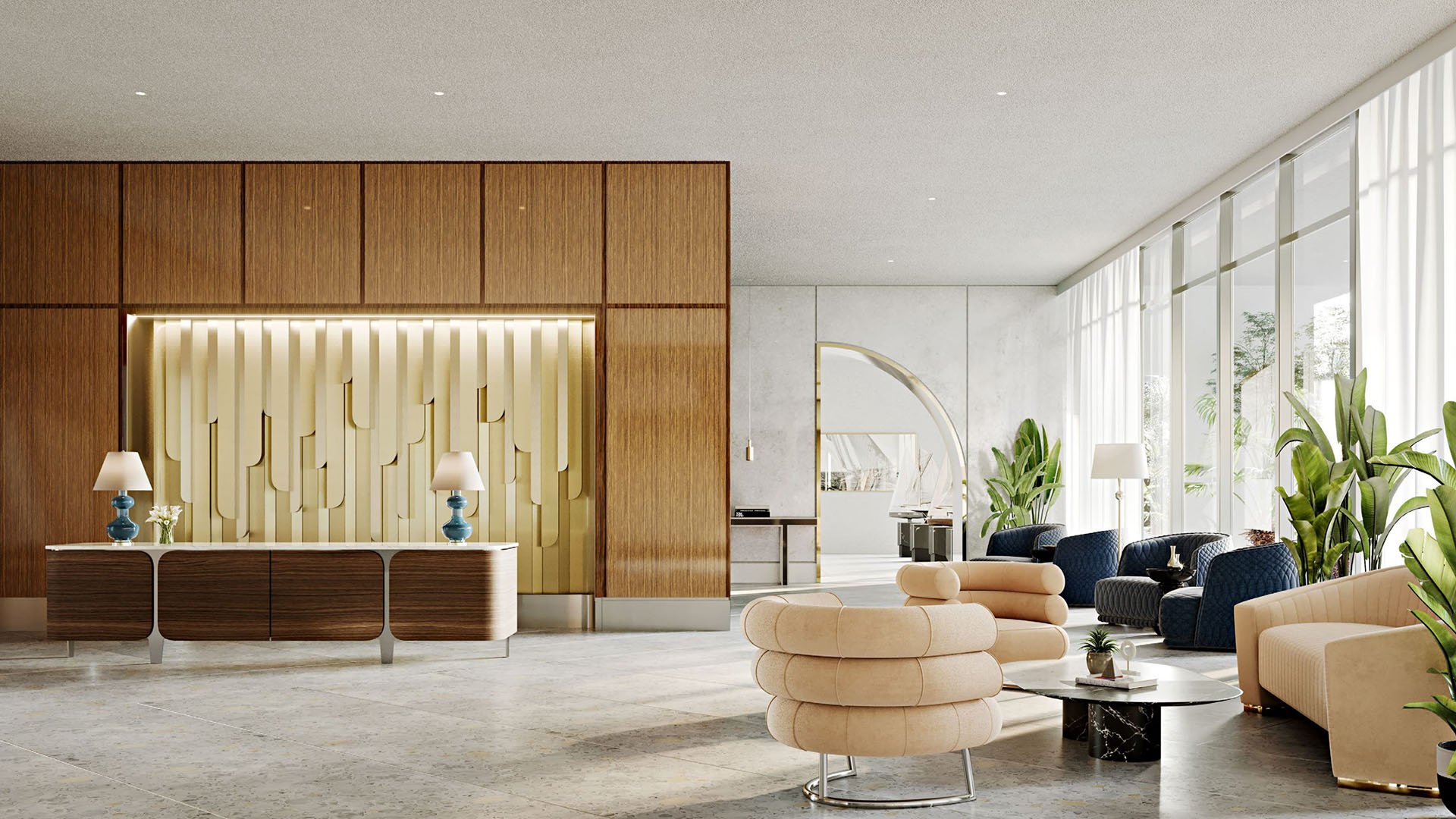
For South Florida’s ultra-premium buyer, hospitality no longer means simply importing the hotel experience into a condominium. The more consequential proposition is subtler: service should be precisely available, yet recede when it is not wanted. In 2026, that balance makes privacy a measure of quality rather than another amenity on a checklist.
Mr. C Tigertail Coconut Grove and St. Regis® Residences Bahia Mar Fort Lauderdale frame this idea in two distinct South Florida settings. One is a branded residential development in Coconut Grove, Miami; the other is positioned within Fort Lauderdale’s Bahia Mar enclave. Both speak to buyers who want hotel-caliber support without surrendering the discretion, autonomy, or emotional quiet of a private home.
The comparison is not about naming a universal winner. It is about understanding how each proposition structures the relationship between resident and service.
At the highest level, residential hospitality is becoming less theatrical and more responsive. Its value lies not in the constant visibility of staff or a conventionally public hotel atmosphere, but in the confidence that support will be attentive, consistent, and adapted to the resident’s preferences.
Mr. C Tigertail presents an ultra-luxury, service-rich experience rather than conventional condominium living. Its proposition balances attention with discretion and resident control. St. Regis® Residences Bahia Mar similarly emphasizes an ultra-luxury residential environment supported by hospitality services while maintaining the identity of a private residence.
This is the central evolution within branded residences: a respected hospitality culture can shape the experience without dominating it. For buyers, the brand matters most when its standards become an unobtrusive operating language rather than a conspicuous layer of ceremony.
Coconut Grove provides the context for Mr. C Tigertail’s interpretation of private hospitality. Here, privacy is framed through architectural, operational, and cultural choices. The result is a proposition centered on full-service support while preserving control over how residential life feels and functions.
Buyers evaluating the neighborhood may also consider how other hospitality-led offerings interpret the same tension. Four Seasons Residences Coconut Grove offers a relevant point of comparison for those deciding how strongly a service identity should shape their daily routine.
At Bahia Mar, the St. Regis proposition places recognized hospitality branding within a private residential framework. Privacy remains an architectural and operational priority in a service-intensive setting. Crucially, hospitality is presented as compatible with discretion rather than dependent on a conventional public-hotel experience.
The broader Fort Lauderdale market offers another useful comparison through Four Seasons Hotel & Private Residences Fort Lauderdale. The buyer’s task is not merely to compare brand names, but to determine which model best aligns service, setting, and personal boundaries.
For affluent buyers, privacy is often defined too narrowly. It may involve architecture and access, but it also encompasses operational discretion, cultural restraint, and control over interactions. A residence feels private when service is calibrated to preference, information is handled thoughtfully, and the owner determines when assistance enters the day.
That distinction matters for principals with visible public profiles, multigenerational households, frequent guests, or changing occupancy patterns. The most persuasive service model is not necessarily the most active. It is the one that understands when engagement adds value-and when restraint is the greater luxury.
Neither proposition should be reduced to a promise of complete separation from every hotel or public component. The stronger question for buyers is whether the residential experience preserves identity and control within a hospitality-supported environment.
Buyers should begin with their own definition of privacy. Some prioritize quiet and minimal interaction. Others want seamless assistance but prefer it to remain largely unseen. A household using a residence seasonally may assess the proposition differently from one seeking a primary home.
Operational questions deserve the same scrutiny as design. Buyers can ask how preferences are communicated, how requests are managed, and how the residential identity is maintained on ordinary days and during periods of increased activity. They should also consider how readily service can be declined, customized, or scaled to the household’s rhythm.
Lifestyle considerations are equally important. Coconut Grove and Bahia Mar establish different contexts, and location shapes the emotional character of arrival, departure, entertaining, and retreat. The right choice connects hospitality to how the buyer actually lives, not to an abstract ideal of luxury.
Mr. C Tigertail and St. Regis® Residences Bahia Mar illustrate a shared direction in South Florida luxury housing. Service and privacy are no longer opposing ideas. Thoughtfully integrated, service can protect time, reduce friction, and reinforce discretion.
For 2026 buyers, the distinction lies in controlled attention. Mr. C Tigertail emphasizes full-service support shaped by resident control, while St. Regis® Residences Bahia Mar combines a recognized hospitality identity with the priorities of private residential life. Each suggests that the highest form of hospitality may be the ability to make complexity disappear without making service itself the center of the home.
What is residential hospitality? It is a private-home experience supported by attentive services and an established culture of care.
Why is privacy central for 2026 buyers? Buyers increasingly want service without sacrificing discretion, autonomy, or control over daily interactions.
Is privacy limited to physical security? No. It also encompasses architecture, operations, cultural restraint, information handling, and resident choice.
How does Mr. C Tigertail frame hospitality? It presents a service-rich residential experience that balances attentive support with discretion and control.
How does St. Regis® Residences Bahia Mar frame privacy? It treats privacy as compatible with hospitality within an ultra-luxury private-residence identity.
Are these conventional condominium propositions? Both center on elevated residential hospitality rather than condominium living defined solely by ownership.
Does hospitality require a public-hotel experience? Not necessarily. The Bahia Mar proposition presents hospitality as compatible with residential privacy.
What operational questions should buyers ask? Ask how preferences, requests, interactions, and the choice to decline service are handled.
How should buyers compare the two locations? Consider how each setting supports arrival, retreat, entertaining, and the household’s preferred daily rhythm.
What is the clearest measure of luxury here? It is controlled attention: support that appears when useful and recedes when privacy matters more.
To compare the best-fit options with clarity, connect with MILLION.
If branded residences are on your mind — as a home or as an allocation — we would be glad to share what we are seeing, privately.
Begin a quiet conversation