The Miami Open offers a practical lens for evaluating a luxury residence beyond its address: how privately owners arrive, where drivers can wait, and how reliably the journey works when event access requires careful coordination.
For a luxury buyer, the Miami Open brings a revealing question into focus: does a residence make a carefully planned day feel effortless, or merely look convenient on a map? The tournament takes place at Hard Rock Stadium in Miami Gardens. Attending requires more than choosing a home within an appealing radius of the venue.
The useful shift is from proximity to control. Arrival privacy, a driver's permitted waiting location, and the reliability of the route home each deserve scrutiny. A beautiful entrance does not, by itself, establish any of them. Nor does the tournament establish that a particular community experiences privacy loss or residential traffic spillover.
For buyers, the event is a practical test of daily-life arrangements, not evidence of a property's strengths or weaknesses. The relevant luxury is the ability to leave and return with fewer unresolved decisions.
Hard Rock Stadium's address is 347 Don Shula Drive, Miami Gardens, Florida 33056. Yet an address is only the beginning of an arrival plan. Miami Open guest arrival uses Gates 15, 16, 17, and 18, with the Stadium Court and Tennis Campus entrance at the stadium's southeast corner.
Parking is extremely limited, and pre-purchasing a parking pass is recommended. For an owner who intends to drive, parking should be settled before departure, not left as an incidental detail on arrival.
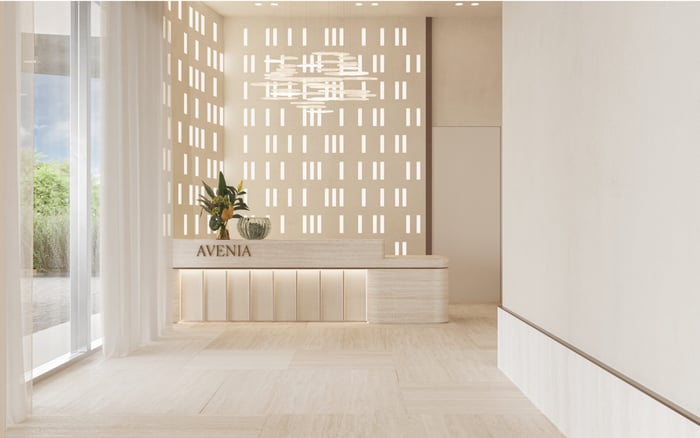
A buyer considering Avenia Aventura can use this distinction to structure due diligence: evaluate the actual departure point in Aventura and the approach to the assigned tournament access point, rather than a route ending at the stadium's map pin. This is a question to investigate, not a claim of superior access from the project.
Reconfirm gate assignments for the intended visit. A familiar venue does not make every event's routing interchangeable.
Assess residential arrival privacy step by step. Where does the vehicle leave the public road? Where do passengers step out? Who can see that transition? How does the resident continue toward the home? These questions distinguish an attractive arrival court from an arrangement that meets a particular household's expectations.
Ask management whether residents, visitors, deliveries, and waiting vehicles use the same space. Request a walkthrough of the intended arrival sequence, including any alternative entrance offered to residents. Where a building is not yet operating, distinguish proposed arrangements from enforceable permissions and established procedures.
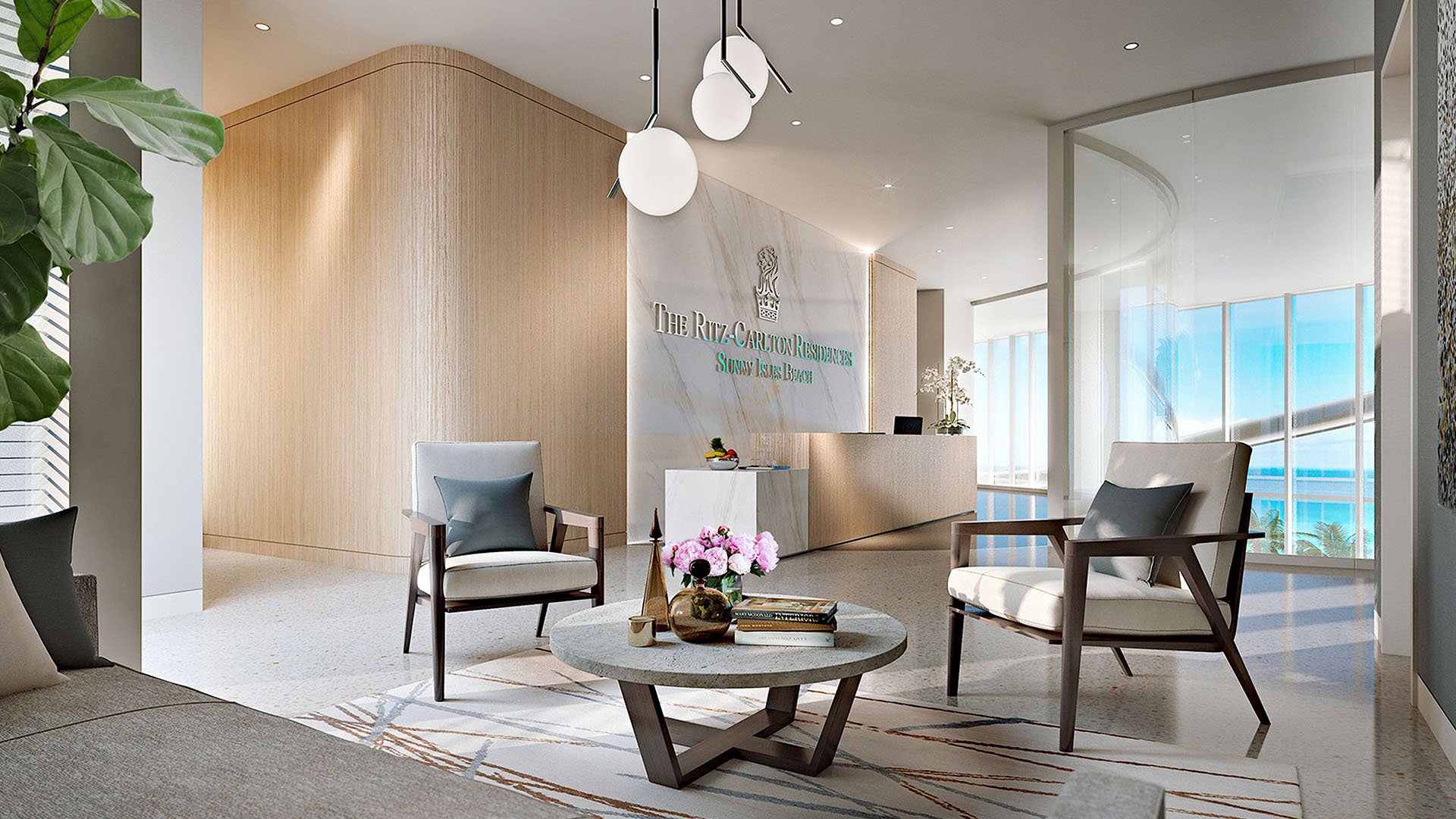
For someone evaluating Bentley Residences Sunny Isles, the Sunny Isles Beach address should begin, not conclude, the discussion. Verify the specific vehicle-to-residence journey and its operating rules rather than infer privacy from a project name.
The Miami Open sharpens these questions because the outing requires coordinated departures and returns. It does not establish that tournament spectators compromise privacy at any named residence.
A passenger drop-off point is not necessarily a place where a chauffeur may wait. Driver staging concerns both the location and the permission for a vehicle to remain available between movements. That distinction matters at the residence and the venue alike.
Miami Open rideshare drop-off is at Gate 18, with pickup at Gate 17. These separate locations require distinct instructions for the outward and return journeys. They do not establish private-driver holding areas, waiting permissions, or curbside dwell limits.
At the residence, ask where a driver may wait, how the resident requests the vehicle, and whether visitor or contractor traffic shares that space. At the tournament, confirm private-car arrangements directly before travel. Do not assume rideshare access authorizes chauffeur staging.
A viewing at Rivage Bal Harbour offers an opportunity to request the same operational explanation for a Bal Harbour home. Verify any description of waiting space against the applicable rules; do not treat it as a benefit established here.
Generic stadium routing and tournament routing are not identical. General stadium rideshare pickup and drop-off use off-site Lot 30 on NW 37th Avenue, with an estimated 25-minute walk to the stadium. That walking estimate is not a verified Miami Open requirement and should not become part of a tournament itinerary without confirmation.
The same distinction applies to general park-and-ride arrangements. Complimentary shuttles to the northwest gate, with service beginning three hours before gametime and continuing 90 minutes postgame, do not establish Miami Open shuttle availability or session hours.
Start with tournament-specific arrangements, then reconfirm them for the visit. A driver brief should distinguish the destination, authorized drop-off, confirmed waiting plan, and return pickup. Collapsing those details into one generic stadium instruction leaves too much unresolved.
There is no supported basis here for assigning a fixed tournament delay, identifying recurring daily congestion hours, or ranking neighborhoods by journey time. A more useful buyer exercise is to examine route options and, where practical, observe the intended journey under relevant conditions.
For a Brickell residence such as Una Residences Brickell, compare the actual building exit, approach roads, and return entrance rather than relying on the neighborhood label. Record observations as conditions on that visit, not a permanent commute guarantee.
Second-home buyers should also consider who coordinates the journey when they are not managing every detail personally. Ask whether management can explain resident pickup procedures and how changes are communicated to an arriving driver. Distinguish coordination assistance from any promise about public-road conditions.
The aim is not to eliminate uncertainty. It is to understand which parts of the journey the residence can control and which require a separate event-day plan.
Accessible parking at the stadium requires a valid disabled parking placard and matching photo ID. Accessible spaces are in on-site inner and outer lots and certain off-site lots, but those categories alone do not establish the most suitable tournament arrival arrangement.
Confirm the applicable lot, entrance, and onward route before travel. At the residence, examine the passenger transfer point and the path into the building with equal care. Evaluate accessibility across the entire journey, not simply by the availability of a parking space.
Ultimately, the strongest property assessment separates design, permission, and execution. A discreet entrance is a design question; driver waiting is a permissions question; peak-traffic access requires a route plan. Together, they offer a more useful definition of convenience than distance alone.
For a considered approach to South Florida residences and the details that shape ownership, explore MILLION.
If branded residences are on your mind — as a home or as an allocation — we would be glad to share what we are seeing, privately.
Begin a quiet conversationThe tournament takes place at Hard Rock Stadium, at 347 Don Shula Drive, Miami Gardens, Florida 33056.
Parking is described as extremely limited, and pre-purchasing a parking pass is recommended. Confirm the applicable access arrangements before leaving.
Tournament arrival arrangements identify Gates 15, 16, 17, and 18. Reconfirm assignments for the intended visit.
Miami Open-specific arrangements identify Gate 18 for drop-off and Gate 17 for pickup. These locations should be reconfirmed before travel.
No. Rideshare access does not establish chauffeur holding areas, waiting permissions, or curbside dwell limits.
No. The 25-minute walking estimate concerns general stadium rideshare arrangements at Lot 30, not a verified Miami Open walking requirement.
No. General shuttle arrangements and gametime-based operating hours do not establish tournament shuttle availability or session schedules.
Examine where passengers leave the vehicle, visibility from public areas, and the path into the residence. Verify how residents, visitors, deliveries, and waiting vehicles share the arrival space.
No fixed tournament delay or neighborhood journey-time ranking is established here. Evaluate actual approach roads, authorized access points, and conditions for the intended visit.
A valid disabled parking placard and matching photo ID are required. Confirm the applicable tournament lot and onward route before travel.