A discreet buyer’s look at how Miami Music Week can clarify the value of a Bay Harbor Islands pied-à-terre, with emphasis on privacy, access, governance, and long-term positioning.
Miami Music Week has a way of making the temporary feel expensive. Even for affluent visitors, the friction of a high-demand cultural week can sharpen essential questions: Where do you arrive, where do you decompress, where do you keep clothing and equipment, and how easily can you move from social energy to privacy?
That is why the event can strengthen the case for a better-positioned South Florida pied-à-terre in Bay Harbor Islands. The point is not to own a residence for one week of programming. The stronger argument is that a demanding week reveals whether a second home truly functions. A pied-à-terre should reduce decisions, preserve discretion, and give its owner a reliable base when the region is at its busiest.
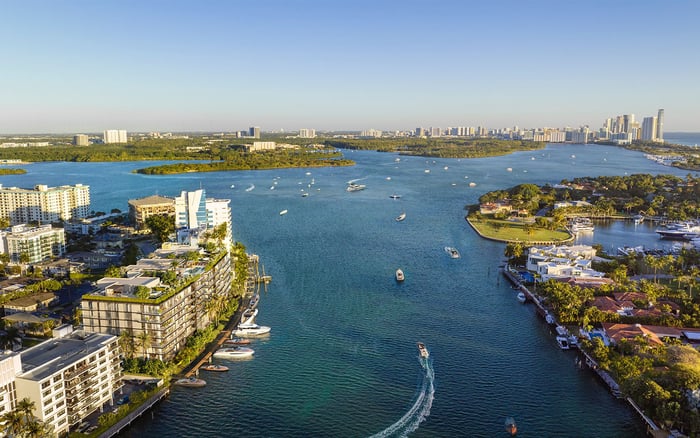
Bay Harbor Islands can appeal to buyers who want access to Miami’s cultural calendar without living inside its most visible hotel corridors. The area’s appeal is less about spectacle than control. It allows an owner to participate selectively, return quietly, and maintain a residential rhythm that feels distinct from the event itself.
For the right buyer, the Bay Harbor proposition is proximity with restraint. A residence here can sit within the broader orbit of Miami Beach, Bal Harbour, Surfside, North Bay Village, Sunny Isles, and the mainland, while still feeling more composed than the city’s more kinetic districts.
That distinction matters during Miami Music Week because the most valuable luxury may be optionality. An owner can attend dinners, private gatherings, wellness appointments, and late-night events, then return to a setting that is not trying to become part of the entertainment. A better pied-à-terre does not compete with the week. It supports it.
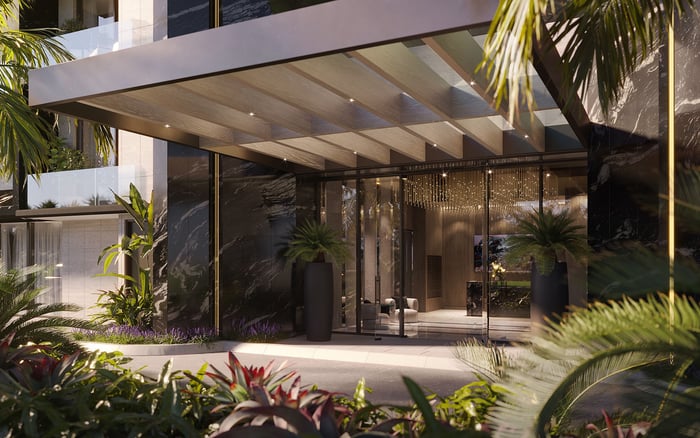
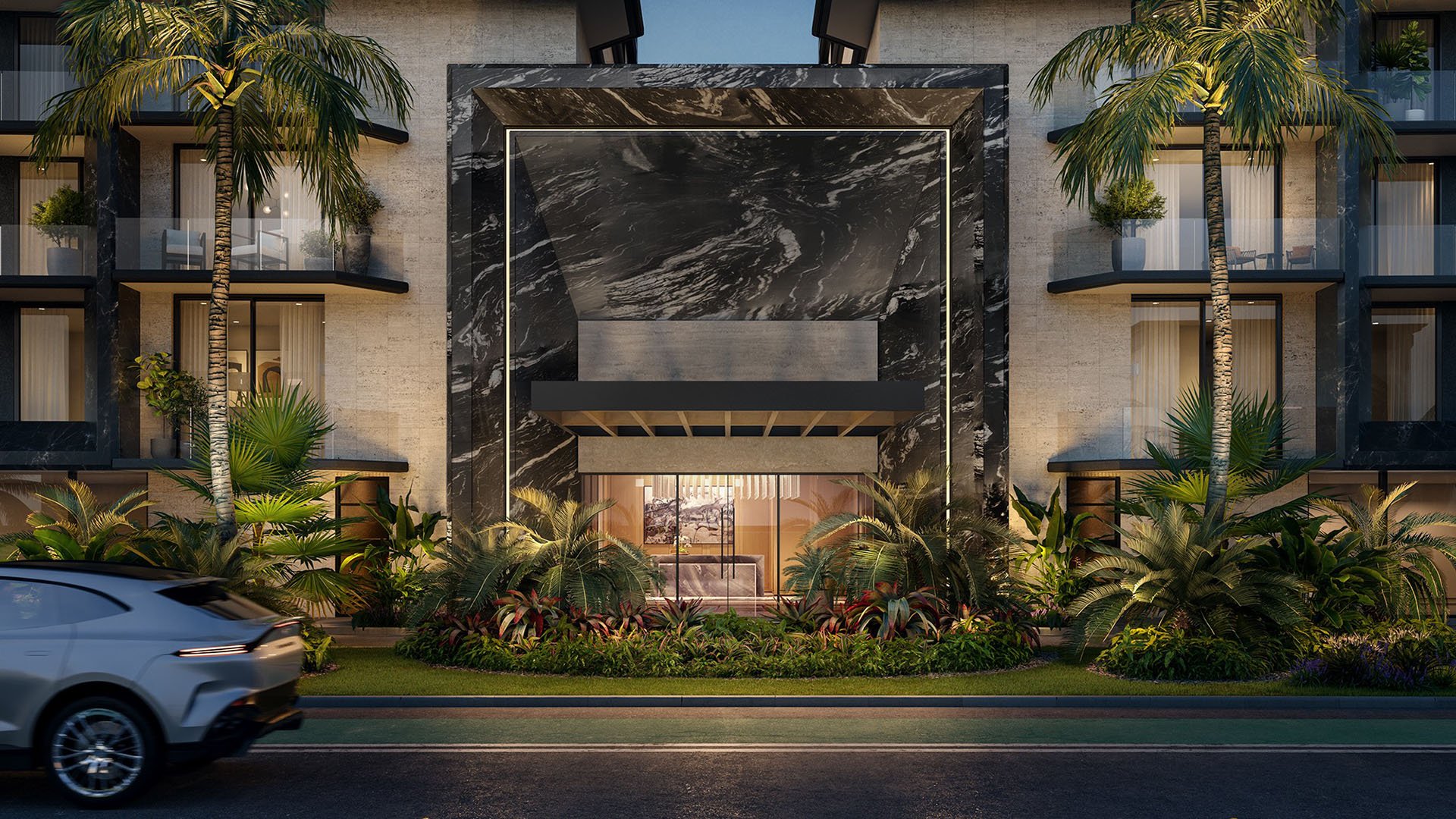
This is where boutique residential thinking becomes important. A project such as Alana Bay Harbor Islands enters the conversation for buyers who prefer a quieter island address to a hotel suite or a more anonymous high-rise environment. The attraction is not simply having a place to sleep. It is having repeatable personal infrastructure in a neighborhood that can feel residential even when South Florida is highly activated.
The best pied-à-terre decisions begin with use, not finishes. During a week like Miami Music Week, an owner learns quickly whether the home can handle wardrobe changes, visiting friends, car-service timing, package deliveries, late returns, and early recovery. These are not glamorous details, but they determine whether the residence feels effortless.
Parking and arrival choreography deserve careful attention. So do elevator experience, lobby discretion, staff culture, storage, acoustic comfort, terrace usability, and the ability to host a small pre-event drink without turning the residence into an event venue. In South Florida, a pied-à-terre is often judged less by square footage than by how gracefully it manages movement.
Governance is equally central. Buyers should review association rules, leasing policies, guest procedures, pet rules, renovation restrictions, and any limits that could affect flexible use. A pied-à-terre is only as useful as its operating framework. A building with elegant architecture but inconvenient rules may feel less valuable than a more understated property that functions with precision.
Hotels remain part of Miami’s cultural ecosystem, but hotel dependence can feel less compelling for owners who return often. A residence offers continuity. Clothing can remain in place, preferred linens can be selected, wellness routines can be protected, and arrival can feel private rather than transactional.
This does not mean every buyer should seek the largest residence. In many cases, the better South Florida pied-à-terre is compact, beautifully planned, and easy to close up between visits. The more relevant question is whether the home is located and managed well enough to make repeat use feel natural.
For some, Bay Harbor Towers may be part of that discussion because the name itself sits within the Bay Harbor Islands frame that many buyers are increasingly evaluating for discreet second-home use. Others may be drawn to wellness-oriented living, where The Well Bay Harbor Islands aligns with a lifestyle in which recovery, calm, and daily rituals are just as important as proximity to nightlife.
Second-home ownership in South Florida has become more sophisticated. Buyers are not only asking whether a residence is beautiful. They are asking whether it is strategically placed for the way they actually live: seasonal stays, business trips, cultural weekends, family visits, and spontaneous arrivals.
Miami Music Week is useful as a stress test because it concentrates many of those needs into a short period. If a residence works when the region feels most animated, it is likely to work during calmer weeks as well. The buyer can assess whether the location feels convenient, whether the building retains its composure, and whether the home supports both social and restorative use.
Investment discipline begins with lived practicality. A pied-à-terre should not be purchased solely because an event makes hotels feel inconvenient. It should be purchased because the same factors that matter during a major cultural week also matter throughout the year: access, privacy, governance, design, services, and ease of ownership.
Bay Harbor Islands is especially relevant for buyers who want a more edited version of Miami living. The setting can support morning routines, low-key dining, private appointments, beach access in the broader area, and a quieter return after the city’s larger social commitments.
In that context, projects such as Onda Bay Harbor and La Maré Bay Harbor Islands can be considered through a practical lens: Does the building match the owner’s pattern of arrival, use, and retreat? Does it offer the right balance of residential intimacy and polished presentation? Does it feel like a base, not merely a backdrop?
The strongest buyers will compare buildings through lived scenarios. Imagine arriving on a late flight, changing for dinner, returning after midnight, hosting breakfast the next morning, and leaving the residence closed for several weeks. If each step feels simple, the property begins to justify itself.
Miami Music Week can clarify what a South Florida pied-à-terre is supposed to do. It should not only signal taste. It should remove friction. It should create a private point of return in a region where desirable weeks can feel dense, fast, and highly visible.
Bay Harbor Islands makes a compelling case for buyers who value cultural participation without constant exposure. The most successful purchase will combine location, building culture, design, and governance into a residence that quietly works when demand is highest.
Why consider Bay Harbor Islands for a Miami Music Week pied-à-terre? It can offer a calmer residential base while keeping the broader Miami lifestyle within reach.
Is this only useful during Miami Music Week? No. The week simply highlights the same access, privacy, and operating needs that matter year-round.
What should buyers prioritize first? Arrival ease, building governance, parking, storage, guest procedures, and acoustic comfort should be early priorities.
Does a smaller residence make sense? Yes, if the plan is efficient, the building is well managed, and the location supports repeat use.
Should buyers assume rental flexibility? No. Leasing rules, association policies, and local requirements should be reviewed before purchase.
How does wellness factor into the decision? Recovery, quiet, and routine can be central for owners who use the home around busy cultural weeks.
Is a hotel still preferable for some visitors? Yes. A residence makes more sense for buyers who return often and value continuity over short stays.
What makes a building feel discreet? Controlled arrivals, thoughtful staffing, privacy-minded circulation, and a composed residential culture all matter.
Can Bay Harbor Islands serve both leisure and business travel? It can, if the residence supports fast arrivals, calm work periods, and easy movement across South Florida.
What is the clearest test before buying? Walk through a full visit scenario, from airport arrival to late return, and judge whether the home reduces friction.
To compare the best-fit options with clarity, connect with MILLION.
If branded residences are on your mind — as a home or as an allocation — we would be glad to share what we are seeing, privately.
Begin a quiet conversation