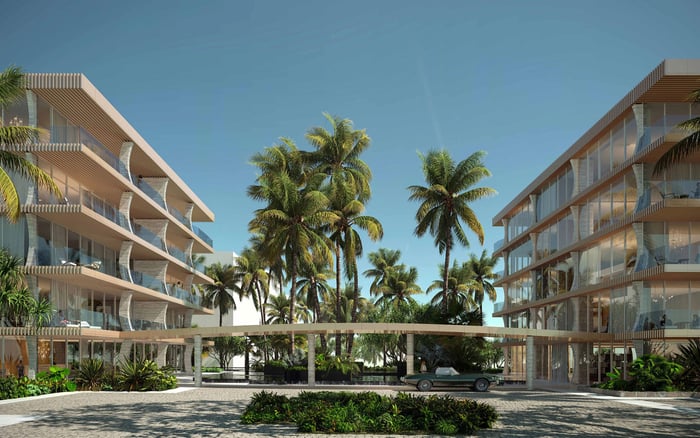
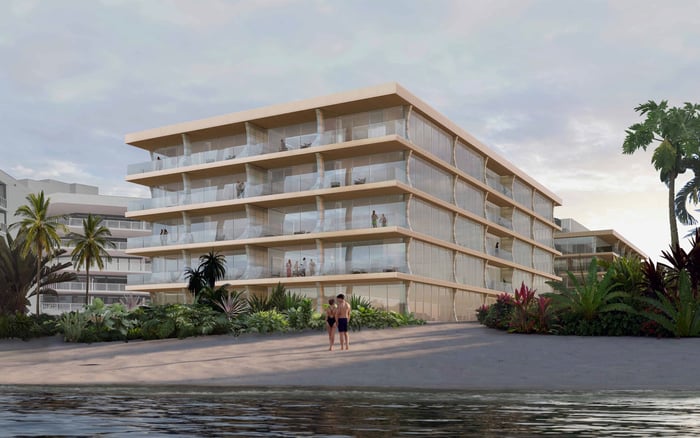
Maison d’Or and Forté on Flagler advertise distinct delivery-related amenities. For buyers handling valuable or confidential shipments, the decisive questions concern access permissions, documented custody, exceptional deliveries, and liability rather than the presence of a package room alone.

A carefully composed arrival experience is one expression of residential luxury. Another is how a valuable delivery is handled when its owner is absent. For a West Palm Beach buyer, the question is not simply whether a building receives packages, but who may accept them, where they are held, and how responsibility passes from courier to resident.
Maison d’Or and Forté on Flagler offer distinct starting points for that conversation. Maison d’Or advertises courier support and service circulation; Forté advertises package service alongside round-the-clock lobby staffing and security. Neither property's advertised amenities establish a formal bonded-courier access policy or an insured chain-of-custody commitment. That distinction matters when a shipment is confidential, irreplaceable, temperature-sensitive, or unusually valuable.
A package room is infrastructure, not a complete custody protocol. Buyers should treat advertised amenities as a reason to ask precise questions, not as a guarantee of specialized handling.
At Maison D'Or South Flagler, advertised features include large mail and package rooms on the lobby arrival level, courier services, and a separate overnight delivery service. The overnight offering does not establish acceptance hours or handling conditions. Buyers should clarify what it includes and whether staff can accept their particular shipment.
A service elevator for staff and deliveries provides infrastructure to separate service traffic from resident arrivals. Private arrival access is described through an access-controlled garage or valet at the elevated main entry, while access-controlled elevators open directly into individual residential elevator lobbies. These features make the permitted delivery route an important point to clarify, particularly when a resident wants a direct handoff without granting broader access.
The distinction is between a route that exists and one a courier is authorized to use. Confirm whether delivery personnel remain at reception, use the service elevator with an escort, or may reach a residential elevator lobby under defined conditions. None of those permissions should be inferred from the physical layout alone.
Individual lockable, humidity-controlled storage rooms are also advertised, but their use for package custody is not established. They should not be treated as secure holding rooms for valuable shipments without confirmation. Courier identity checks, signature procedures, photographic logging, and tamper-evident storage also remain unspecified.
At Forté on Flagler West Palm Beach, advertised amenities include package service and a mail room on the grand-lobby level, concierge service, 24-hour security and surveillance, and a 24-hour lobby attendant and valet service.
That staffing framework gives buyers a clear starting point for questions about arrivals outside ordinary daytime hours. It does not establish that every overnight attendant is authorized to sign for every delivery. Concierge service is listed separately from the 24-hour lobby attendant, so continuous availability for concierge requests should not be assumed.
Moving coordination and storage solutions are among the concierge offerings, but neither establishes specialized handling for valuables. House cars are also listed, without being identified as vehicles for transporting packages or valuable items. Buyers should distinguish an available convenience from a service specifically authorized for their shipment.
Courier preregistration, delivery-personnel escorts, and package screening before storage remain unspecified. Those are matters to confirm, not grounds to conclude that internal procedures are absent. The useful comparison with Maison d’Or is therefore one of advertised service emphasis, not a ranking of verified custody performance.
“Screening” can mean different things in a delivery conversation. A buyer may be asking about courier identification, exterior inspection, acceptance restrictions, or examination of package contents. Management should explain exactly which procedures apply and who performs them.
Access control and surveillance do not, by themselves, establish content screening, identity verification, or documented custody transfers. Nor does a signature establish how a parcel will be stored after acceptance. Ask for the current package-handling procedure and walk through a representative delivery from arrival to release.
The written procedure should address authorized receivers, courier identification, arrival logging, storage location, resident notification, and release authorization. Ask whether records identify each transfer and document the package's exterior condition. Then confirm the escalation process for a damaged seal, disputed signature, missing parcel, or attempted collection by someone without permission.
These are requests for clarity, not assumptions about either property's operations. A polished lobby and a well-documented handoff serve different purposes; buyers need to understand both.
For a buyer using a bonded courier, the key issue is whether the building accepts that provider under a defined access arrangement. Neither property's advertised delivery services establish such an arrangement or an insured chain-of-custody commitment.
Before scheduling a shipment, confirm the permitted entrance, advance-notice requirements, identification requirements, escort rules, and designated waiting area. Ask whether direct handoff to the resident is allowed, where it may occur, and what happens if the resident is delayed. A service elevator or staffed lobby does not answer those questions automatically.
Request written exceptions for signature-required, confidential, irreplaceable, temperature-sensitive, and unusually valuable deliveries. The answer may involve advance approval, a restricted acceptance window, or a resident-present handoff. These are possibilities to discuss, not advertised policies at either property. Confirm whether the building can decline a shipment and how the courier would be notified.
An owner who is away should establish who may receive and collect a shipment on their behalf. Ask whether authorization is delivery-specific, how it can be changed, and whether a household representative must present identification. Notification should not be confused with permission to release a parcel.
Separately, verify the building's liability while a shipment is in its custody, relevant insurance limits and exclusions, courier coverage, and additional service fees. Ask when each party's responsibility begins and ends, and whether temporary storage changes the arrangement. Written answers are especially valuable when an owner cannot attend the handoff personally.
The same questions can structure a broader search that includes Alba West Palm Beach, without assuming that its delivery services or policies match either property discussed here. Keep the comparison consistent: advertised infrastructure, authorized handling, exceptional shipments, and liability.
Maison d’Or's courier support and separate service circulation frame one conversation. Forté's package infrastructure and round-the-clock staffing frame another. The decisive next step is to obtain current written procedures that fit the owner's actual delivery needs. Luxury is more reassuring when the handoff is as clearly defined as the arrival.
For a discreet perspective on your West Palm Beach residential search, explore MILLION.
If branded residences are on your mind — as a home or as an allocation — we would be glad to share what we are seeing, privately.
Begin a quiet conversationMaison d’Or advertises large mail and package rooms, courier services, overnight delivery service, and a service elevator for staff and deliveries.
No. The advertised service does not detail acceptance hours or handling conditions, so buyers should confirm both.
Their use for package custody is not established. Buyers should confirm permitted uses rather than assume they provide specialized shipment storage.
Forté advertises package service and a mail room on the grand-lobby level, alongside concierge service, 24-hour security and surveillance, and a 24-hour lobby attendant and valet service.
Concierge service is listed separately from the 24-hour lobby attendant. Continuous availability for concierge requests should not be assumed.
No. Those features do not establish package-content screening, courier identity verification, or documented custody transfers.
Neither property's advertised delivery descriptions establish a formal bonded-courier access policy or an insured chain-of-custody commitment. That does not prove an internal policy is absent.
Confirm permitted entrances, advance-notice and identification requirements, escort rules, waiting areas, and direct-handoff permissions.
Request written rules for signature-required, confidential, irreplaceable, temperature-sensitive, and unusually valuable shipments.
Verify building custody liability, relevant insurance limits and exclusions, courier coverage, and any additional service fees. Clarify when responsibility transfers between parties.