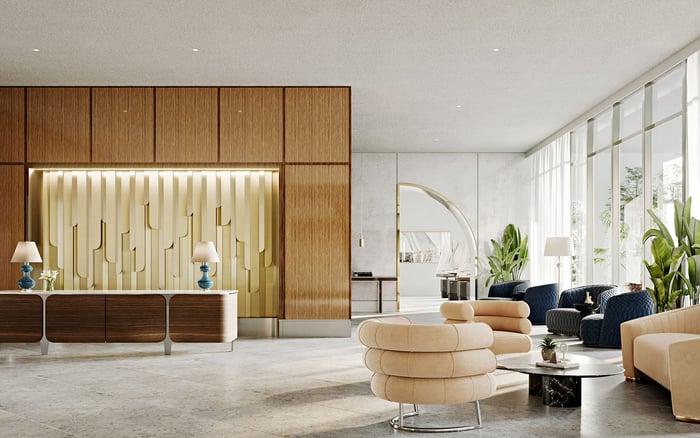
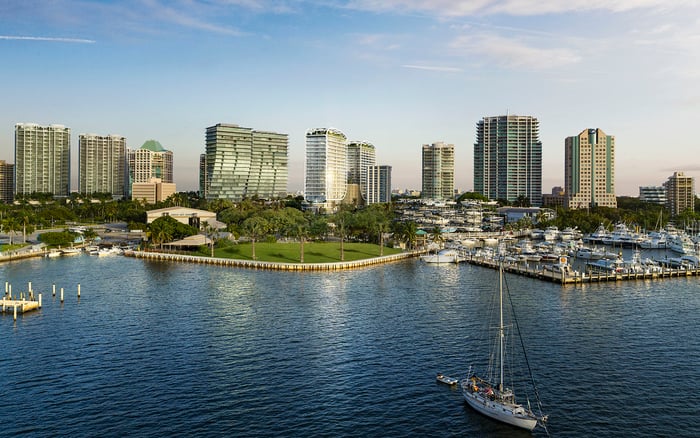
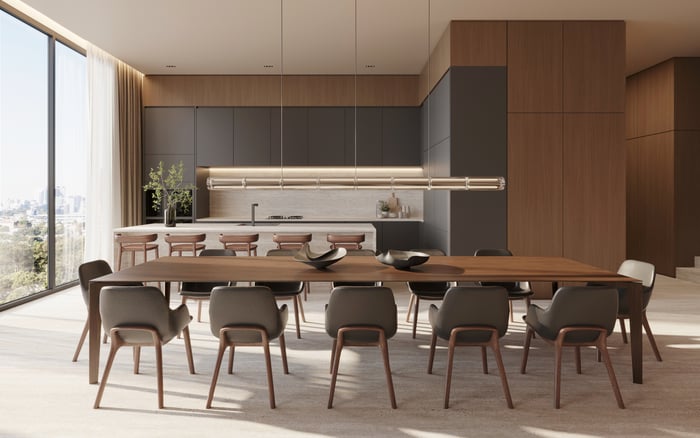
Three Coconut Grove developments show how privacy now extends from residence planning and controlled circulation to discreet service and the wider neighborhood setting.
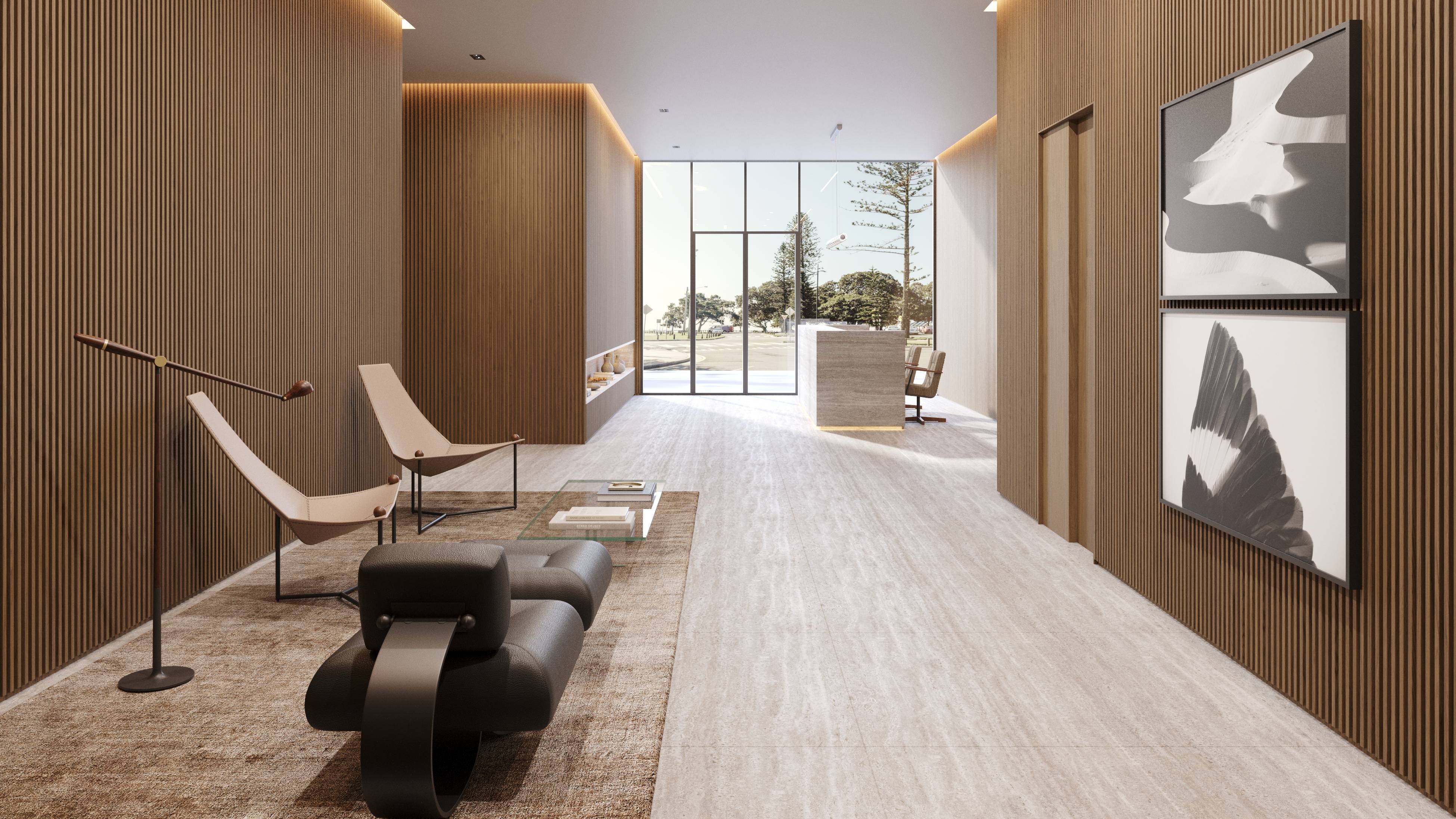
In Coconut Grove, privacy is no longer adequately defined by a gated arrival or distance between neighboring homes. It has become a more nuanced residential condition, shaped by architecture, circulation, amenities, staffing, and the frequency of everyday encounters. For buyers at the upper end of the market, the ideal is not isolation, but control over when, where, and how interaction occurs.
That distinction helps explain the appeal of three current expressions of private living in the Grove. Four Seasons Residences Coconut Grove, Mr. C Tigertail Coconut Grove, and Opus Coconut Grove approach privacy through distinct identities, yet each places discretion at the center of its residential proposition.
Their shared direction signals a broader evolution in luxury: privacy is moving from the amenity column into the underlying logic of a building.
The strongest privacy propositions operate across three connected layers. The first is architectural: building scale, residence configuration, amenity placement, and pathways through shared spaces. The second is operational: controlled access, visitor management, and service protocols. The third is relational: the quality and frequency of contact among residents, staff, and guests.
When these layers align, privacy feels intuitive rather than defensive. A resident can receive assistance without inviting unnecessary visibility, use amenities without excessive circulation, and move between home and the wider city with minimal friction. This is particularly relevant within Branded Residences, where buyers may expect substantial hospitality while wanting service to remain composed and unobtrusive.
Privacy, in this sense, is not the absence of service. It is service delivered with judgment.
Four Seasons Residences Coconut Grove frames seclusion through controlled access and discreet residential service. Its proposition extends beyond physical separation to encompass building scale, residence layouts, amenity planning, and service programming. The result is a model in which privacy depends as much on orchestration as enclosure.
For a buyer, that means examining the full residential journey. Arrival is only one moment. The route to a residence, access to amenities, interactions with staff, and the handling of visitors all determine whether a property feels genuinely private.
The project also draws strength from its location. Coconut Grove already possesses a retreat-like character within Miami, allowing the residence to build upon an established sense of shelter rather than manufacture one entirely within its walls.
At Mr. C Tigertail Coconut Grove, privacy is closely tied to the operations of a hospitality-branded residence. Seclusion, controlled access, and discreet service work in concert, making staff protocols part of the lived experience rather than merely a back-of-house detail.
This matters because even a well-planned residence can feel exposed when service interactions are frequent, conspicuous, or poorly timed. Regulating encounters among residents, staff, and visitors can create a calmer atmosphere without diminishing attentiveness. The luxury lies in responsiveness that never becomes interruption.
Mr. C Tigertail therefore reflects a holistic buyer expectation. Architecture and amenities matter, but so do the rhythms of hospitality and the discretion with which they are delivered.
Opus Coconut Grove presents privacy through boutique scale, residence configuration, curated amenities, and controlled circulation. Here, limited scale is more than an aesthetic preference. It can reduce unnecessary movement through common areas and foster a more measured relationship between private homes and shared spaces.
For privacy-focused buyers, this model offers a clear proposition: exclusivity can be experienced through fewer points of contact and a more precisely defined residential environment. Opus also illustrates the market shift from viewing privacy as an optional feature to treating it as part of a development’s identity.
That identity is reinforced by the Grove itself. Mature vegetation, winding streets, residential character, and the Biscayne Bay setting lend the neighborhood a naturally retreat-like context.
Prospective owners should look beyond broad claims of exclusivity and examine how privacy functions during an ordinary day. Consider whether arrival routes, amenity circulation, residence planning, visitor access, and staff interaction are coordinated. A private floor plan can lose much of its value if a building’s operations create avoidable exposure.
The comparison among these three properties is therefore less about naming a universal winner than identifying the right privacy model. Four Seasons emphasizes coordinated residential service and planning. Mr. C Tigertail highlights discreet hospitality protocols. Opus gives particular weight to limited scale and controlled circulation.
In each case, the central question remains the same: does the building allow residents to stay connected to service, amenities, and Miami while retaining meaningful control over personal space and interaction?
Coconut Grove offers a setting in which privacy can feel atmospheric rather than imposed. Its mature landscape, winding streets, residential fabric, and relationship with Biscayne Bay create a sense of retreat within the larger city.
That context matters. A development may carefully manage internal access, but the experience becomes more convincing when the surrounding neighborhood also offers visual softness and a calmer residential cadence. In the Grove, privacy can begin before a resident reaches the lobby and continue beyond the residence itself.
For buyers weighing luxury property here, privacy is best understood as a system. The most persuasive developments coordinate design, operations, hospitality, and setting so seamlessly that discretion becomes part of daily life.
How do these three developments define privacy? They frame it through architecture, operations, and personal interaction-not physical separation alone.
What distinguishes Four Seasons Residences Coconut Grove? Its approach combines controlled access, discreet service, residence planning, amenity design, and the Grove’s retreat-like setting.
How does Mr. C Tigertail Coconut Grove support discretion? It uses controlled access and hospitality protocols to manage interactions among residents, staff, and visitors.
Why is Opus Coconut Grove relevant to privacy-focused buyers? Its boutique scale, residence configuration, curated amenities, and controlled circulation place discretion within the project’s identity.
Is privacy simply about having fewer neighbors? No. Scale can matter, but circulation, layouts, access, amenities, and service practices also shape the experience.
Why does discreet service matter? It gives residents access to assistance while reducing unnecessary interruption, visibility, and social friction.
How does Coconut Grove reinforce residential privacy? Mature vegetation, winding streets, residential character, and the Biscayne Bay setting contribute to a retreat-like atmosphere.
What should buyers examine during a property visit? They should consider arrivals, shared-space circulation, visitor access, amenity placement, and the apparent rhythm of staff interaction.
Are all three properties using the same privacy model? No. They share an emphasis on discretion but express it through different combinations of service, planning, scale, and operations.
Has privacy become a core luxury value? These developments indicate that privacy is increasingly treated as a defining residential principle rather than an optional amenity.
To compare the best-fit options with clarity, connect with MILLION.
If branded residences are on your mind — as a home or as an allocation — we would be glad to share what we are seeing, privately.
Begin a quiet conversation