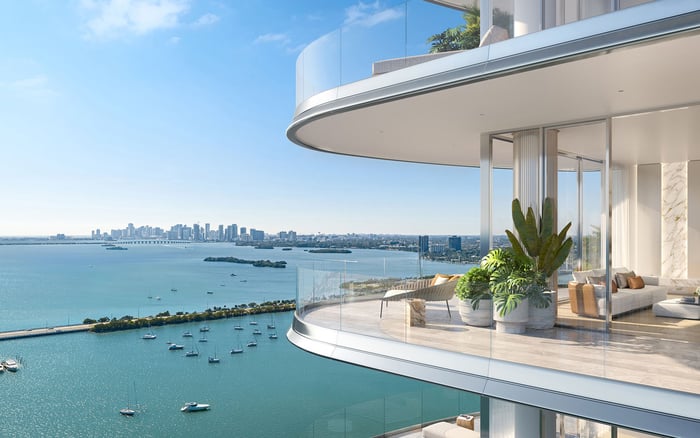
A disciplined framework for comparing North Bay Village residences through the priorities that matter most to families: future buyer depth, line quality, daily livability, and the durability of a view.
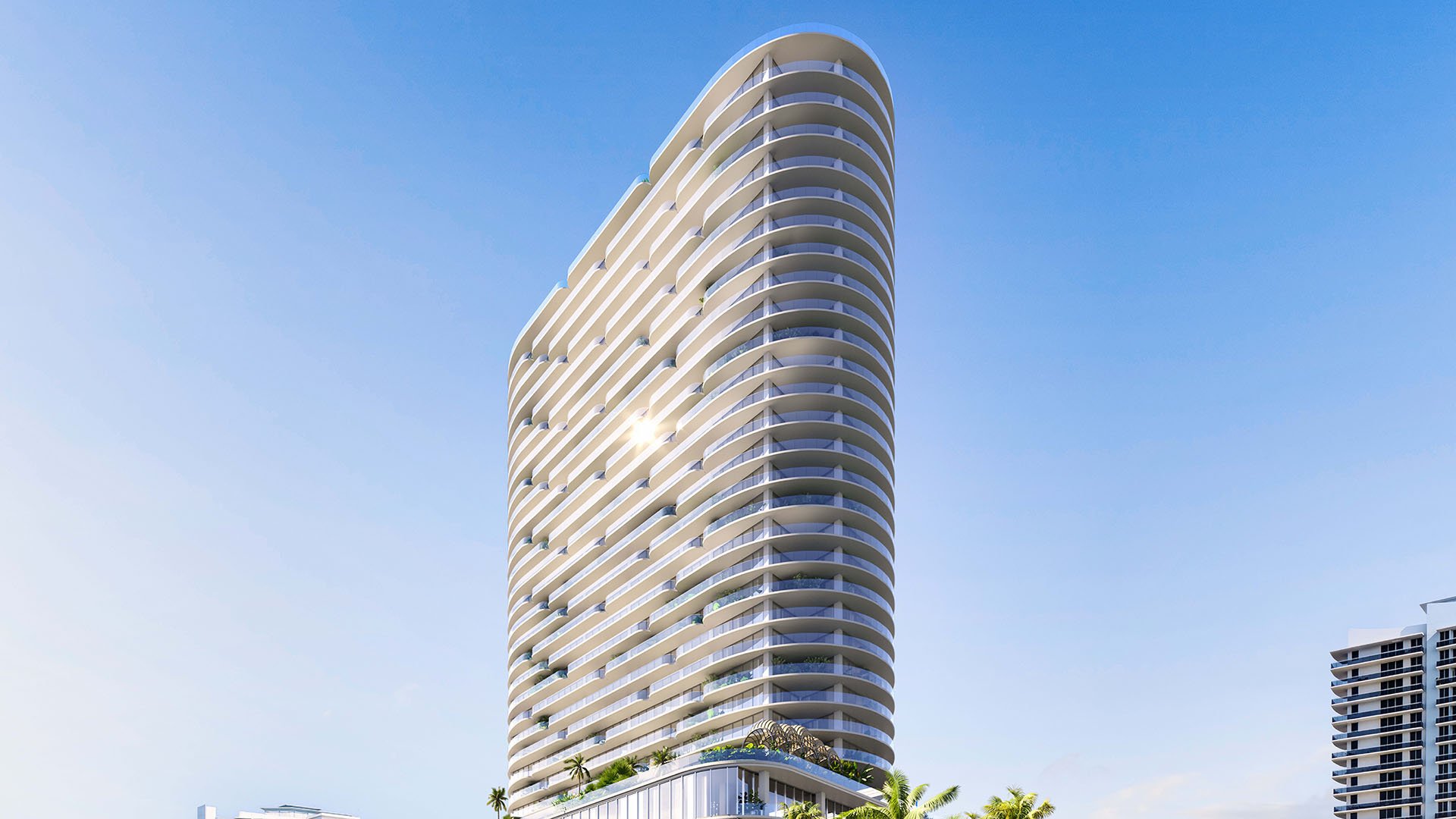
For a family choosing North Bay Village, the most consequential questions often extend beyond the immediate appeal of a model residence. A polished interior can be changed. The geometry of a line, the utility of the floor plan, and the long-term character of an outlook are far less flexible.
Resale depth is not simply a prediction about price. It is an assessment of how many credible future buyers might want the same home, for many of the same reasons, when circumstances eventually change. Families should favor residences that remain compelling to a broad luxury audience: practical bedroom separation, comfortable shared spaces, sensible storage, privacy, and an arrival experience appropriate to the price category.
The central vocabulary is simple: North Bay Village, resale, waterfront, waterview, and balcony. Yet each term should be tested at the residence level rather than accepted as marketing shorthand.
A residence has deeper resale potential when its appeal does not depend on one narrow lifestyle or a highly personal renovation. The objective is not to buy the most conventional home, but to avoid paying a premium for characteristics a future family may regard as compromises.
Begin by envisioning the likely next buyer. Would the layout work for a household with young children, teenagers, live-in help, frequent guests, or two adults working from home? Can a secondary bedroom accommodate real furniture without obstructing circulation? Is there a calm separation between entertaining areas and private rooms? Does the kitchen relate naturally to family life, or does it function mainly as a visual centerpiece?
Resale depth also depends on substitution. If several comparable lines offer a similar experience, a seller may face more direct competition. If a residence combines a particularly usable plan with a difficult-to-replicate outlook, its position becomes more distinctive. This is why buyers should underwrite the unit and its competitive set together.
A line is not merely a compass direction or a stack on a sales plan. It is the complete relationship among orientation, room placement, exposure, privacy, outdoor space, and the outlook from each principal room.
Walk the plan in sequence. Consider the routes from entry to kitchen, bedrooms to laundry, and parking arrival to the front door. Note whether family members must cross formal entertaining spaces during ordinary routines. Examine where doors swing, where bags and sports equipment might land, and whether storage sits where it is actually needed.
Then compare the outlook room by room. A compelling living-room panorama does not automatically compensate for bedrooms facing nearby structures or service areas. Likewise, an oversized balcony may be less useful if its shape constrains furniture placement. The strongest family line usually delivers consistency rather than a single theatrical moment.
Within North Bay Village, buyers can use Continuum Club & Residences North Bay Village, Shoma Bay North Bay Village, and Tula Residences North Bay Village as distinct starting points for line-by-line comparison. The purpose is not to assume equivalence, but to apply the same questions to every candidate.
View scarcity is often misunderstood. Height alone does not create scarcity, and water visibility alone does not guarantee a superior outlook. A family buyer should deconstruct the view into several attributes: width, depth, foreground, privacy, exposure from principal rooms, and the extent to which the experience depends on standing in one exact position.
A durable waterview should be evaluated from seated eye level, the kitchen, and the bedrooms-not only from the most flattering corner of the living room. Buyers should also consider whether railings, columns, terrace depth, or neighboring balconies interrupt the composition.
Scarcity becomes more persuasive when paired with a functional floor plan. A spectacular exposure attached to awkward bedroom placement may narrow the future audience. Conversely, a highly usable residence with a calmer but coherent view may attract more families. The correct premium is one supported by both rarity and everyday utility.
North Bay Village should not be analyzed in isolation. A family may also compare the scale, layouts, and residential character available in nearby markets. Origin Bay Harbor Islands and La Maré Bay Harbor Islands can frame an alternative set without presuming that every project serves the same priorities.
Use a single scorecard for every residence. Weight line efficiency, bedroom privacy, storage, outdoor usability, outlook quality, arrival, building rules, carrying costs, and likely competing inventory. Keep finish packages separate from fixed attributes. Finishes influence emotion, but line geometry and exposure deserve greater weight because they are harder to alter.
For a useful second pass, remove the project names from the scorecard. If the preferred residence changes once branding is hidden, the original choice may have been driven more by narrative than by family suitability.
Family life changes faster than real estate. A nursery becomes a study, siblings need greater separation, and a second home can become a primary residence. Buyers should test whether the plan can absorb those transitions without structural reinvention.
Before signing, review the governing documents, budgets, insurance information, use restrictions, leasing provisions, parking arrangements, storage rights, and precise boundaries of the residence and outdoor areas with qualified advisers. For pre-construction decisions, confirm what is contractual, what is illustrative, and how the purchase documents address material or dimensional variations.
Finally, assign every premium to a reason. If one line costs more, determine whether the difference reflects usable area, orientation, privacy, outdoor quality, or genuine view scarcity. If the premium cannot be explained without adjectives, it deserves further scrutiny.
What does resale depth mean for a family buyer? It is the breadth of plausible future demand for the residence, based on enduring utility rather than current presentation alone.
Should families always choose the highest available floor? No. Height should be weighed against layout, exposure, privacy, terrace usability, and the quality of views from each principal room.
How should two similar lines be compared? Map everyday circulation, furniture placement, bedroom separation, storage, outdoor use, and room-by-room outlooks on the same scorecard.
Is a water view automatically scarce? No. Scarcity depends on the view's width, depth, privacy, foreground, consistency, and relationship to the residence's plan.
How much weight should finishes receive? Less than fixed attributes. Finishes can often be revised, while orientation, structural geometry, and core placement usually cannot.
Why compare North Bay Village with nearby markets? A broader comparison reveals available substitutes and clarifies whether a premium is attached to a genuinely distinctive residence.
What makes a floor plan family-friendly? Look for useful bedroom dimensions, privacy, intuitive circulation, practical storage, and shared spaces that support ordinary routines.
How can buyers assess a balcony properly? Confirm its dimensions, shape, access points, privacy, obstructions, and whether it can accommodate the furniture the family expects to use.
What documents deserve review before purchase? Review contracts, governing documents, budgets, insurance materials, restrictions, parking, storage, and residence boundaries with qualified advisers.
What is the best final test before choosing a residence? Ask whether the home would still be preferred without its branding, staging, or finish package, based only on utility and scarcity.
For a tailored shortlist and next-step guidance, connect with MILLION.
If branded residences are on your mind — as a home or as an allocation — we would be glad to share what we are seeing, privately.
Begin a quiet conversation