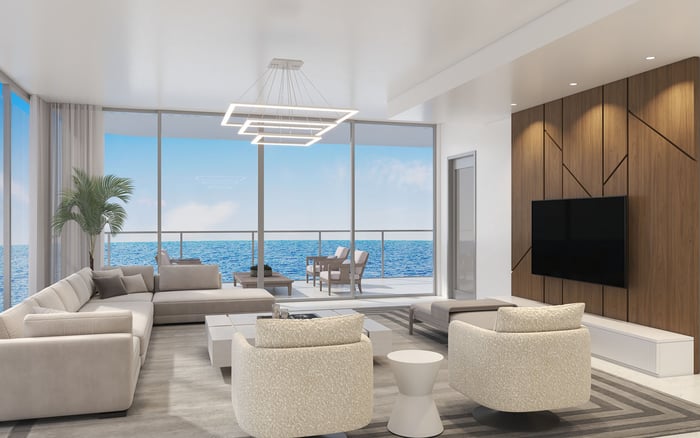
For family buyers, an HOA fee is best understood as the operating price of a residential experience. The more revealing questions concern staffing coverage, service consistency, reserves, insurance, amenity intensity, and how each element supports daily family life.

For a family considering Pompano Beach, the headline HOA fee is only the starting point. A lower monthly charge may reflect a leaner operating model, fewer staffed touchpoints, narrower amenity coverage, or costs residents pay separately. A higher fee may support a more service-intensive environment, but price alone never guarantees quality.
The more revealing question is simple: What daily experience is the association designed to deliver, and does it suit the household? Parents who value seamless arrivals, attentive common areas, package handling, guest coordination, and responsive maintenance may reasonably prioritize deeper staffing. Families seeking privacy and simplicity may prefer fewer services and a more restrained cost structure.
This buyer's guide treats the HOA as an operating system for family life, not merely another line item at closing.
Evaluate staffing by function, schedule, and accountability. Ask who is present at the front desk, entrance, beach area, pool, and management office, then determine when that coverage begins and ends. Clarify which roles are filled by association employees and which are provided through outside contracts.
Coverage matters because family routines rarely follow a predictable timetable. Deliveries, visitors, maintenance concerns, after-school arrivals, and weekend amenity use can expose the difference between a well-defined service model and one that impresses only during a scheduled tour.
Buyers should also distinguish visible staff from operational staff. The person greeting residents matters, but so do the engineering, housekeeping, security, and management teams working behind the scenes. Request an organizational chart or staffing schedule, and ask how the building handles absences, overnight issues, emergencies, and peak periods.
A useful comparison set should include buildings with distinct operating philosophies. Families can begin by examining Armani Casa Residences Pompano Beach alongside The Ritz-Carlton Residences® Pompano Beach, then pose identical questions about projected or current staffing, included services, contracts, and owner-paid extras.
Apply the same discipline when considering W Pompano Beach Hotel & Residences or Waldorf Astoria Residences Pompano Beach. Branded residences may create hospitality-driven expectations, but buyers still need written clarity on what the residential association funds, what may be shared, and what is available only for an additional charge.
For another point of comparison, include Ocean 580 Pompano Beach on the same worksheet. The objective is not to identify a universal winner, but to reveal which cost and service structure most closely matches the family's intended use.
Read the association budget in operational terms. Group expenses into staffing, insurance, utilities, maintenance, management, amenities, reserves, and contracted services. Then identify which categories are most likely to change and whether the current fee aligns with the building's stated service promise.
Families should request the governing documents, current budget, recent financial statements, available reserve materials, insurance information, meeting minutes, pending contracts, and details of any assessments under consideration. For a new development, review the proposed budget and its assumptions, recognizing that actual operations can evolve after residents take control.
Do not compare fees solely on a per-square-foot basis. The metric can help normalize unit size, but it does not account for household usage, staffing hours, service exclusions, or the association's financial condition. Two similarly priced homes can carry markedly different recurring obligations.
Create three columns: essential, valuable, and optional. Reliable access control, clean common areas, responsive building systems, and competent management may belong in the essential column. Valet, extensive attendant service, elaborate resident programming, or highly personalized hospitality may be valuable to one family and unnecessary to another.
This exercise is particularly useful in an oceanfront setting, where the care of exterior spaces and amenity areas can define the residential experience. Ask how frequently shared areas are inspected, who can authorize repairs, and how service requests progress from complaint to completion.
The family should also model its actual usage. A primary residence with children, guests, pets, and frequent deliveries may derive greater utility from robust staffing than a lightly used second home. Lifestyle value is personal; the financial commitment is collective.
A prudent family budget should account for more than the current HOA payment. Allow for future increases, assessments, owner-paid services, parking arrangements, storage needs, and maintenance inside the residence. Ask whether an attractive introductory structure depends on assumptions that could change as the property matures.
Interview management when possible, and observe the building at different times of day. Notice how residents enter, how visitors are handled, whether common areas feel cared for, and whether staff appear empowered to solve problems. The goal is not theatrical service, but quiet consistency.
Finally, assess the governance culture. Clear communication, disciplined contracting, transparent budgeting, and defined service standards can matter as much as the amenity program itself. Family buyers are choosing both a home and a shared institution.
Is a higher HOA fee necessarily better for a family? No. Judge the fee against the services, staffing, reserves, insurance, and amenities it supports.
What staffing detail should buyers request first? Ask for roles, coverage hours, reporting lines, and plans for overnight issues, absences, and peak periods.
Should families compare HOA fees per square foot? It can be a useful reference, but it should not replace a comparison of services, exclusions, and financial condition.
How should buyers evaluate valet or front-desk service? Consider actual frequency of use, expected wait times, guest procedures, and whether coverage matches the family's schedule.
Why do reserves matter when reviewing service levels? Reserves can shape how an association addresses major shared needs without relying entirely on future assessments.
What should be reviewed for a new development? Examine the proposed budget, staffing assumptions, service contracts, governing documents, and disclosed owner charges.
Can service staffing change after purchase? Yes. Budgets, contracts, governance decisions, and operating priorities can change coverage or cost over time.
How should second-home families approach staffing? Weigh remote oversight, arrival support, access procedures, and responsiveness while the residence is vacant.
What is the best way to compare buildings? Use a single worksheet with identical questions covering fees, staffing, insurance, reserves, amenities, contracts, and exclusions.
What is the central decision for a family buyer? Choose the building whose recurring cost, service depth, and governance structure best support the household's actual routines.
If you'd like a private walkthrough and a curated shortlist, connect with MILLION.
If branded residences are on your mind — as a home or as an allocation — we would be glad to share what we are seeing, privately.
Begin a quiet conversation