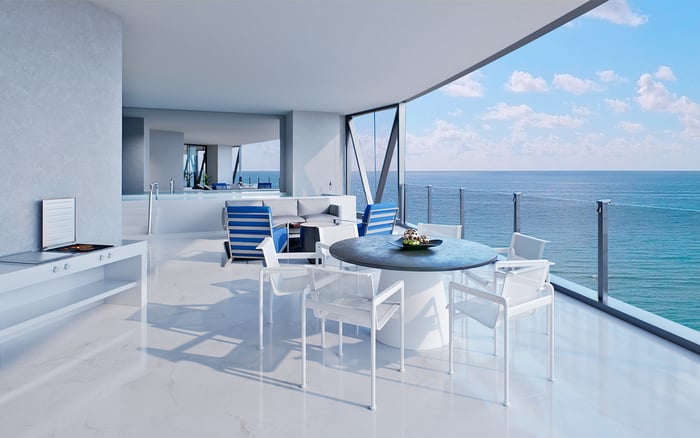
For families collecting art in Sunny Isles Beach, the most consequential residential details are often invisible at first viewing. Stable humidity, controlled daylight, secure interior storage, and HVAC zoning should be evaluated alongside bedrooms, amenities, and ocean views.
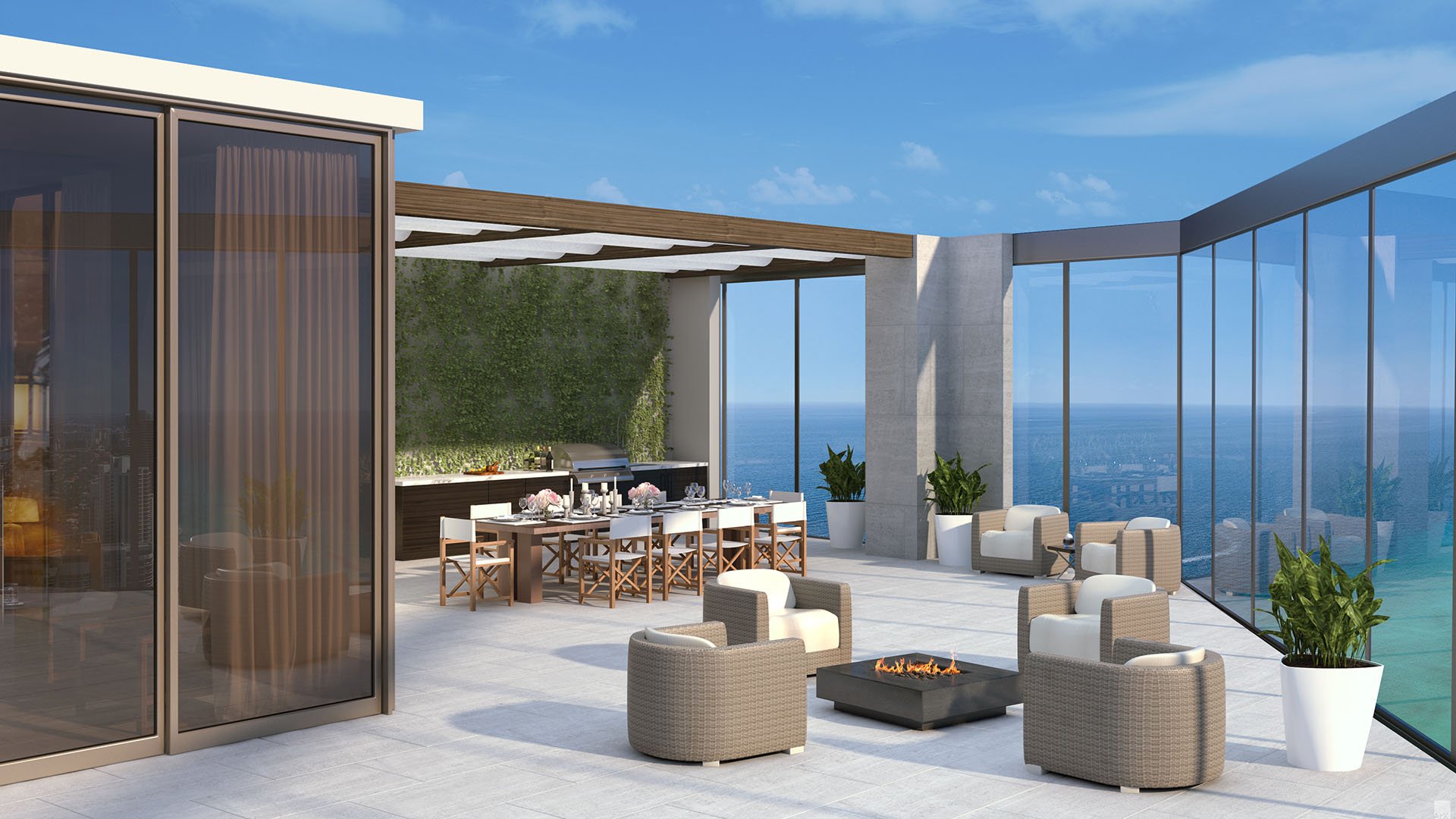
For a family considering Sunny Isles Beach, a residence must do more than frame the Atlantic. It must support paintings, works on paper, photography, and sculpture while accommodating the daily rhythms of children, guests, travel, and seasonal storage. The essential question is not simply whether art looks compelling against full-height glass, but whether the home can preserve it while remaining comfortable and functional.
An oceanfront purchase is therefore as much a technical exercise as an aesthetic one. Humidity, ultraviolet exposure, air movement, wall construction, storage allocation, and storm resilience should enter the conversation before finishes or furniture plans are finalized. The distinction is critical: collection care should shape property selection, not become an improvised correction after closing.
A cool apartment is not necessarily a dry one. Air conditioning may satisfy the thermostat while leaving moisture insufficiently controlled, particularly in a hot, humid coastal setting. Residential relative humidity should remain below 60% to limit mold and moisture concerns, while 30% to 50% is often considered an ideal range for homes. For many fine-art collections in South Florida, approximately 45% to 55% RH is a useful general benchmark.
Stability matters as much as the number. Repeated fluctuations can stress paintings and other moisture-sensitive materials. Works on paper, textiles, photographs, wood, and mixed media may require guidance tailored by a conservator.
Buyers should determine whether a residence actively manages humidity or merely displays temperature. Dedicated dehumidification or a Dedicated Outdoor Air System can separate ventilation and moisture removal from cooling. At Armani Casa Sunny Isles Beach, residences feature intelligent climate controls with digital thermostats, while the amenities include a temperature- and humidity-controlled wine cellar. The distinction is instructive: a controlled amenity space does not establish equivalent in-unit performance.
Sunlight is one of the pleasures of Sunny Isles Beach, but intense daylight and UV exposure can harm sensitive works even when a room feels comfortable. During viewings, study every proposed display wall across different orientations. Consider how direct sun, reflected light from the water, and shifting daylight may affect a piece over the course of the day.
The design and architecture plan should distinguish art-friendly walls from view-driven expanses of glass. Window treatments, thoughtful lighting scenes, and careful artwork rotation can support a display strategy, but buyers should not assume glazing alone resolves every conservation concern. Impact windows and doors provide an additional layer of protection, helping defend storage and display areas from wind-driven rain and moisture intrusion during storms.
When comparing Jade Signature Sunny Isles Beach with The Ritz-Carlton Residences® Sunny Isles, families can apply the same disciplined exercise: mark intended art walls, record daylight conditions, and identify nearby glazing, vents, and exterior surfaces before considering decorative potential.
Art storage should be a dedicated function, not the shelf left over after toys, sports equipment, luggage, and seasonal household items have been accommodated. The preferred location is a cool, dry interior space away from garages, damp utility areas, exterior walls, and abrupt environmental changes. Artwork should also remain clear of HVAC vents, where concentrated airflow can create a damaging microclimate.
Purpose-built cabinetry can integrate collection storage into a polished beachfront interior. The enclosure itself, however, should be evaluated as a distinct environment. Ask whether air can stagnate, humidity can be monitored, or lighting generates unnecessary heat. Acid-free backing and framing materials can help reduce yellowing and deterioration over time.
Security and family circulation matter as well. A storage room beside a play area may appear convenient on a floor plan but prove vulnerable in daily use. Lockable cabinetry, clear household protocols, and sufficient separation from children's activities can protect objects and occupants without making the home feel institutional.
A family residence contains several climates at once: active living areas, quiet bedrooms, kitchens, media rooms, galleries, and enclosed storage. Individual HVAC systems with personal climate controls may provide useful zoning flexibility, but marketing language should never replace verification. Buyers need to understand what each control regulates and whether the system can sustain an art-appropriate RH range throughout the year.
At Turnberry Ocean Club Sunny Isles, or any comparable tower under consideration, request a room-by-room review rather than a broad assurance about climate control. Test proposed gallery walls, cabinetry, and storage locations, particularly those beside full-height glass, exterior walls, and supply vents. A portable calibrated monitor used over time can reveal conditions that a brief showing cannot.
Family amenities deserve assessment through the same lens. A children's playroom and a curated art environment can coexist, but only when circulation, storage, and environmental controls are planned together. The goal is not to choose between family life and collecting, but to prevent either from compromising the other.
Before closing, seek clear answers about in-unit humidity regulation, system zoning, ventilation, filtration, window and door protection, and the location of mechanical equipment. Have qualified professionals inspect the residence and interpret its capabilities for the collection in question.
Then create a simple environmental map. Label display walls, direct-light zones, vents, exterior surfaces, interior storage, and high-traffic family routes. Record temperature and RH at each proposed location rather than relying on a single thermostat reading. Review cabinetry interiors separately, as an enclosed volume can behave differently from the surrounding room.
Finally, model ordinary life. Consider school mornings, open balcony doors, guests, extended travel, storm preparation, and the household objects competing for storage. A residence that performs beautifully only under ideal conditions is not yet a complete solution. The strongest Sunny Isles Beach choice will make conservation part of the home's everyday operating logic.
What relative humidity is appropriate for most art collections? Approximately 45% to 55% RH is a useful general benchmark, subject to medium-specific guidance from a conservator.
Is a comfortable indoor temperature enough to protect art? No. Air conditioning can cool a residence without adequately controlling moisture.
Why are humidity fluctuations a concern? Repeated environmental changes can stress paintings and other moisture-sensitive materials.
Where should a family locate art storage? Choose a cool, dry interior space away from exterior walls, damp utility areas, and HVAC vents.
Can art be stored inside custom cabinetry? Yes, provided the enclosure accommodates appropriate materials, monitoring, airflow, and security.
What framing materials support long-term care? Acid-free backing and framing materials help reduce yellowing and deterioration.
How should buyers evaluate full-height glass? Assess direct daylight and UV exposure at every proposed display location, not simply the room's overall brightness.
Do impact windows help protect a collection? They can help defend display and storage areas from wind-driven rain and storm-related moisture intrusion.
What should families test before closing? Measure temperature and RH near glass, exterior walls, vents, display walls, and inside enclosed storage.
Should family amenities and art care be evaluated separately? No. Children's spaces, circulation, storage, and collection requirements should be planned as one residential system.
For a tailored shortlist and next-step guidance, connect with MILLION.
If branded residences are on your mind — as a home or as an allocation — we would be glad to share what we are seeing, privately.
Begin a quiet conversation