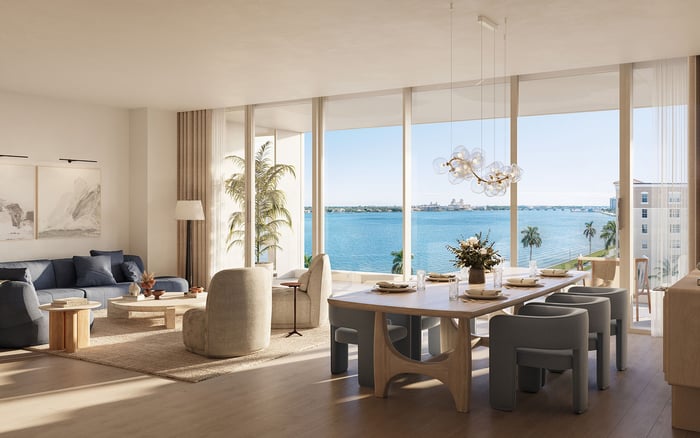
A practical, discreet guide for estate owners evaluating whether West Palm Beach condo living can match the privacy, scale, service, and daily rhythm of a private estate.

For an estate owner, downsizing is rarely a simple move from more space to less. It is a shift in control. A private home keeps decisions largely invisible: when staff arrive, how deliveries are handled, where cars are kept, how guests circulate, whether pets roam freely, and how much sound or visibility enters daily life. A condominium, even at the highest level, translates many of those choices into shared systems.
That is why West Palm Beach should be pressure-tested before the purchase conversation becomes emotional. The most elegant residence can disappoint if the building’s rhythm does not suit the owner’s habits. Before studying views, finishes, or amenity photography, the buyer should map a normal week at the current estate. Include staff movements, storage needs, entertaining patterns, privacy expectations, pet routines, medical or wellness appointments, family visits, cars, drivers, boats if relevant, and quiet hours. Then test each building against that lived reality.
This is especially important for buyers comparing branded, boutique, and new-construction residences across West Palm Beach. A residence such as Alba West Palm Beach may enter the conversation for one set of reasons, while another buyer may focus on Forté on Flagler West Palm Beach for a different sense of scale, arrival, or address. The correct choice is not the one that photographs best. It is the one that can absorb the owner’s private life without friction.
Estate owners are accustomed to direct authority. Condominium ownership introduces boards, budgets, rules, staffing decisions, architectural controls, pet policies, guest procedures, leasing limitations, and reserve planning. None of these should be treated as administrative afterthoughts.
Before buying, review the governing documents with the same seriousness one would bring to a complex estate acquisition. Ask how alterations are approved, whether contractors can work during preferred hours, how service elevators are scheduled, and whether rules affect art installation, security systems, terraces, generators, deliveries, private chefs, domestic staff, or visiting family. A buyer who intends to customize interiors should understand approval timing before assuming a post-closing renovation will be effortless.
Governance culture matters as much as the rules themselves. Some buildings operate with quiet residential formality. Others feel more social, more transient, or more hotel-like. Neither is inherently better. The issue is alignment. An owner leaving a compound with long-standing staff and private protocols may prefer a board and management style that values discretion over activity.
Privacy in a condominium is not only about elevator access or a doorman. It includes sightlines from neighboring residences, corridor configuration, amenity adjacency, valet choreography, package procedures, staff discretion, service-entry design, and how guests are announced. For a buyer used to gates, hedges, long drives, and separate service approaches, these details determine whether condo life feels liberated or exposed.
Walk the building at different times of day if possible. Notice who shares the elevator, how many touchpoints exist between the car and the front door, and whether amenity spaces sit close enough to the residence to create unwanted noise or visibility. Ask how private events are handled, how vendors are credentialed, and whether domestic staff may enter and exit without drawing unnecessary attention.
For some buyers, Shorecrest Flagler Drive West Palm Beach may become part of the discussion because the search is not merely about square footage, but about how a building stages arrival, service, and daily privacy. The best residence should feel composed before the front door opens.
Many estate owners underestimate the operational volume of their current lives. A large home holds seasonal décor, formal tableware, luggage, sporting equipment, wine, linens, art crates, archive boxes, pet supplies, floral vessels, outdoor furniture, tools, and items connected to adult children or grandchildren. A condominium can handle some of this, but rarely casually.
The pressure test should include a storage inventory, not a guess. Separate what must be inside the residence, what can sit in building storage, what belongs in climate-controlled off-site storage, and what should be released before the move. Then ask whether the residence has the wall space, closets, utility areas, and service circulation to support how the owner actually lives.
Service is equally important. A private estate has staff patterns that may not fit a condominium without adjustment. Clarify policies for housekeepers, drivers, personal assistants, chefs, trainers, nurses, dog walkers, security personnel, and vendors. Ask whether recurring staff can be pre-cleared, where they park, which elevators they use, and how management communicates with them. Luxury is not simply having service available. It is having service occur without becoming visible labor.
For a downsizing estate owner, resilience is not only an engineering topic. It is a lifestyle topic. Ask how the building prepares for severe weather, how residents are notified, what protocols exist for elevators and access, how emergency contacts are maintained, and what happens if an owner is away for the season. Review insurance obligations, deductibles, association coverage, owner coverage, and any special assessment history with qualified advisors.
A residence may feel effortless on a calm afternoon and far less so when protocols matter. Buyers should ask management to explain communication practices in plain language. Who calls whom? How are shutters, balcony items, terrace furniture, vehicles, pets, and staff access handled? What is expected of an owner who travels often?
This level of diligence is not pessimism. It is the condominium version of knowing the generator, roof, drainage, landscape contractor, and security procedures at an estate. The difference is that in a condominium, the building’s preparation becomes part of the owner’s private comfort.
West Palm Beach can look ideal during a curated visit, but buying should follow a rehearsal of actual movement. Spend time arriving from airports, dining at preferred hours, meeting friends, visiting doctors, handling errands, walking a dog, using a driver, receiving guests, and moving between Palm Beach, Downtown, and private clubs or family homes as applicable. The buyer should learn whether the location supports the life they intend to live, not the life the sales presentation implies.
A building such as Mr. C Residences West Palm Beach may appeal to an owner who wants a more serviced, urban daily pattern, while The Ritz-Carlton Residences® West Palm Beach may enter a different conversation around branded residential expectations. The important exercise is comparison through routines: morning, afternoon, evening, high season, quiet season, guests in residence, and owner away.
Do not rely on one perfect weekend. Lease nearby if needed, spend multiple days without an agenda, and observe whether the city creates ease or interruption. The right condominium should make life smaller only in maintenance burden, not in possibility.
The most successful downsizers are precise about non-negotiables. These may include a large primary suite, generous outdoor space, protected views, separate guest accommodations, private elevator access, pet comfort, staff logistics, wine storage, art walls, a proper laundry room, two or more parking spaces, or a building culture that remains calm during season. Write these down before touring.
Then rank each residence by lived fit. A dazzling lobby cannot compensate for inadequate storage. A beautiful kitchen cannot solve poor staff access. A panoramic terrace may not matter if the owner avoids using it because of wind, exposure, or neighboring sightlines. A well-run building with slightly less spectacle may outperform a more glamorous address if it protects the owner’s time.
For estate owners, downsizing should not feel like surrender. Done correctly, it becomes a refinement: fewer operational burdens, more lock-and-leave freedom, and a residence that delivers privacy without the constant demands of a large property.
What is the first thing estate owners should test before buying? They should test the building against their current weekly routine, including staff, cars, pets, storage, guests, and quiet time.
Should I prioritize a larger unit or a better-managed building? For many downsizers, management quality is as important as square footage because it shapes daily ease, privacy, and service.
How important are condominium rules for a luxury buyer? They are critical. Rules affect renovations, guests, staff, pets, deliveries, terraces, and the owner’s control over daily life.
What should I ask about privacy? Ask about elevator access, corridor design, valet procedures, guest screening, staff entry, amenity noise, and neighboring sightlines.
How should I evaluate storage? Create a room-by-room inventory from the estate and decide what must remain in-residence, in building storage, or off-site.
Is branded residential living always better for downsizers? Not automatically. The brand matters less than whether the service model, governance, and culture suit the owner’s habits.
Should I spend time in West Palm Beach before committing? Yes. Rehearse normal days, errands, dinners, appointments, guest arrivals, and travel patterns before selecting a residence.
What role should insurance play in the decision? It should be reviewed early with advisors, along with association coverage, owner obligations, deductibles, and reserve planning.
Can a condo feel as private as an estate? It can feel highly private when arrival, elevators, staff protocols, sightlines, and management culture are aligned with the owner.
What is the best sign that a residence is the right fit? The strongest sign is operational calm: the building supports the owner’s life without requiring constant explanation or compromise.
For a confidential assessment and a building-by-building shortlist, connect with MILLION.
If branded residences are on your mind — as a home or as an allocation — we would be glad to share what we are seeing, privately.
Begin a quiet conversation