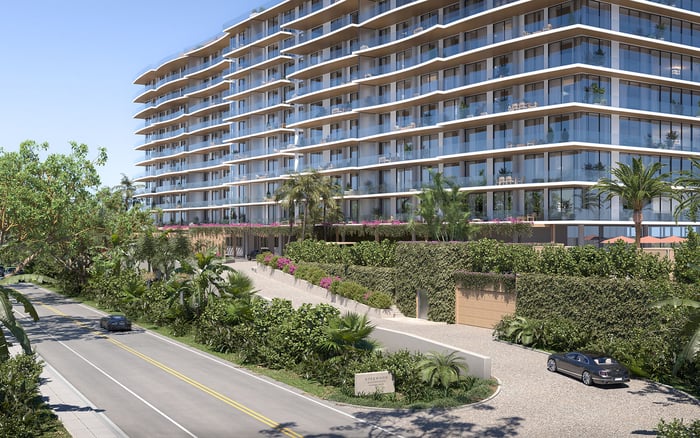
Downtown Miami and Edgewater present different approaches to central Miami living. Primary-residence buyers should compare how each neighborhood and building handles privacy, school logistics, arrivals, services, and everyday routines.

Downtown Miami and Edgewater can serve primary residents in different ways. Downtown places the household within an active urban setting, while Edgewater can appeal to buyers seeking a more residential rhythm without giving up proximity to central Miami.
For a luxury buyer, privacy should be defined before individual properties are compared. One household may prioritize a controlled entrance, discreet staffing, private elevator access, and carefully managed visitors. Another may care more about the experience outside the building, including traffic patterns, pedestrian activity, noise, and the transition from the street to the residence.
The right address depends on whether privacy begins at the lobby or at the neighborhood edge.
The neighborhood decision is therefore only the first step. Building operations, residence orientation, arrival design, and household routines can be more consequential than a broad location label.
Downtown can suit buyers who want an urban primary residence supported by a carefully managed building. The key distinction is between privacy inside the property and activity beyond it. A controlled residential environment can provide separation, but buyers should still assess how the surrounding streets fit their expectations for daily life.
Buyers considering Aston Martin Residences Downtown Miami or Waldorf Astoria Residences Downtown Miami should examine the complete arrival sequence. Relevant questions include how residents enter the garage, where guests are received, how elevators are shared, how deliveries are handled, and whether service circulation is separated from resident movement.
Downtown may be the stronger fit for a household that values urban immediacy and wants the building to function as a private base. Buyers should test that proposition during ordinary routines rather than relying on an amenity list. Morning departures, evening arrivals, guest access, household staffing, and delivery management all reveal how the property performs as a full-time home.
The neighborhood can also appeal to residents who prefer to keep multiple parts of daily life close together. That convenience should be balanced against the household's tolerance for a more public-facing environment. The correct choice depends on whether the energy outside the building feels useful or intrusive.
Edgewater offers a different framework for primary-residence living. Buyers may be drawn to its waterfront setting and a neighborhood experience that can feel more removed from the intensity associated with the urban core. That distinction does not make every property equally private, however.
Projects such as Aria Reserve Miami, EDITION Edgewater, and Villa Miami provide several points of comparison. Buyers should review each building independently, focusing on arrival design, garage access, staffing, visitor management, elevator use, delivery procedures, and residence orientation.
Edgewater may suit households that want central access while placing greater emphasis on the transition home. The relevant question is not whether the neighborhood is isolated, but whether its daily pace better supports the buyer's preferred routine.
A buyer should also consider how often the household expects to leave the neighborhood for work, school, dining, appointments, or other services. A setting that feels calm on a weekend may function differently during weekday travel. Testing real routes at realistic times is more useful than judging the area from a single showing.
School planning should begin with the exact residence rather than a general neighborhood reputation. Zoning, eligibility, admissions, transportation, and program availability can vary, so buyers should verify current requirements directly with the relevant school or authority before making a housing decision.
The practical route matters alongside the available options. Families should test morning travel, afternoon pickup, extracurricular schedules, caregiver access, and the effect of work commutes on school logistics. A short distance on a map does not necessarily describe the complete daily experience.
Downtown may work for a household that prioritizes urban convenience and can coordinate schooling within a broader central-city routine. Edgewater may appeal to a family that prefers a more residential return home while remaining close to central Miami. Neither neighborhood should be selected for school access without property-specific verification.
For a primary residence, service should be evaluated through recurring needs. Buyers should ask how the building handles guests, packages, vendors, household staff, vehicles, maintenance requests, and periods when the owner is away. The quality of these systems can shape privacy and convenience more than the number of shared spaces.
Downtown buyers may place greater weight on a building's ability to create order within an active setting. Edgewater buyers may expect the neighborhood itself to contribute to a calmer arrival. In both cases, the building must still deliver consistent operations.
Households with drivers, frequent visitors, children, pets, or regular deliveries should trace each movement through the property. It is worth observing where vehicles wait, how guests reach the residence, whether service traffic intersects with resident circulation, and how the lobby functions during busy periods.
Buyers should visit at different times and experience the route from street to residence. A private showing can demonstrate finishes and views, but repeated visits are better suited to evaluating noise, traffic, staffing, and the overall rhythm of the property.
Choose Downtown when the household values urban proximity and wants privacy to be produced primarily through building design and management. The strongest candidates will be properties whose arrival, staffing, access controls, and service procedures align with the owner's expectations.
Choose Edgewater when the household wants central Miami access but gives greater weight to a residential neighborhood experience. The best fit will still depend on the individual tower, residence orientation, and the routes used for school, work, and everyday services.
The final decision is not about declaring one neighborhood more luxurious. It is about identifying which setting organizes the household's life more intelligently. Buyers should compare the same practical criteria in both locations: street approach, garage entry, lobby experience, elevator privacy, guest handling, deliveries, school routes, and access to recurring services.
For discreet guidance on selecting the right Miami primary residence, connect with MILLION.
If branded residences are on your mind — as a home or as an allocation — we would be glad to share what we are seeing, privately.
Begin a quiet conversationDowntown can create privacy through building access and operations, while Edgewater may appeal to buyers seeking a more residential neighborhood experience. The individual property remains decisive.
Compare the street approach, garage entry, lobby, elevators, visitor procedures, deliveries, and residence orientation. Visit at different times to understand the daily setting.
Review access controls, staffing, garage circulation, guest reception, elevator sharing, and delivery handling. These details show how the building creates privacy within an active district.
Evaluate arrival design, visitor management, staffing, elevator use, service circulation, and residence orientation. Do not assume every building provides the same experience.
The answer depends on the exact address, current eligibility rules, admissions, and the household's travel routine. Buyers should verify all school details before selecting a residence.
School assignments, program eligibility, admissions, and transportation arrangements can vary. A neighborhood name alone does not establish access.
Families should trace morning and afternoon routes and consider extracurricular activities, caregiver access, and work commutes. Testing the routine at realistic times provides a clearer comparison.
It includes the handling of guests, packages, vendors, household staff, vehicles, and maintenance needs. Consistent operations can matter more than an extensive amenity list.
Downtown may suit buyers who value an urban setting and expect the building to provide a controlled private base. Comfort with activity outside the property is important.
Edgewater may suit buyers who want central Miami access with a more residential return home. The right choice still depends on the building and the household's daily routes.