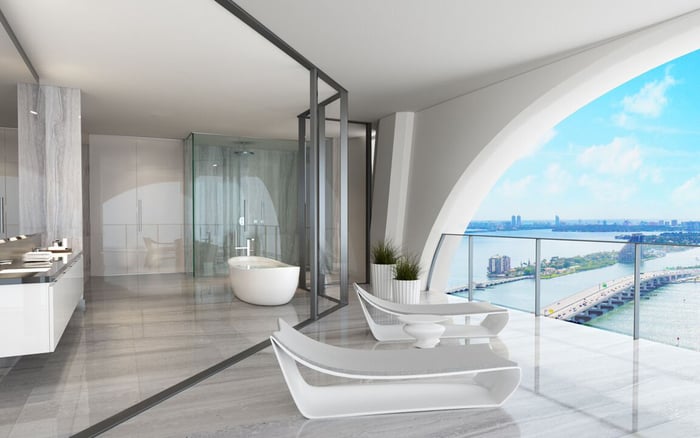
A buyer-focused framework for evaluating Delano Residences & Hotel Miami through two priorities: meaningful beach access and genuine residential privacy. The central task is to verify how access, circulation, shared spaces, hospitality operations and ownership documents support the intended lifestyle.

Buyers considering Delano Residences & Hotel Miami should separate two ideas that are often blended in luxury marketing: access to a beach-oriented lifestyle and privacy within a residence. Each can be valuable, but neither should be assumed without reviewing the project's current plans and governing documents.
The first question is practical: what does beach access mean for an owner? The second is operational: how effectively are residents separated from hotel guests, visitors, staff and public-facing activity? A persuasive fit requires clear answers to both.
Beach access can describe very different experiences. Buyers should establish whether the offering involves direct access, transportation, club privileges, attended service, reservations or another arrangement. They should also confirm when access is available, who may use it and whether guests are included.
Convenience matters as much as branding. A buyer who wants spontaneous daily time on the sand may judge access differently from an owner who prefers planned, serviced beach visits. Travel time, parking, transportation arrangements and seasonal demand should therefore be tested against the buyer's actual routine rather than treated as secondary details.
Any access right should be reviewed in the controlling documents. Buyers should ask whether it is tied to ownership or membership, whether fees apply, whether it transfers with a resale and whether the terms can change.
Residential privacy is not established by finishes or branding alone. It depends on circulation and operations: entrances, reception areas, elevators, corridors, loading activity, service routes and access controls.
Buyers should request the latest plans and identify every point where residents may encounter hotel guests, club members, event attendees or other visitors. They should also ask which amenities are private, which are shared and how busy shared areas may become during events or peak periods.
Acoustic separation, staff protocols, deliveries and guest registration can be equally important. These details reveal whether privacy is embedded in daily operations or presented mainly as a marketing theme.
A branded project may appeal to buyers who value service, hospitality and a recognizable identity. Those benefits can also introduce more operational complexity than a residents-only building. The relevant question is not whether shared activity exists, but whether it is managed in a way that supports the owner's preferred level of discretion.
Prospective purchasers should compare service promises with the documents defining them. Staffing, reservations, fees, access priorities and future modification rights can shape the ownership experience long after the initial purchase.
The best comparison set depends on the buyer's definition of beach access and privacy. The Perigon Miami Beach and The Ritz-Carlton Residences® South Beach can be included when examining Miami Beach alternatives. Waldorf Astoria Residences Downtown Miami can broaden the review to another branded residential option in Downtown Miami.
These links identify projects for further evaluation, not claims of equivalence. Buyers should compare current documents, location, access arrangements, shared-use patterns and operating structures on a like-for-like basis.
Before signing, buyers should obtain the latest offering materials and governing documents through appropriate professional advisers. Key topics include access rights, membership terms, recurring charges, transferability, guest privileges, rental rules, shared facilities and the allocation of operating costs.
A site visit should test the route from arrival to residence and from residence to each important amenity. Buyers should also ask how hotel, event, dining or club activity could affect elevators, valet operations, security and quiet enjoyment.
Delano's fit cannot be determined from branding alone. It works for a particular buyer only if the documented beach experience is convenient enough and the residential operation is private enough for that buyer's routine.
The strongest decision process is therefore personal and evidence-based: define the desired frequency of beach use, set a clear privacy threshold and verify both against plans, contracts and operating terms.
Is beach access the same as living directly on the beach? Not necessarily. Buyers should verify the location, route, service model and legal basis of any access described in project materials.
What should buyers ask about beach privileges? Ask who may use them, when they are available, whether reservations or fees apply and whether the rights transfer with a resale.
How can a buyer assess residential privacy? Review entrances, elevators, corridors, service routes, access controls and the separation between private and shared spaces.
Why do hotel operations matter to residents? Hospitality activity can affect arrivals, staffing, deliveries, shared amenities and visitor circulation, depending on the final operating plan.
Should buyers rely on lifestyle marketing? Marketing can explain the intended experience, but controlling documents should define enforceable rights, costs and restrictions.
What should be checked during a site or sales-gallery visit? Test the proposed arrival sequence, ask who shares each space and review how residents reach homes and amenities.
Are branded residences suitable for privacy-focused buyers? They may be, but suitability depends on how access, service and shared activity are structured and managed.
What costs require special attention? Buyers should review recurring charges, membership expenses, service fees and the allocation of shared operating costs.
How should Delano be compared with other South Florida projects? Use consistent criteria covering location, beach access, residential circulation, hospitality operations, documents and total ownership obligations.
Who is the best fit for this type of proposition? A potential fit is a buyer who values branded service and beach-oriented access while accepting the specific privacy and operating structure confirmed through due diligence.
For a confidential assessment and a building-by-building shortlist, connect with MILLION.
If branded residences are on your mind — as a home or as an allocation — we would be glad to share what we are seeing, privately.
Begin a quiet conversation