A buyer-focused comparison of published wellness amenities at Delano and The Setai, with a disciplined framework for investigating capacity, air, water, and access rules before purchase.
At a luxury residence, wellness is more than a collection of attractive rooms. It is the ability to use those spaces when desired, breathe comfortably inside the home, trust the water delivered to kitchens and bathrooms, and understand how owners rank alongside hotel guests, renters, members, and spa clients.
That distinction is central when comparing Delano Residences & Hotel Miami with Setai Residences Miami Beach. Delano presents a planned wellness program with a strong thermal and movement component. The Setai offers a broader, documented operating environment, including established resort amenities and defined spa hours. Neither program, however, answers every technical or access question a discerning purchaser should ask.
Wellness has value only when its infrastructure, capacity, and access rules support daily use.
This Miami Beach comparison belongs within the most practical buyer’s guides because it separates lifestyle appeal from operational evidence. The objective is not to choose the longest amenity menu, but to determine which property can deliver the buyer’s preferred routine with the fewest uncertainties.
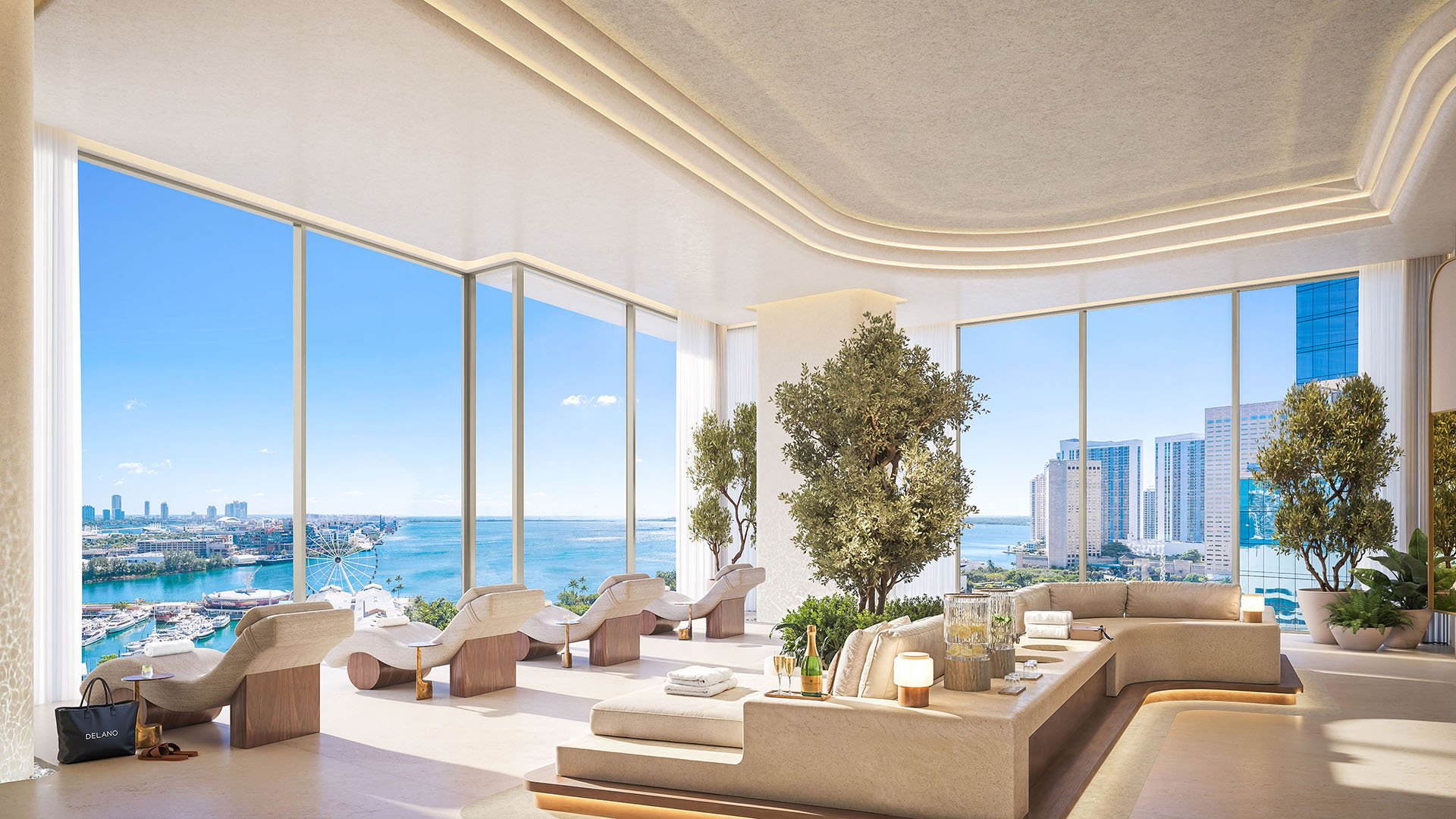
Delano’s planned The Source by Delano includes a fitness center, movement studio, treatment rooms, separate locker rooms, steam room, sauna, and cold plunge. The fitness and movement spaces support independent exercise and organized programming, but class calendars and capacity limits are not specified. Buyers should therefore ask for room dimensions, equipment counts, treatment-room counts, maximum class sizes, and peak-use policies.
The Setai offers Spa by Valmont, 24-hour fitness, complimentary weekend sunrise yoga, bicycles, three temperature-controlled infinity pools, private beach service, Finnish saunas, and a cold plunge. Residents are also offered access to beach butlers, the Setai Beach Club, and private spa suites. This is a wider wellness offering, yet breadth does not guarantee availability at a preferred hour.
Request utilization data where available and ask management to identify typical pressure points. Clarify whether the cold plunge and sauna are freely accessible, whether private spa suites require advance reservations, and whether pool cabanas, yoga, or treatment rooms carry separate charges. A pool may be visually generous while its most desirable seating remains constrained.
For a broader comparison, a tour of The Well Bay Harbor Islands can help buyers refine the same questions about capacity, programming, and the distinction between a wellness concept and reliably usable infrastructure.
Neither Delano nor The Setai identifies HEPA status, MERV ratings, ventilation rates, fresh-air exchange figures, or dedicated in-residence purification specifications. This is a due-diligence gap, not evidence that advanced systems are absent.
Ask for written HVAC specifications covering filtration type, filter rating, replacement frequency, outside-air rates, operating schedules, and responsibility for equipment inside each residence. Buyers should also establish whether corridors, elevators, wellness rooms, treatment areas, and residences use separate or shared systems. If an in-unit purifier is offered, determine whether it serves the entire residence or only selected rooms.
Pet policies deserve attention from buyers with allergy sensitivities. Both properties, or at least some accommodations associated with them, are categorized as pet-friendly. The practical questions concern designated routes, elevator protocols, cleaning standards, and whether animals may enter shared hospitality or wellness areas.
In a condo-hotel environment, air quality is partly a management issue. High turnover, maintenance access, filter replacement, and shared-space cleaning can affect the lived experience even when mechanical specifications appear suitable. Buyers should make technical review a contract-stage priority rather than rely on terms such as clean, sustainable, or restorative.
Neither Delano nor The Setai identifies a whole-building potable-water filtration, ultraviolet treatment, or remineralization system. Pools, hydrotherapy facilities, bottled water, and spa systems do not establish how water reaching a residence sink or shower is treated.
The buyer’s request should begin with plumbing specifications and any available water-quality documentation. Ask whether treatment occurs at the building entry, by residential stack, or within individual homes. Confirm which fixtures are served, which contaminants or conditions a system is designed to address, how often filters require replacement, and whether maintenance falls to the association, hotel operator, or owner.
If no central standard is documented, investigate whether point-of-entry or point-of-use equipment can be installed without affecting warranties, cabinetry, plumbing, or building approvals. A specialist can then evaluate the specific residence rather than make assumptions based on the spa program.
The Setai’s spa-wellness hours are 8 a.m. to 7 p.m., while treatment hours are 10 a.m. to 7 p.m.; reservations are handled through dedicated spa contacts. It also offers 24-hour fitness and complimentary weekend sunrise yoga. These details make basic access easier to evaluate, but they do not establish whether owners receive priority over hotel guests, renters, or day-spa clients.
At Delano, class schedules, booking windows, and capacity limits are not detailed. A purchaser should request the anticipated reservation platform, owner priority, cancellation terms, guest privileges, class fees, treatment charges, cabana policies, and any owner blackout periods. The same inquiry should cover penalties for unused bookings and whether residents may reserve recurring time slots.
Hotel-style turnover also matters. At least some short-term Setai accommodations specify a 4 p.m. check-in and 11 a.m. checkout. That confirms turnover procedures for those accommodations, but not a universal rule for every residence. Ask how rental arrivals affect elevators, valet service, pool access, fitness traffic, and quiet enjoyment.
These questions apply throughout branded residences, particularly where public-facing hospitality and private ownership overlap. A comparison visit to Shore Club Private Collections Miami Beach can help a buyer test how clearly another service-oriented property defines the boundary between resident privileges and hotel operations.
Before relying on a sales presentation, request four written packages. The first should cover wellness capacity, including equipment, room counts, hours, class schedules, fees, and maintenance closures. The second should contain HVAC schedules, outside-air information, filtration details, and replacement obligations. The third should address potable-water treatment and permitted in-residence upgrades. The fourth should set out booking priority, guest rules, rental access, blackouts, cancellations, and additional charges.
Review the documents with advisers qualified to address the relevant technical, legal, and financial questions. Then test operations in person at the times the buyer expects to use them. Morning fitness availability, afternoon pool demand, spa booking lead times, and weekend guest patterns can be more revealing than a quiet scheduled tour.
The final choice is not simply established breadth versus planned novelty. It is a judgment about documented performance, personal routine, and the buyer’s tolerance for unanswered operational details. Delano’s focused, planned program may appeal to an owner who values movement and thermal ritual. The Setai’s established range may suit a buyer seeking pools, beach service, fitness, yoga, and spa access within one hospitality setting. In either case, written specifications and rules should carry more weight than atmosphere alone.
For discreet guidance comparing South Florida residences through the lens of wellness, operations, and long-term ownership, connect with MILLION.
If branded residences are on your mind — as a home or as an allocation — we would be glad to share what we are seeing, privately.
Begin a quiet conversationThe Source by Delano is planned with fitness and movement spaces, treatment rooms, locker rooms, a steam room, sauna, and cold plunge.
The Setai documents Spa by Valmont, 24-hour fitness, weekend sunrise yoga, bicycles, three temperature-controlled pools, beach service, Finnish saunas, and a cold plunge.
Neither property’s public wellness information confirms HEPA filtration, MERV ratings, ventilation rates, or dedicated in-residence purification.
Public materials for Delano and The Setai do not identify a whole-building potable-water filtration standard.
Request filter type and rating, replacement frequency, outside-air rates, operating schedules, system configuration, and maintenance responsibility.
Spa-wellness hours are published as 8 a.m. to 7 p.m., while treatment hours are 10 a.m. to 7 p.m.
No. Public materials do not detail class schedules or capacity limits, so buyers should request them in writing.
Owners may share amenities with hotel guests, renters, and spa clients. Written priorities clarify access during busy periods.
Ask where treatment occurs, which fixtures it serves, what it addresses, how filters are maintained, and who pays for service.
Compare documented capacity, technical specifications, booking rights, fees, guest rules, and the fit with the buyer’s actual routine.