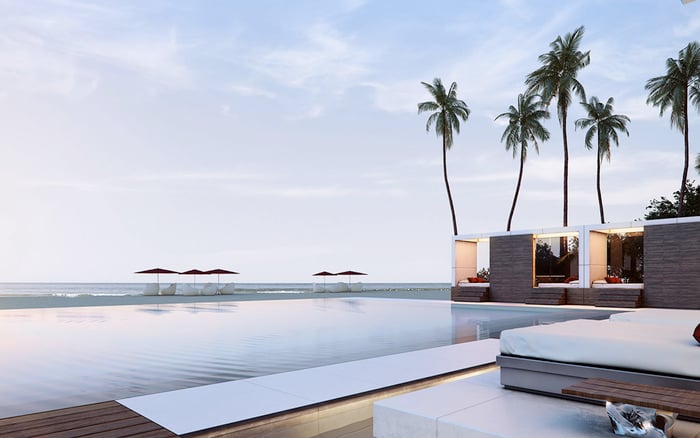
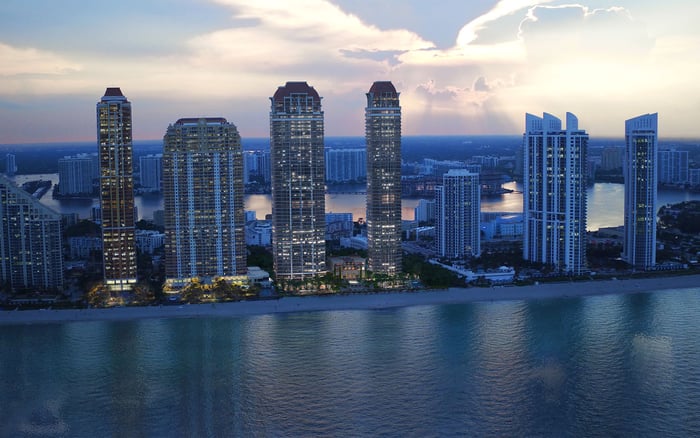
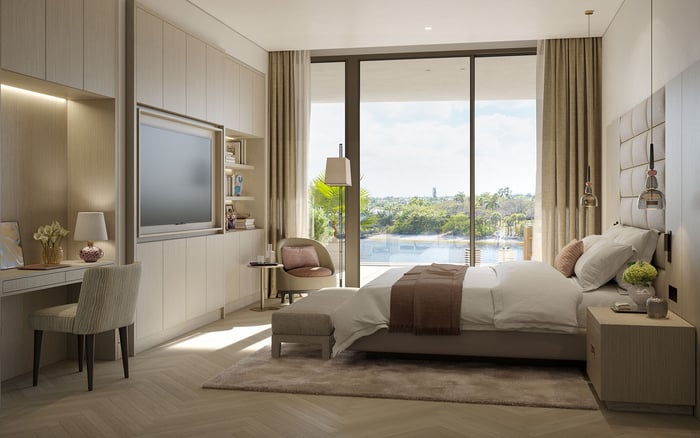
Private entertaining at these two branded residences begins with fundamentally different operating models. St. Regis offers a resident-centered collection of dining environments without an on-site hotel, while Mandarin Oriental connects residences to hotel restaurants, chefs, catering, and larger event facilities. Buyers should look beyond amenity descriptions and obtain the governing rules, booking terms, fee schedules, and vendor requirements that determine how each space can actually be used.
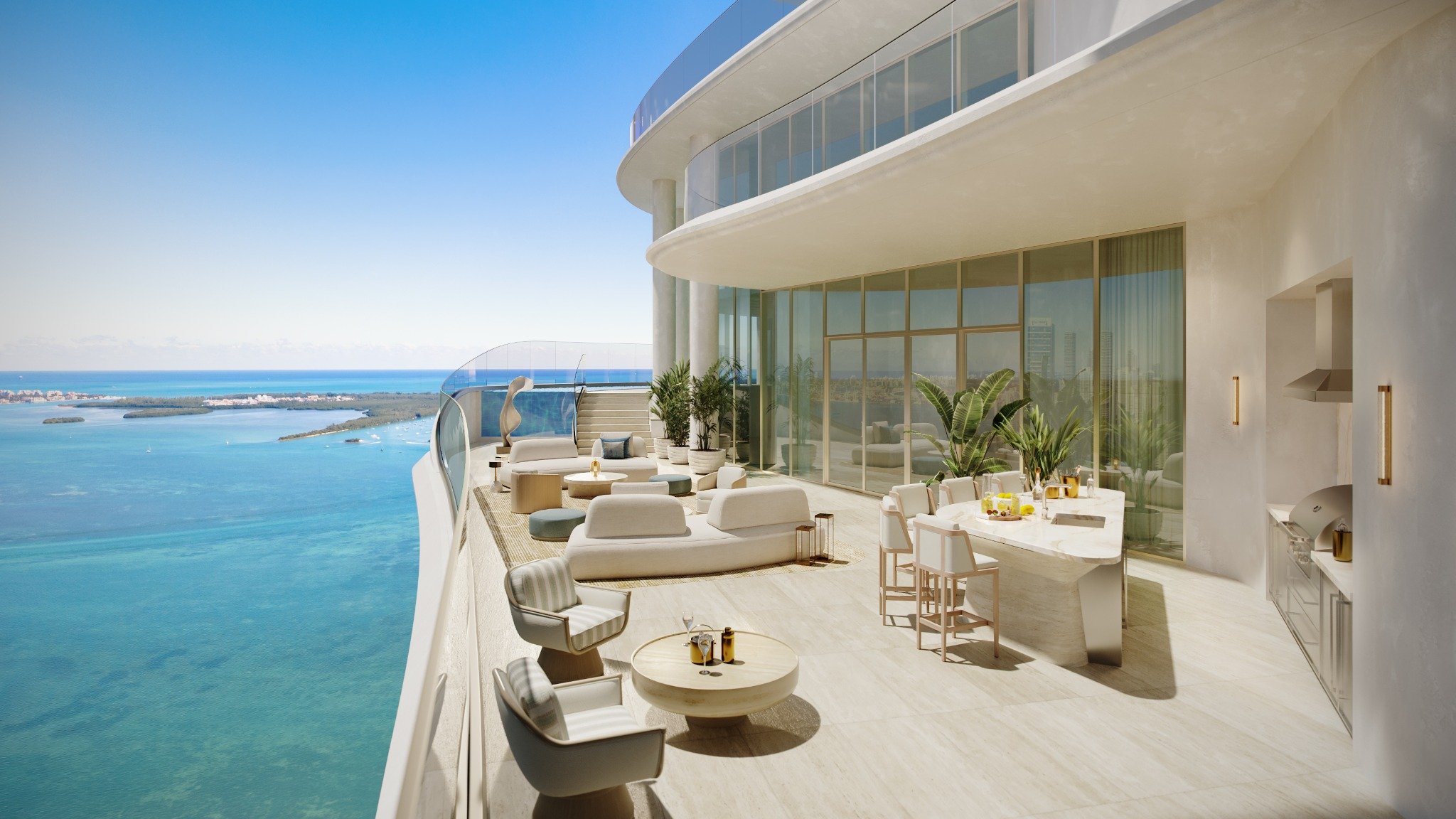
For buyers who entertain frequently, the decisive amenity is not simply a handsome dining room. It is the operating structure behind it: who prepares the food, who controls reservations, which guests may attend, and whether a private dinner can expand into a professionally serviced event.
The contrast between St. Regis® Residences Sunny Isles and The Residences at Mandarin Oriental Boca Raton is therefore meaningful. The former is planned as a private residential resort without an on-site hotel or transient hotel use. The latter follows a hotel-residence model, connecting owners directly to the adjoining Mandarin Oriental hotel.
Both belong in the broader conversation around branded residences, but their hospitality ecosystems are not interchangeable. One emphasizes resident-focused amenity spaces and à-la-carte residential service. The other extends hotel kitchens, chefs, restaurants, and event infrastructure into the ownership experience.
The real luxury is not access to a dining room, but clarity about how it can be used.
At 18801 Collins Avenue in Sunny Isles Beach, the St. Regis plan offers several distinct settings rather than a single conventional party room. A signature restaurant is intended to be open to the public, while the bar lounge and private dining room are designated for residents. The Ellipse Club includes a private dining room with a chef’s kitchen; another private dining room and chef’s kitchen are planned for the exclusive mezzanine.
The Residents’ Club adds a bar, lounge, conference room, library, and oceanfront terrace dining and lounge space. A beach bar and grill is planned with indoor and covered outdoor seating, beach service, and in-residence dining. In-residence private dining and catering also appear among the à-la-carte resident services, while branded butler service may provide an internal channel for coordination.
The variety is compelling, but buyers should map each occasion to a specific venue. A family dinner in a chef-kitchen room, cocktails on an oceanfront terrace, and a catered anniversary inside a residence may each be subject to different reservation systems and operating rules. Buyers comparing the social character of other Sunny Isles Beach properties, including Bentley Residences Sunny Isles, should apply the same venue-by-venue scrutiny rather than compare amenity counts alone.
Ask who receives priority for each room, how far in advance residents may reserve it, whether recurring bookings are restricted, and whether a minimum food-and-beverage commitment applies. Confirm guest caps, event duration, quiet hours, security staffing, deposits, cancellation provisions, responsibility for damage, and post-event cleaning charges in writing.
The Residences at Mandarin Oriental Boca Raton combines 89 private residences with an adjoining hotel containing 164 rooms and suites. For an owner, that relationship can broaden the service menu considerably. The residential offering includes 24-hour in-residence catering supplied by hotel restaurants, along with private chefs available to owners.
Residents are also planned to have sky-bridge access to hotel restaurants. The adjoining hotel program includes a signature rooftop restaurant with a terrace and bar, a lobby lounge, and a cake shop. Within the residential amenities, a wine lounge is planned with a private tasting room and resident wine storage. A show kitchen is intended for private dinners of up to 25 guests, with access to hotel chefs for preparation.
The larger distinction is scale. The hotel’s event infrastructure includes an approximately 4,500-square-foot ballroom and adaptable conference rooms. Ownership also includes access to Via Mizner Golf & City Club and its members-and-residents-only restaurant, adding another potential setting for social or business dining.
That breadth should not be mistaken for automatic availability. Buyers should determine whether owners receive reservation priority at restaurants, conference rooms, and the ballroom, or whether those venues follow the hotel’s external-event calendar. The same discipline applies when evaluating Boca Raton alternatives such as Alina Residences Boca Raton, where the practical value of entertaining amenities ultimately depends on the rules attached to them.
“In-residence dining” can encompass very different levels of service. It may mean delivery from a property restaurant, plated service by staff, a private chef cooking in the residence, or complete event production. Buyers should request a written scope rather than assume that catering includes every element required for a polished evening.
Confirm whether custom menus, chef labor, servers, bartenders, china, glassware, linens, rentals, setup, breakdown, and cleaning are included or priced separately. Ask whether wine service and outside alcohol are permitted, whether corkage applies, and who is responsible for complying with building procedures.
At St. Regis, clarify how the butler team, restaurant, beach bar and grill, and outside professionals interact. At Mandarin Oriental, determine which hotel restaurants supply the 24-hour catering and whether private-chef availability is guaranteed or subject to scheduling. For the show kitchen, verify whether the stated capacity of up to 25 guests refers to seated diners, total occupancy, or an operating guideline.
The governing condominium documents and operating policies deserve the same scrutiny as the floor plans. Amenity descriptions do not establish binding guest limits, quiet hours, booking frequency, deposits, cancellation terms, cleanup fees, or vendor insurance requirements.
At both properties, buyers should request the condominium declaration, association rules, current or proposed booking policies, catering menus, and fee schedules. Ask whether outside caterers, chefs, florists, musicians, rental companies, and alcohol providers are permitted. If they are, obtain the required certificates of insurance, loading procedures, service-elevator rules, delivery windows, and staffing requirements.
Outdoor settings require particular care. Ordinary resident access to a terrace, pool area, or cabana does not necessarily confer the right to reserve it exclusively for a private function. Written confirmation should address exclusivity, amplified music, décor, weather contingencies, and guest movement through residential areas.
A practical buyer’s-guide approach is to present management with three real scenarios. First, a seated dinner for close friends inside the residence. Second, a larger celebration requiring chefs, servers, flowers, rentals, and music. Third, a business reception that may require audiovisual support, valet coordination, and a conference or ballroom setting.
Request a sample proposal for each scenario, including venue availability, staffing, menus, taxes, service charges, cancellation exposure, and cleanup. This reveals not only the cost, but also how many departments must approve an event and whether the promised hospitality feels seamless in practice.
St. Regis may appeal to an owner who prioritizes privacy and a collection of resident-oriented settings within an oceanfront residential resort. Mandarin Oriental may suit a buyer who values direct integration with hotel dining and access to infrastructure capable of supporting larger functions. Neither model is inherently superior. The better choice is the one whose documented rules align with the owner’s actual calendar, guest profile, and preferred degree of service.
For discreet guidance comparing South Florida’s private dining and branded-residence options, consult MILLION.
If branded residences are on your mind — as a home or as an allocation — we would be glad to share what we are seeing, privately.
Begin a quiet conversationSt. Regis is planned as a private residential resort without an on-site hotel, while Mandarin Oriental connects owners to an adjoining hotel and its dining and event services.
Yes. Plans include resident private dining rooms with chef’s kitchens, Ellipse Club dining, and oceanfront terrace dining and lounge space.
No. The signature restaurant is planned to be open to the public, while the bar lounge and private dining room are designated for residents.
Yes. The residence offering advertises 24-hour in-residence catering supplied by the hotel’s restaurants.
Private chefs are advertised as available to owners, although buyers should verify scheduling, pricing, and the precise service scope.
It is marketed for private dinner events of up to 25 guests. Buyers should confirm whether that figure means seated capacity, total occupancy, or an operating guideline.
The adjoining hotel plans an approximately 4,500-square-foot ballroom and adaptable conference rooms, subject to availability and applicable policies.
Not necessarily. Buyers should confirm vendor permissions, insurance requirements, delivery procedures, staffing rules, and any related fees in writing.
No. Buyers should verify whether chefs, servers, bartenders, rentals, setup, breakdown, and cleaning are included or separately arranged.
Request the condominium declaration, association rules, venue booking policies, catering menus, fee schedules, cancellation terms, and vendor requirements.