A buyer-focused comparison of entertaining infrastructure, catering access, membership privileges, and event-rule diligence at two distinct South Florida residences.

For buyers who entertain regularly, the decisive issue is rarely whether a property has a handsome dining room or waterfront terrace. It is whether an owner can reserve that space, invite the intended number of guests, select a caterer, serve alcohol, play music, and conclude the evening on workable terms.
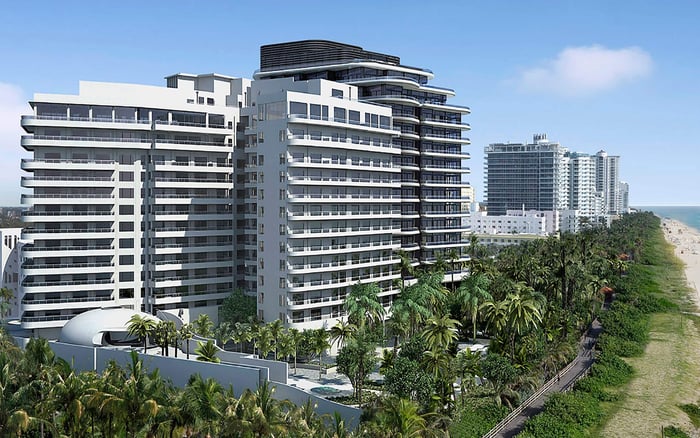
That distinction is especially important when comparing Shell Bay by Auberge Hallandale with The Ritz-Carlton Residences® Miami Beach. The former is conceived as a private-club community with resort and residential components. The latter is positioned as a private residential development, not a conventional hotel with a publicly marketed banquet operation.
For buyers, lifestyle value therefore depends on enforceable access rather than visual promise. Even a beautifully presented amenity may be subject to guest caps, booking windows, approved-vendor requirements, staffing charges, deposits, quiet hours, and cancellation terms.
The relevant luxury is not merely having an event space, but knowing when and how it can be used.
Shell Bay occupies a 150-acre private-club setting in Hallandale Beach, combining residences with golf, racket sports, marina access, dining, and social facilities. Its approximately 20,000-square-foot clubhouse includes fine dining, bars, bowling, billiards, and event spaces. Indoor and alfresco dining overlook the golf course, while an outdoor event terrace is intended for celebrations.
Its event proposition appears comparatively formal, with onsite catering, a restaurant, outdoor areas, private space, and substantial meeting facilities across the club and resort. Plans list 32,000 square feet of meeting space and 60 guest rooms, although other future specifications differ. Buyers should treat those figures as points for direct confirmation rather than fixed entitlements.
Dedicated channels for dining reservations, weddings, and meetings suggest a managed booking system. That structure can be valuable for owners seeking professional execution, but it also signals that hosted functions are likely governed by procedure. The central diligence questions are which channels residents may access, what priority applies, and at what cost.
Ownership includes social-club membership; golf membership is separate. A buyer should obtain a written explanation of the dining and event privileges accompanying the residence, whether those privileges survive resale, and whether member sponsorship or owner attendance is required. Invitation-only status makes precision around guest access particularly important.
Shell Bay’s culinary program is led by Michelin-starred chef Julien Jouhannaud, with in-residence dining and house-sommelier services contemplated for owners. These offerings could support everything from an intimate dinner at home to a more orchestrated celebration, but buyers should distinguish a service offering from a contractual right.
Ask whether in-residence dining is available year-round, whether menus or staffing carry minimums, how far in advance bookings open, and whether owners may supplement the program with outside chefs or planners. The same discipline applies to yacht-oriented entertaining. A planned 48-slip private marina with direct Intracoastal access creates compelling possibilities, but marina, club, and residential rules may govern separate elements of an event.
For a broader Hallandale Beach comparison, buyers may also consider 2000 Ocean Hallandale Beach. The analysis should focus not simply on amenity count, but on how each property converts shared space into usable private-hosting privileges.
At the Ritz-Carlton property, catered functions have taken place, including multiple elevated developer sales events supplied by an outside caterer. That history confirms operational capability, but it does not establish that residents may freely retain the same caterer or stage events on equivalent terms.
The condominium declaration, rules and regulations, and amenity-reservation agreement should govern the analysis. Buyers should ask whether private dining is limited to the residence or may extend into amenity areas; whether caterers, chefs, bartenders, florists, musicians, and planners require advance approval; and whether every vendor must provide insurance documentation.
Local marina-oriented catering services can support cocktail parties, boat days, intimate home or amenity-space gatherings, and larger events. The relevance to waterfront entertaining is clear, yet access should not be presumed for every owner. Building consent, staffing, insurance, security, and minimum-spend conditions may still apply.
Nor should buyers import private-dining policies from a nearby Ritz-Carlton hotel. A separate hotel may offer bookable restaurant spaces, but those privileges do not automatically attach to ownership at The Ritz-Carlton Residences® Miami Beach. Buyers comparing other Miami Beach residences, such as The Perigon Miami Beach, should apply the same property-specific standard.
The most useful buyer’s-guide principle is to convert entertaining preferences into written scenarios. Present management with three examples: a seated dinner in the residence, a cocktail reception in an amenity space, and a marina-adjacent gathering. Request a written explanation of the approval path, maximum attendance, available dates, required staffing, and total categories of charges for each.
Then review the latest condominium declaration, rules and regulations, club membership documents, marina rules, and amenity-reservation agreement with counsel. Confirm reservation priority, guest caps, quiet hours, amplified-music rules, alcohol policies, security charges, deposits, cleanup fees, and cancellation terms. Ask whether resident attendance is mandatory and whether private events require member sponsorship or an approved planner.
Catering deserves its own matrix. Distinguish in-house exclusivity from preferred-vendor status and simple vendor approval. Determine whether outside food is permitted, whether alcohol must be purchased or served through the property, whether kitchen access is included, and whether service elevators or loading windows constrain setup. Also ask who bears responsibility for damage, overtime, waste removal, and weather contingencies for outdoor events.
Finally, test the rules for frequency. A property may accommodate one annual celebration while discouraging recurring hosted dinners or commercially styled gatherings. Buyers should clarify whether reservation limits apply per unit, per owner, per month, or per calendar year-and whether policies can change through board or club action.
Shell Bay presents the more formal club-and-resort event infrastructure, with defined dining, celebration, meeting, and catering channels. Its appeal may be strongest for buyers who value an integrated hospitality system and are comfortable operating within membership protocols.
The Ritz-Carlton residence presents a different proposition: private residential living with evidence that sophisticated catered activations are operationally possible, but with resident permissions requiring condominium-specific confirmation. Neither model is inherently superior. The better choice is the one whose written rules align with the owner’s guest list, vendor preferences, desired frequency, and appetite for managed procedure.
For discreet guidance comparing South Florida residences and their real-world entertaining privileges, connect with MILLION.
If branded residences are on your mind — as a home or as an allocation — we would be glad to share what we are seeing, privately.
Begin a quiet conversationResidence ownership includes social-club membership, while golf membership is separate. Buyers should confirm the exact dining and event privileges that transfer with a residence.
Shell Bay presents event spaces and formal inquiry channels, but reservation rights, priority, fees, and guest limits should be confirmed in writing.
Shell Bay is presented with onsite catering and restaurant service. Buyers should verify whether particular events require in-house catering or permit approved outside vendors.
The culinary program has been described as including in-residence dining and house-sommelier services. Availability, pricing, booking windows, and minimums require direct confirmation.
The planned 48-slip marina creates potential for yacht-oriented entertaining, but marina, club, and residential rules may separately govern access and events.
Catered events have occurred at the property, but that does not establish unrestricted resident vendor access. The condominium rules should identify approval and insurance requirements.
No such assumption should be made. The property is positioned as a private residential development rather than a conventional hotel with publicly marketed ballroom operations.
Not automatically. A nearby hotel is a separate property, so its private-dining policies should not substitute for the residence's own rules.
Request the latest declaration, rules and regulations, membership documents, marina rules, and amenity-reservation agreement, then review them with counsel.
Confirm catering minimums, staffing, security, deposits, cleanup, overtime, insurance, alcohol service, cancellation charges, and any outdoor-event contingencies.