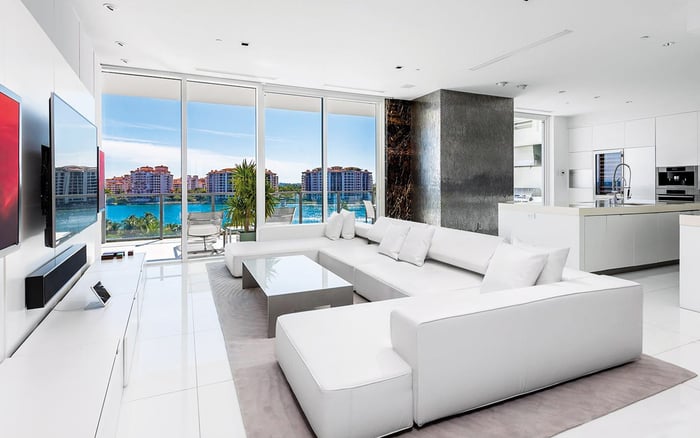
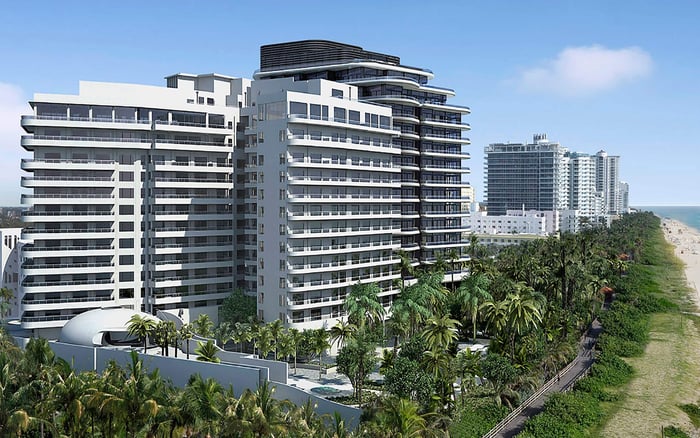
Five Park offers the clearer published path to self-parking and private-garage EV readiness, while Shore Club emphasizes secure, discreet, hospitality-led arrivals. Buyers should treat both propositions as a starting point and verify the legal form of parking, charging access, costs, and operating rules before contracting.

At the highest end of Miami Beach real estate, parking is not a minor line in an amenity schedule. It shapes privacy, spontaneity, staffing, electric-vehicle ownership, and the cadence of every arrival. The distinction is particularly sharp between Five Park Miami Beach at 500-600 Alton Road, near the southern gateway to South Beach, and Shore Club Private Collections Miami Beach at the oceanfront 1901 Collins Avenue site.
Five Park presents a comparatively owner-directed model: private, enclosed individual garages allow self-parking, with provisions for EV charging and, in certain garages, an optional vehicle lift for a second car. Shore Club foregrounds secure parking, valet service, a discreet residential entrance, dedicated elevator access, and support for residents who use chauffeurs. Neither proposition is inherently superior. The better fit depends on whether control or service is the buyer's first luxury.
The decisive question is not whether parking exists, but how much control follows the residence.
Five Park's defining parking advantage is the clarity of its self-parking proposition. Enclosed individual garages are designed to let owners park their own vehicles. For a buyer who prefers to leave without requesting a car, keep a collectible automobile within a more private enclosure, or manage charging on a personal schedule, that distinction is meaningful.
The individual garages are designed with provisions for EV charging stations. Yet “EV-ready” should never be interpreted automatically as an installed, activated, separately metered charger included in the purchase. The purchase documents should identify responsibility for installation, electrical capacity, approvals, equipment standards, metering, and electricity costs.
Certain private garages can also accommodate an optional vehicle lift, potentially expanding capacity to a second car. Eligibility, added cost, structural or association approvals, operating restrictions, and maintenance obligations still warrant confirmation. Buyers should also determine which residences qualify for an enclosed garage and the precise legal relationship between the residence and that space.
Self-parking does not eliminate service. Five Park includes 24-hour valet and security, along with a separate valet parking building equipped with EV charging stations. The result is a dual model: direct access when desired and staffed vehicle handling when convenient. Bicycle storage adds another practical layer to its mobility infrastructure.
Shore Club's vehicle experience is organized around discretion and service. Secure parking connects by dedicated elevator to the private residential arrival area in the landmarked Cromwell House. A private residential entrance on 20th Street creates a lower-profile route apart from the main Collins Avenue frontage, while a driver and chauffeur room near the secure parking facilities serves households that employ private drivers.
Valet parking is central to the property's proposition. That approach may suit a buyer who wants the automobile handled as part of a staffed arrival ritual, particularly at an oceanfront address. It also introduces operational questions for anyone who expects regular, independent access to a specific vehicle.
The property includes both garage and valet parking, but the available details do not clearly establish whether spaces are deeded, assigned, licensed, or consistently open to resident self-parking. Residential parking spaces and bike parking are identified, although unit-by-unit parking allocations are not specified. Buyers should therefore avoid treating the words “garage parking” as proof of a particular ownership or access right.
Five Park provides the more explicit path toward owner-controlled charging because its individual garages include EV provisions. It also offers charging within the separate valet facility, potentially giving residents both private-garage and service-managed options. The practical value, however, depends on charger installation, activation, metering, access, and cost.
Shore Club confirms communal car-charging stations, but the available information does not specify the number of ports, charging speeds, resident exclusivity, allocation procedures, fees, or rights to install a private charger. An EV owner should ask whether valet staff manage charging rotations, how completed sessions are handled, whether hotel and residential users share equipment, and what happens during periods of high demand.
This distinction matters because a communal charger is a service resource, while a charger tied to a private garage can function more like personal infrastructure. Buyers considering other Miami Beach residences, including The Ritz-Carlton Residences® Miami Beach or The Perigon Miami Beach, should apply the same scrutiny rather than assuming comparable language creates comparable rights.
This comparison belongs in practical Buyer's Guides because parking language can conceal several distinct legal and operating structures. A space may be deeded, assigned, licensed, or designated as a limited common element. Each structure can affect transferability, control, association authority, and day-to-day use. Counsel should review the condominium documents and purchase agreement rather than relying solely on an amenity description.
At Five Park, ask which residences receive enclosed garages, whether the garage is legally linked to the unit, and whether self-parking access can be restricted operationally. Confirm lift eligibility, approvals, insurance, maintenance, and cost. For charging, determine who purchases the equipment, who pays for installation and electricity, and whether the private and valet charging systems operate under different rules.
At Shore Club, confirm whether residents may self-park, whether a particular space is allocated, and how residential parking is separated from any hotel-related operation. Request valet retrieval procedures, access protocols, guest rules, overnight charging practices, station allocation, and charging fees. Households with chauffeurs should also clarify access to the driver room and the rules governing waiting and vehicle handoffs.
Five Park appears less dependent on valet because qualifying residents can self-park in private enclosed garages. That can appeal to drivers who value immediate departures, direct vehicle custody, and a clearer route to personal EV charging. Its 24-hour valet means choosing control does not require surrendering convenience.
Shore Club is more overtly hospitality-led. Secure parking, dedicated elevator access, the discreet 20th Street entrance, valet service, and a chauffeur room create a composed arrival sequence for buyers who prefer staffing and privacy. The tradeoff is less clarity around consistent self-parking and individualized charging rights.
Lifestyle ultimately determines the emphasis. Second-home owners who rarely drive may favor a highly serviced model, while frequent drivers or multi-car households may place greater value on private-garage control. In either case, the contract, condominium documents, garage rules, and charging policies should convert an elegant promise into an enforceable, workable arrangement.
For discreet guidance on comparing South Florida residences and their ownership details, connect with MILLION.
If branded residences are on your mind — as a home or as an allocation — we would be glad to share what we are seeing, privately.
Begin a quiet conversationFive Park advertises private, enclosed individual garages that permit self-parking for qualifying residences.
No clear public detail establishes consistent self-parking rights. Buyers should verify access and allocation in the governing and purchase documents.
The individual garages are designed with provisions for EV charging stations, but installation, activation, metering, and cost should be confirmed.
Yes. Five Park lists 24-hour valet and security, plus a separate valet parking building with EV charging stations.
Certain private garages may accommodate a second car through an optional vehicle lift. Eligibility, approvals, costs, and maintenance obligations require verification.
Shore Club confirms communal car-charging stations, but port counts, speeds, exclusivity, fees, and private-installation rights are not publicly specified.
Its package emphasizes secure parking, dedicated elevator access, a discreet 20th Street residential entrance, valet service, and a driver and chauffeur room.
The reviewed public details do not clarify whether spaces are deeded, assigned, licensed, or treated under another legal structure.
Five Park appears less valet-dependent because its private enclosed garages expressly permit self-parking, while valet remains available.
Confirm the legal form and allocation of parking, self-parking rights, valet rules, EV equipment terms, charging fees, access procedures, and any lift obligations.