A buyer-focused comparison of entertaining infrastructure, hospitality service and the operating rules that can determine how private dining amenities work in practice.
Private dining has become a defining promise of Branded Residences, yet the room itself is only part of the proposition. For buyers who regularly host chef-led dinners, family celebrations, business presentations or cocktail receptions, the decisive questions are operational: who may reserve the space, which culinary teams may work there, what services are mandatory and how late an event may continue.
That distinction is particularly relevant when comparing 888 Brickell by Dolce & Gabbana with Mr. C Tigertail Coconut Grove. The former presents a substantial, purpose-built event and culinary suite. The latter is more explicitly oriented toward everyday hospitality, delivery and relaxed poolside service. Both can support an elegant entertaining life, but they appear to do so through different operating models.
The true luxury is not merely having an event space, but knowing precisely how it may be used.
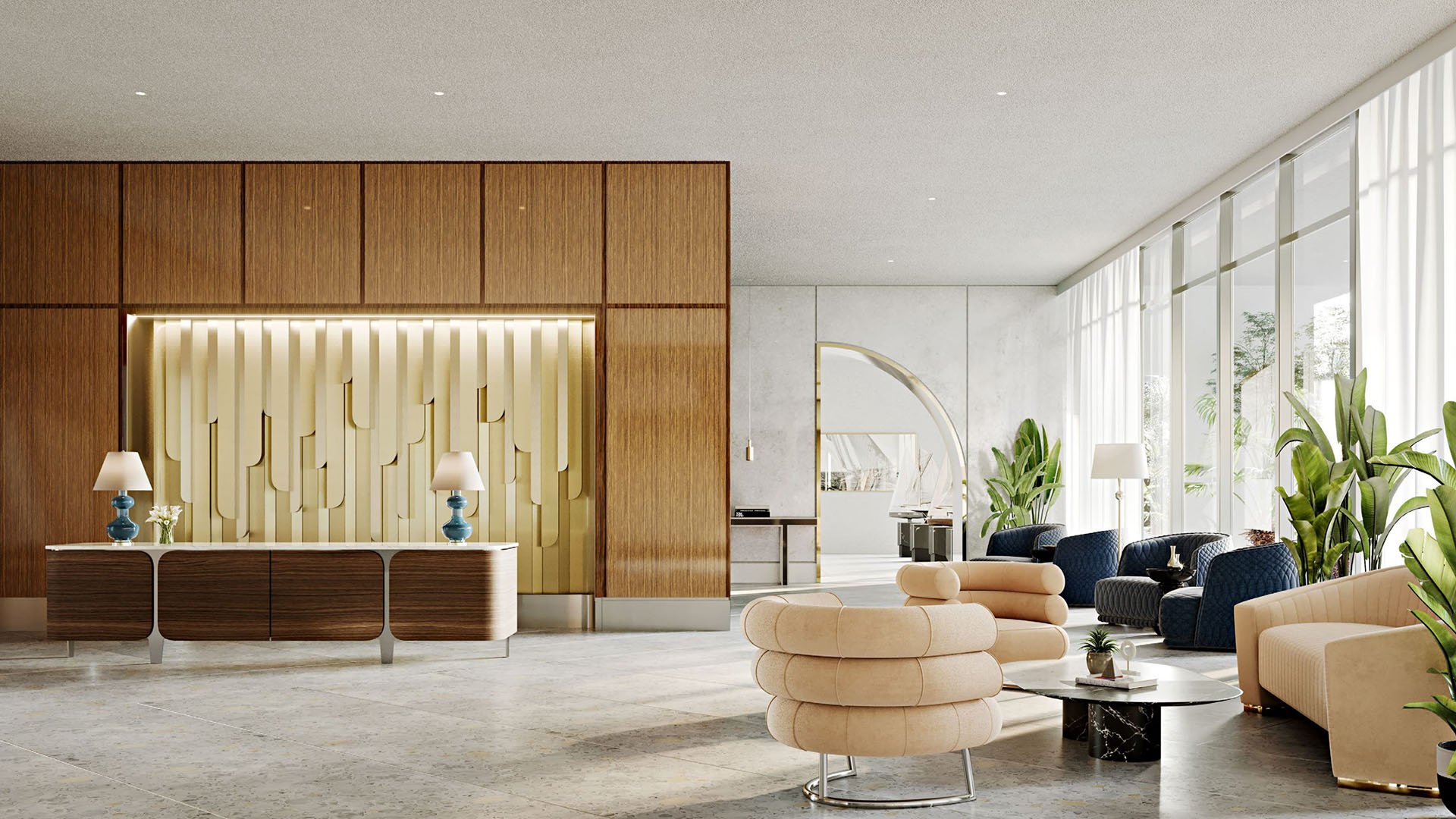
Planned for 888 Brickell Avenue, 888 Brickell advertises a 5,000-square-foot event space with an outdoor terrace, event and theater area, demonstration kitchen, private dining room, wine cellar, and bar and lounge. The double-height, salon-style venue is presented with plush seating, a stage and a DJ booth. That combination suggests greater versatility than a conventional condominium party room, with potential for performances, presentations and highly produced dinners.
The chef’s kitchen and private dining area are equally important. Purpose-built culinary infrastructure can make demonstrations and chef-led meals more fluid, but buyers should not assume that the presence of a kitchen grants an outside chef unrestricted access. The amenity details do not define whether outside caterers may work in the space or whether an in-house food-and-beverage operator will have exclusive rights.
The broader hospitality ecosystem is notable. Plans call for six food-and-beverage outlets, including a signature restaurant at ground level, two lobby bars, a pool-club restaurant and bar, and private dining facilities. The 888 Pool Club is expected to feature a 3,800-square-foot pool, private cabanas, two poolside bars, a gelateria and an all-day restaurant. A 43rd-floor pool is described as reserved for residents, making it essential to distinguish resident-only areas from broader club operations.
Buyers considering other Brickell addresses, such as Cipriani Residences Brickell, should apply the same discipline: compare enforceable reservation and service rights, not simply the visual ambition of the amenity package.
The principal diligence issue is exclusivity. Buyers should obtain written confirmation of whether the event venue, private dining room and culinary spaces are reserved for residents or may also serve hotel guests, public functions and brand activations. Shared use is not necessarily a disadvantage, particularly if it brings professional staffing, but it may affect preferred dates, privacy and advance-booking windows.
Several practical terms remain unspecified: guest capacity, operating hours, event-frequency limits, usage fees and reservation lead times. A buyer who entertains frequently should request the current fee schedule, a sample event agreement and a calendar protocol. Buyers should also ask whether simultaneous functions can occur elsewhere in the building and whether music, stage use or the DJ booth triggers additional security, audiovisual or staffing charges.
Private culinary experiences are referenced without defining whether they take place within residences, in the dedicated private dining room or in both. The answer may materially affect hosts who want a restaurant-level dinner without moving guests through common areas.
Mr. C Tigertail’s program emphasizes food service woven into residential life rather than a large, dedicated residential event hall. La Bottega Café, La Bottega Gourmet Market and in-home café delivery can provide practical support for intimate gatherings. The key limitation is that the disclosed details do not specify order limits, staffing arrangements or whether delivery can scale into a fully serviced private event.
Outdoor hospitality is central to the proposition. A private Bellini Bar sits on the garden-level pool deck, accompanied by poolside food-and-beverage service. A secluded rooftop pool, bar and lounge also includes poolside service, while the garden-level lap pool and cabanas provide another potential social setting. Private reservation rights for those areas, however, are not stated.
Concierge reception and butler service may help coordinate in-residence entertaining, but buyers should clarify the boundary between general resident assistance and billable event production. Setup, serving staff, rentals, floral deliveries, cleanup and vendor supervision may be included, available for an additional charge or left to the owner.
Separate hotel event spaces are identified by size and banquet or reception capacity. Tigertail owners should therefore ask whether they receive access, priority reservations or preferred pricing. A nearby comparison such as Four Seasons Residences Coconut Grove can also help buyers evaluate how differing hospitality affiliations translate into actual owner privileges.
For a host envisioning staged presentations, musical programming or larger chef-led occasions, 888 Brickell has the more explicitly documented event infrastructure. Its terrace, stage, DJ booth, demonstration kitchen and private dining facilities create a compelling production framework. The unanswered question is not whether the physical program is ambitious, but how much control a resident receives over it.
For smaller dinners and informal gatherings, Mr. C Tigertail Coconut Grove may offer a more seamless daily rhythm through café delivery, market access, butler assistance and poolside food service. Its disclosed program is less explicit about ballroom-scale residential entertaining, making hotel access and in-residence service terms especially relevant.
This is the core lesson for buyers’ guides focused on luxury amenities: availability does not establish a legal right to reserve or privatize a space, or to bring vendors into it. Nor does hospitality branding guarantee preferred access to affiliated hotel venues. Buyers should match each operating model to the frequency, scale and formality of their actual events.
Before relying on a private dining promise, request the governing documents and current management policies. The review should address outside-chef and caterer permissions, operator exclusivity, kitchen access, vendor insurance, food-and-beverage minimums, corkage, alcohol service and amenity rental charges. It should also establish guest limits, booking priority, cancellation terms and the number of events permitted within a given period.
Operational details can be equally consequential. Ask who controls deliveries, loading, parking, elevator protection, décor installation, security, music, cleanup and waste removal. Confirm whether rooftop, pool or terrace functions face different noise rules and whether inclement weather brings an indoor backup or a cancellation.
Finally, request a sample cost illustration for the kind of gathering you expect to host. A polished room can carry mandatory staffing, catering, security and cleanup costs that meaningfully alter its utility. Written answers allow buyers to compare 888 Brickell by Dolce & Gabbana and Mr. C Tigertail Coconut Grove on the terms that matter most: privacy, certainty, service quality and freedom to entertain.
For discreet guidance on South Florida luxury residences and their amenity structures, connect with MILLION.
If branded residences are on your mind — as a home or as an allocation — we would be glad to share what we are seeing, privately.
Begin a quiet conversation888 Brickell has the more explicit program, including a 5,000-square-foot venue, terrace, stage, demonstration kitchen, private dining room, wine cellar and lounge.
Published details do not specify outside-chef access or whether an in-house operator has exclusive catering rights. Buyers should obtain the policy in writing.
Resident exclusivity is not clearly defined in the published amenity details. Buyers should confirm whether hotel guests, public functions or brand activations may share access.
The program includes La Bottega Café, La Bottega Gourmet Market, in-home café delivery and poolside food-and-beverage service.
Private reservation rights for the garden-level and rooftop pool settings are not stated. Written management rules should clarify availability, guest limits and fees.
Separate hotel event venues exist, but owner access, priority booking and preferred pricing should be confirmed directly in writing.
Buyers should ask about rental charges, food-and-beverage minimums, corkage, staffing, security, cleanup, insurance and cancellation costs.
They reveal the enforceable booking, vendor, liability, payment and cancellation terms that amenity descriptions may not disclose.
Mr. C Tigertail's in-home café delivery, market access and butler service may suit smaller gatherings, subject to service limits and separate charges.
Request governing documents, current management policies, fee schedules, sample event agreements and written rules for vendors, alcohol, noise, deliveries and guests.