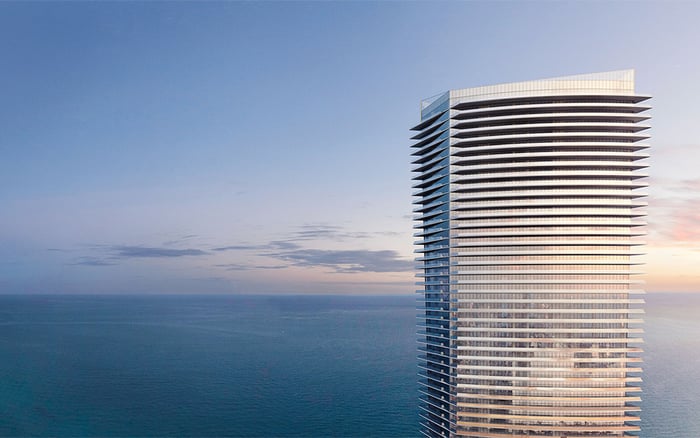
At Armani Casa Sunny Isles Beach and Kempinski Residences Miami Design District, discerning buyers should separate amenity access from service charges and establish which rights survive a resale. A document-led comparison clarifies both the annual cost and the lasting value of the residential experience.

The appeal of a serviced residence lies in its apparent effortlessness: a prepared beach chair, a discreet concierge, a wellness routine close to home. The financial and contractual structure behind that experience deserves equal attention. Access to an amenity, inclusion of a service and ownership of a transferable membership are three distinct propositions.
That distinction is central when comparing Armani Casa in Sunny Isles Beach with Kempinski in Miami’s Design District. Neither project’s amenity descriptions establish a complete fee or transfer structure for a separate private club. Buyers should avoid assuming either that club-style amenities require an additional membership or that ownership includes every advertised service without further charge.
The question is not simply what the building offers. It is what the buyer is entitled to use, at what cost, under which agreement and for how long.
At Armani Casa Sunny Isles Beach, the oceanfront setting at 18975 Collins Avenue comes with advertised beach attendants, chaise lounges, umbrellas and beach food-and-beverage service. Advertised services also include 24-hour valet, 24-hour security and multilingual concierge. These describe the residential offering, not necessarily what the monthly bill covers.
Stated monthly association assessment inclusions encompass amenities, cable television, building maintenance, parking, pool access, security and utilities. Buyers should nevertheless obtain a current, unit-specific assessment statement and inclusion schedule. A broad description cannot resolve parking allowances, the scope of utilities or whether particular service requests incur additional charges.
Beach-club terminology warrants special care. The language includes both “Club Membership: No” and, for Unit 4700, “Beach Club Membership Available.” Neither phrase establishes the contractual position. Nor do the advertised oceanfront restaurant, coffee bar or poolside dining establish that consumption is assessment-funded.
Request written clarification of the basis for beach access and whether a separate club agreement exists. If one does, obtain the initiation charge, recurring dues, eligibility rules and resale provisions. If not, ask management to identify the documents governing resident access and chargeable services.
Kempinski Residences Miami Design District is presented as the brand’s U.S. branded-residences debut. The announced development comprises two towers, 132 private residences, six townhomes and 17 guest suites reserved exclusively for residents. Planned amenities connect through an elevated third-floor bridge.
The approximately 70,000 square feet of announced indoor and outdoor amenities suggest a substantial lifestyle offering. Planned wellness facilities include a fitness center, spa and recovery zones, lap pool, cold plunge, infrared and steam saunas, and outdoor training areas. Announced social spaces include dining, screening facilities, simulator rooms and family recreation areas.
The essential distinction is between planned availability and included usage. Advertised concierge, on-site staffing, valet, housekeeping and private-chef services do not establish which costs fall within common charges and which are billed individually. Request a service matrix separating included benefits, paid appointments, reservations and optional subscriptions, if any.
Resident-exclusive guest suites warrant a separate review. Exclusivity does not establish complimentary nights, guaranteed availability or transferable membership rights. Ask for proposed nightly pricing, booking windows, cancellation terms, stay limits and guest eligibility. Treat unanswered items as unresolved, not as zero-cost entries in the ownership budget.
Start with mandatory association charges. For Armani, use the current statement for the precise residence under consideration. For Kempinski, request the applicable proposed budget and identify which figures remain estimates. In both cases, ask what is included, what is excluded and how charges may change under the governing documents.
Next, isolate any documented membership obligations. Record initiation fees separately from recurring dues, and distinguish mandatory participation from optional enrollment. Ask whether minimum spending, re-enrollment charges or other commitments apply, without presuming that either project imposes them. The absence of a published fee table does not establish that every possible charge is zero.
Finally, model personal usage. Dining, spa treatments, housekeeping and guest accommodation should remain separate line items unless written terms confirm their inclusion. Estimate use around the household’s actual calendar, not an idealized full-time lifestyle.
For this comparison, annual recurring service-related cost equals association assessments plus documented recurring membership obligations plus anticipated usage charges. Present one-time enrollment or transfer costs alongside that figure, rather than burying them within it. This is a service-cost comparison, not a complete property carrying-cost budget.
A membership that follows the unit automatically has a different value from one that belongs to a named individual and requires a fresh application after sale. Neither project’s amenity descriptions establish those transfer mechanics. Have counsel review the declaration, association rules, service agreements and any separate membership contract together.
Ask whether rights attach to the residence, named owner or household. Establish whether a resale requires approval, re-enrollment or a transfer fee, and whether the buyer receives the same access as the seller. These are verification questions, not established restrictions at either development.
Ownership structure also matters. For an LLC or trust purchase, request written confirmation of how eligible users are designated. Ask how spouses, adult children, guests and any permitted tenants are treated. A seller’s current experience is no substitute for confirmation of the incoming buyer’s rights.
Where multiple agreements govern access and service delivery, have counsel identify who can revise pricing or eligibility and which provisions control if descriptions conflict.
The comparison should remain personal. A buyer expecting regular beach days should focus on access, guest policies and the distinction between beach setup and food-and-beverage spending. A household anticipating frequent visitors should give guest-suite booking terms greater weight than the mere existence of suites.
If the search also includes Turnberry Ocean Club Sunny Isles, apply the same document-led test rather than inferring a separate membership obligation from the project’s name. Club terminology should begin the inquiry, not conclude it.
Before committing, assemble a concise written schedule of included services, optional costs, unresolved pricing and transfer conditions. For Kempinski, distinguish announced amenities from contractual delivery commitments; for Armani, reconcile current unit charges with the applicable access rules. The strongest choice is the residence whose documented rights and likely service spending fit the way the household intends to live.
For a discreet perspective on South Florida’s residential choices, explore MILLION.
If branded residences are on your mind — as a home or as an allocation — we would be glad to share what we are seeing, privately.
Begin a quiet conversationThe amenity descriptions do not establish a separate membership requirement or complete fee schedule. Obtain written clarification of beach-access rights and any separate club agreement.
Public descriptions include amenities, cable television, building maintenance, parking, pool access, security and utilities. Confirm the precise inclusions through a current statement and service schedule for the unit.
Advertised beach food-and-beverage services do not establish that consumption is included. Request written pricing and confirmation of any assessment-funded benefits.
Public descriptions include both “Club Membership: No” and “Beach Club Membership Available.” Those descriptions do not settle the buyer’s contractual rights or obligations.
The amenities discussed here are planned or announced, not confirmed operational facilities. Buyers should distinguish amenity descriptions from contractual delivery commitments.
The official amenity descriptions do not disclose a separate initiation fee, recurring club-dues table or membership-transfer schedule. That does not establish that all services are included without additional charges.
The designation of 17 guest suites as resident-exclusive does not establish free stays or guaranteed availability. Confirm rates, booking rules, stay limits and guest eligibility.
Separate mandatory association assessments, any documented recurring membership obligations and anticipated usage charges. Track one-time enrollment or transfer fees separately.
Automatic transfer is not established for either project by the amenity descriptions. Review the governing documents and any membership agreement for approval, re-enrollment and transfer provisions.
Request written confirmation of how eligible users are designated and whether rights attach to the unit, owner or household. Clarify family, guest and permitted-tenant access before relying on those benefits.