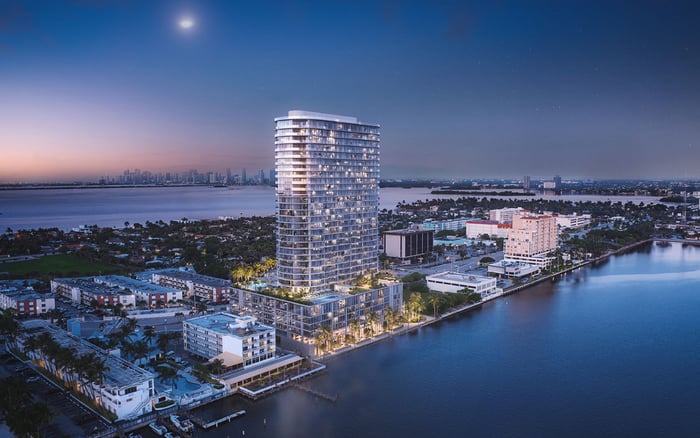
A disciplined comparison of parking at Continuum Club & Residences North Bay Village and Tula Residences North Bay Village should focus on the legal nature of the parking right, the building’s operating model, electric-vehicle support, vehicle restrictions, recurring costs, and the written documents governing future use.

Parking can materially affect daily convenience, recurring expenses, vehicle flexibility, and resale considerations. Buyers comparing Continuum Club & Residences North Bay Village with Tula Residences North Bay Village should therefore evaluate more than whether parking is generally described as available.
The central question is what the purchaser will receive in writing. Marketing language should be reconciled with the sales contract, condominium declaration, parking exhibits, association rules, fee schedules, and any separate garage or valet agreement.
A parking arrangement may involve a deeded interest, an assigned space, a license, a common-element use right, or access through an operating system. Buyers should ask which structure applies, whether a particular stall is identified, and whether the right transfers automatically with the residence.
The documents should also explain whether a space can be relocated, leased, transferred separately, or withdrawn under specified circumstances. If the arrangement depends on assignment or licensing, buyers should review the duration of that right and the authority responsible for administering it.
Where valet service is contemplated, buyers should determine whether it is mandatory, optional, or limited to particular users or hours. Written procedures should address resident retrieval, guest vehicles, overnight access, keys, claims, oversized vehicles, additional household cars, fees, and any direct-access or self-parking rights.
A buyer can test the arrangement against an ordinary week: commuting, school runs, airport departures, appointments, deliveries, guests, and multiple departures in a short period. The objective is to understand how the operating model would function for the household rather than relying on the arrival experience alone.
Electric-vehicle diligence should cover both infrastructure and policy. Buyers should request written answers about charger locations, eligibility, reservations or queues, billing, idle-time charges, maintenance, and responsibility for connecting or moving a vehicle.
If private equipment might be permitted, the relevant documents should identify the approval process, installation standards, electrical pathway, insurance requirements, ownership of the equipment, and responsibility for future repairs or upgrades. Buyers should distinguish between access to a shared charger and a documented right to install or use equipment associated with a particular parking arrangement.
Parking rules may address the number, dimensions, type, condition, or registration of vehicles. Owners with multiple cars, pickups, large sport-utility vehicles, collector cars, motorcycles, trailers, or frequently changing rental vehicles should obtain written confirmation that their anticipated use is permitted.
Guest parking requires separate review. Buyers should ask whether visitors use designated spaces, valet inventory, temporary permits, or another procedure, and whether limits or charges apply. The same review should cover household employees, service providers, and overnight guests where relevant.
The analysis should remain consistent when considering other nearby residences, including Shoma Bay North Bay Village and Onda Bay Harbor. For each property, buyers can compare the legal right, access method, eligible vehicles, EV provisions, guest procedures, recurring charges, and amendment authority.
A side-by-side worksheet can help separate documented rights from operating practices and unresolved questions. Any inconsistency among marketing materials, contract language, rules, and exhibits should be resolved before the applicable diligence or contract deadline.
The parking file should include the governing declaration, applicable exhibits, current rules, garage plan, contract provisions, fee schedules, valet terms, EV policies, and written responses to project-specific questions. Buyers should have qualified counsel review how these materials work together and identify which provisions are binding.
The final assessment should account for present needs and plausible changes, such as a second vehicle, a different vehicle type, an electric car, regular guests, or a change in household routine. A workable arrangement is one whose rights, procedures, and costs are sufficiently clear for the buyer’s intended use.
What is the first parking question a buyer should ask? Ask what legal right is conveyed and where that right is defined in the governing documents.
Is an assigned space the same as a deeded space? Buyers should not assume they are equivalent; the documents should explain the ownership, duration, transferability, and relocation terms.
How should buyers assess valet dependence? Review whether valet is mandatory or optional and obtain written procedures for access, retrieval, guests, fees, keys, and claims.
What should an EV owner verify? Confirm charger access, billing, queue rules, maintenance responsibility, and any right to install private equipment.
Why does electrical capacity matter? Buyers considering EV use should determine whether the documents address installation approval, electrical pathways, and responsibility for upgrades.
How can buyers check vehicle restrictions? Review the governing definitions and obtain written confirmation for the specific vehicle types the household expects to use.
What should a household with two cars investigate? Determine how many vehicles may be registered, whether an additional parking right is available, and what recurring charges or restrictions apply.
How should guest parking be evaluated? Ask about designated areas, permits, valet procedures, time limits, overnight rules, and applicable fees.
Which documents belong in a parking diligence file? Include the declaration, parking exhibits, garage plan, rules, contract terms, fee schedules, valet provisions, and EV policies.
When should unresolved parking questions be addressed? They should be resolved in writing before the relevant contract or diligence deadline.
For a discreet conversation and a curated building-by-building shortlist, connect with MILLION.
If branded residences are on your mind — as a home or as an allocation — we would be glad to share what we are seeing, privately.
Begin a quiet conversation