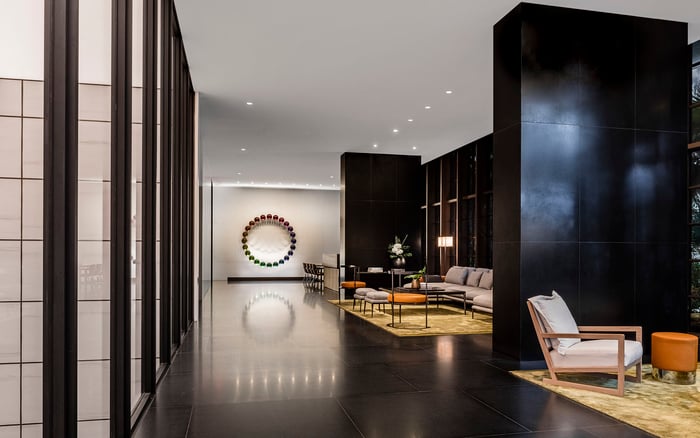
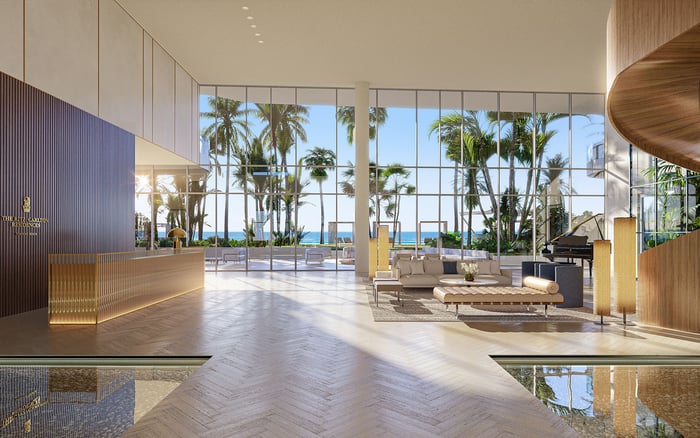
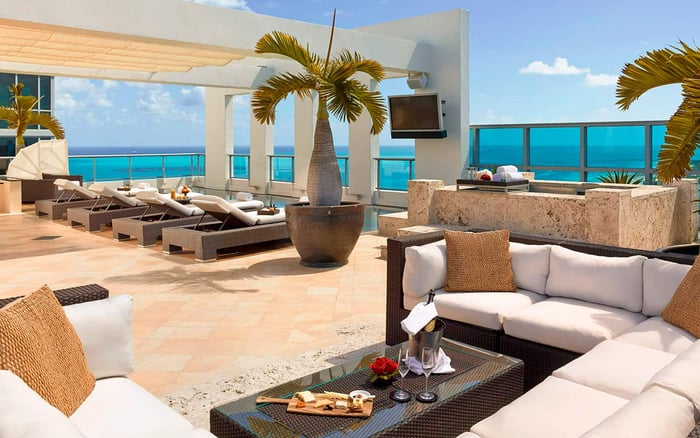
A buyer’s guide to evaluating arrival routes, shared amenities, elevator access and owner-only spaces at Fendi Château and W Pompano Beach, with privacy measured through plans and policies rather than branding.
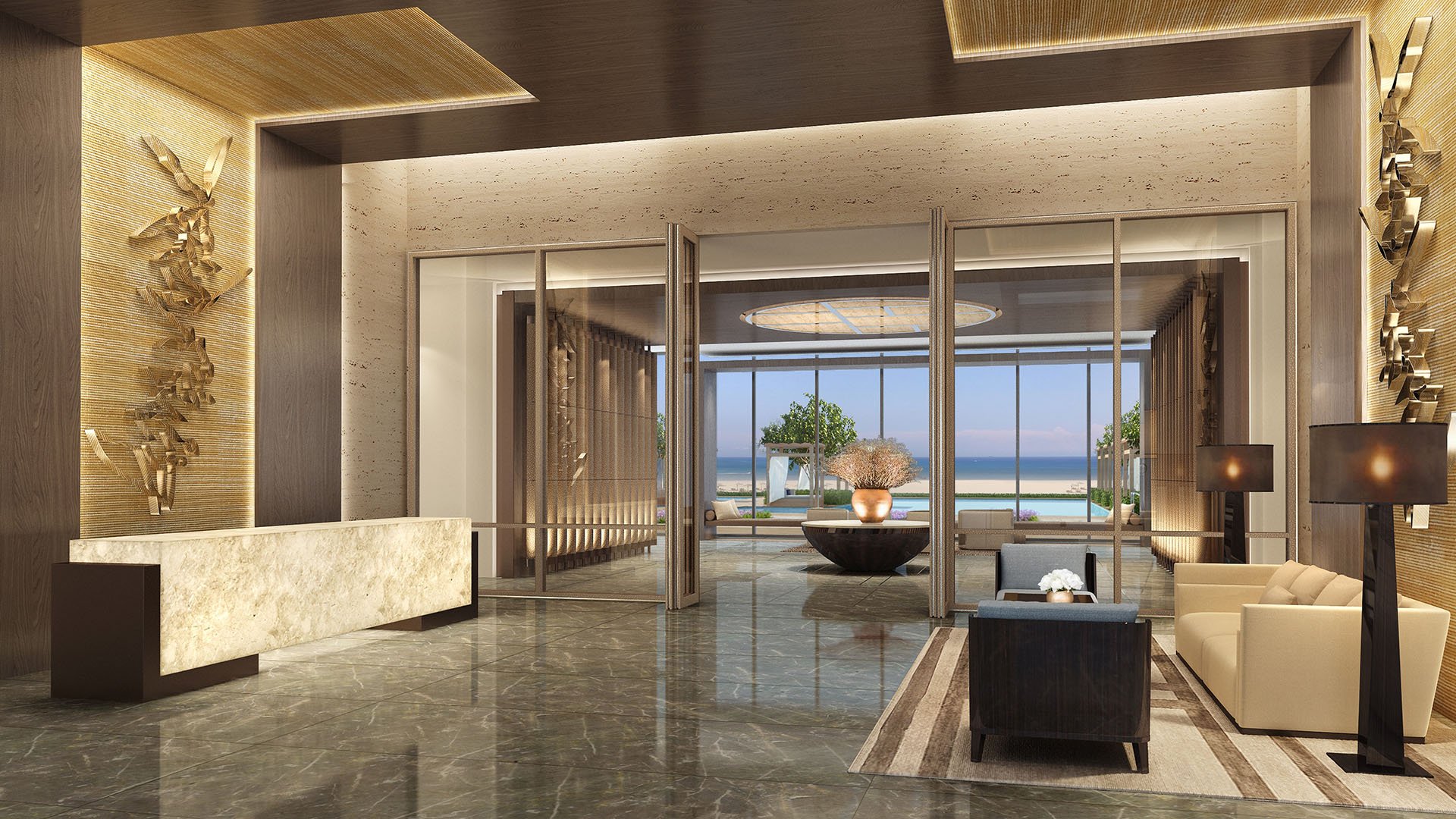
For a buyer who values discretion, privacy begins before the front door. The essential questions are who shares the arrival sequence, where visitors may linger, and whether returning home means passing through a social destination. A private lobby matters, but so does every connection between that lobby, the garage, the elevators and the residence.
Fendi Château Residences Surfside and W Pompano Beach Hotel & Residences present different frameworks for that assessment. Fendi Château emphasizes controlled residential arrival and resident-oriented amenities. W’s marketed offering combines hotel/shared facilities with a separate residential layer. Neither description alone establishes superior day-to-day privacy.
The strongest comparison follows a simple principle: evaluate privacy as a continuous route, not an isolated amenity. Architecture sets the boundaries; credentials, staffing and visitor procedures determine how those boundaries function.
At Fendi Château Residences Surfside, advertised arrival features include a gated entrance, 24-hour security, a doorman and valet. These are meaningful provisions for a resident-centered arrival experience, but buyers should still establish where screening occurs and how visitors proceed once admitted.
The distinction between communal and public is particularly important here. The amenity offering includes a private lobby lounge, lobby bar, and poolside bar and restaurant. Indoor and outdoor dining areas are designated for residents and their guests only. Hospitality-style service does not make them public restaurants.
Ask how residents’ guests are registered, whether an owner must accompany them, and how dining visitors move from arrival to their destination. A residents-and-guests designation defines eligibility; it does not explain every circulation rule.
For buyers also considering Ocean House Surfside, the same questions offer a useful basis for comparison without assuming equivalent access arrangements.
At W Pompano Beach Hotel & Residences, the distinction between hotel/shared amenities and residence-exclusive spaces is explicit. Planned hotel/shared arrival facilities include dedicated lobby and reception areas, bellman services, a 24-hour attended lobby and valet.
The residential offering separately includes an advertised private resident-only lobby, with planned 24-hour concierge service, valet parking and direct elevator access. These provisions deserve attention, but they remain marketed features rather than verified operating conditions.
The decisive step is to locate the boundary between the two arrival systems. Request plans showing whether pedestrian paths, vehicle queues, garage approaches or elevator waiting areas intersect. Separate lobbies do not automatically mean separate routes from the curb or parking space.
Clarify what happens during busy hotel arrivals or events. Ask whether the proposed operating plan preserves the residential route without redirecting owners through shared reception or social areas. This is a diligence question, not an assertion that overlap will occur.
Private elevator access is documented for individual Fendi Château residences, including Residence 604. That does not establish an identical arrangement for every home. Buyers should review their selected unit’s plans and confirm how access works at each landing.
W Pompano Beach’s marketed offering includes private elevator entry to each residence. Here, too, the phrase should prompt precise questions rather than broad assumptions. On its own, it does not establish exclusive elevator use, a wholly private foyer or separation from service traffic.
Request elevator credential rules in writing. Establish who can authorize visitors, which floors each credential permits access to, how deliveries are handled, and whether contractors use the same elevator bank.
Shabbat elevators are also part of Fendi Château’s offering. Their availability is an operational feature, not evidence of tighter access control. Buyers should ask how access procedures work in that mode rather than infer security characteristics from its inclusion.
W’s planned Living Room is a hotel/shared social hub featuring cultural events, live music, a speakeasy and culinary tastings. The advertised shared offering also includes a restaurant, a 60,000-square-foot WET pool deck, spa, fitness/yoga facilities and a game lounge.
For owners who enjoy the energy of a hotel setting, those spaces may be part of the appeal. The privacy question is whether participation is optional in practice: can an owner reach home and everyday residential amenities without passing through the social hub?
Do not equate hotel/shared with unrestricted public access. Ask who may enter each venue, including restaurant patrons and event attendees, and where their routes end. Guest eligibility, event access and residential boundaries require separate consideration.
For either property, request an annotated circulation plan tracing curb-to-home and garage-to-home journeys. Add separate routes for visitors, staff, deliveries and contractors. Each intersection becomes a specific question for management or the sales team, rather than a vague concern about activity.
W’s residence-exclusive offering includes a planned 12,000-square-foot outdoor pool deck, private spa and private fitness center. Additional owner-exclusive spaces include an Owner’s Club Lounge, business center, meeting rooms, Great Room, wine storage and mailroom.
The existence of these spaces is only the first test. The second is connectivity. Ask whether owners can reach them through residential circulation and how access is checked at connections to shared facilities. Confirm whether owners’ guests may use them and under what conditions.
Fendi Château’s amenities include a private cinema/media center, kids’ club, library area, ocean-facing fitness center and spa with an indoor European thermal pool. Evaluate the routes to these destinations as carefully as the route home. A family’s daily privacy depends on repeated journeys, not simply the impression made on arrival.
Before committing, assemble a unit-specific package of circulation plans, owner-zone access policies, elevator credential rules and visitor procedures. Clarify delivery handoffs, contractor access and the handling of temporary credentials. Plans show intended separation; written rules explain who can cross those boundaries.
For W Pompano Beach, distinguish planned provisions from contractual commitments and eventual operating procedures. Some amenities and hotel-style services cost extra and are not included with purchase or ownership. Obtain an itemized fee schedule and clarify which services are included, optional or charged by use.
Treat access and price as separate questions. Eligibility to enter an amenity does not necessarily mean every service within it is included.
Fendi Château’s disclosed framework emphasizes controlled residential arrival and dining reserved for residents and their guests. W’s planned model offers hotel/shared experiences alongside owner-exclusive alternatives. The right choice depends on whether the documented routes and rules support the buyer’s preferred balance of sociability and retreat.
For a discreet assessment of South Florida residences aligned with your privacy priorities, connect with MILLION.
If branded residences are on your mind — as a home or as an allocation — we would be glad to share what we are seeing, privately.
Begin a quiet conversationThe disclosed features do not establish a winner. Buyers should compare unit-specific routes, access controls and visitor policies against their own privacy priorities.
Its indoor and outdoor dining areas are described as available only to residents and their guests. They should not be characterized as publicly accessible restaurants.
Its advertised features include a gated entrance, 24-hour security, a doorman and valet. Buyers should confirm how visitors are screened and admitted.
Yes, it advertises a private resident-only lobby distinct from hotel/shared arrival facilities. The complete curb-to-home and garage-to-home separation still requires review.
No. Private entry alone does not establish exclusive elevator use, a wholly private foyer or separation from service traffic.
It is documented for individual residences, including Residence 604. Buyers should verify the arrangement for their selected unit rather than assume it is uniform.
No. Fendi Château lists Shabbat elevators, but that operational feature does not specify their access-control procedures.
The offering includes a 12,000-square-foot outdoor pool deck, private spa, private fitness center and Owner’s Club Lounge. Buyers should confirm access rules and residential connections to these spaces.
No. Its disclaimer states that some amenities and hotel-style services cost extra, making an itemized fee schedule an important part of diligence.
Request curb-to-home and garage-to-home plans identifying intersections with guests, staff, deliveries and contractors. Obtain written owner-zone access policies, elevator credential rules and visitor procedures as well.