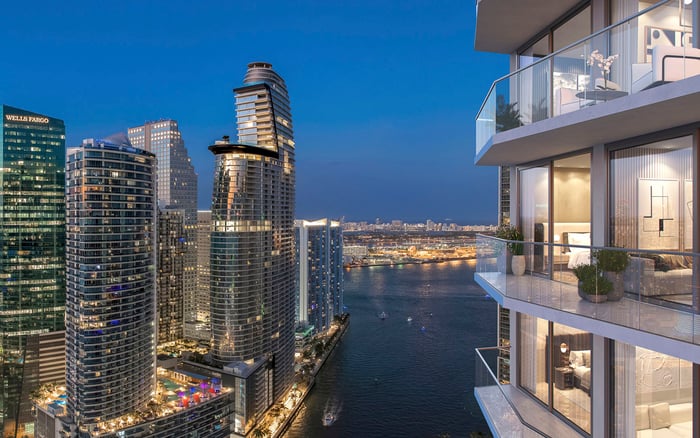
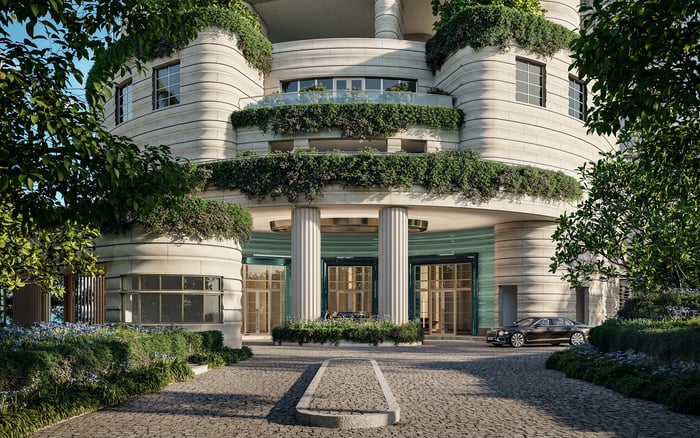
A discreet buyer’s guide to reading building culture before committing to full-time condominium life on Brickell Key, with emphasis on governance, service rhythm, privacy, amenities, pets, rentals, and everyday fit.

For many buyers, Brickell Key is compelling because it offers a more contained residential setting close to the energy of Brickell. Yet for a full-time resident, the defining question is not simply whether a condominium is beautiful. It is whether the building’s daily culture supports the life you intend to live there.
Culture is the sum of a building’s habits: how residents use the lobby, how management communicates, how staff protects privacy, how neighbors treat shared spaces, how the board approaches improvement, and how rules are applied when convenience and discretion collide. These details rarely appear in listing photography, but they shape every morning, every guest arrival, every service appointment, and every quiet evening at home.
A seasonal owner may tolerate a mismatch for a few weeks. A full-time resident cannot. The right building should feel composed when it is busy, gracious when something goes wrong, and consistent when no one is trying to impress a prospective buyer.
A building’s rhythm should be observed at ordinary moments, not only during a polished showing. Visit at different times if possible: weekday morning, late afternoon, early evening, and a weekend. Notice whether the lobby feels like a private residence, a hotel lounge, a waiting room, or a thoroughfare. None is inherently wrong, but each suggests a different lifestyle.
Full-time buyers should ask how deliveries are managed, how often service elevators are occupied, whether residents linger in common areas, and whether staff recognizes regular owners with ease. The tone of the front desk is often revealing. A polished building is not merely formal; it is calm, informed, and responsive without becoming intrusive.
For comparison, buyers looking across nearby Brickell can study how newer urban residences frame arrival, amenity access, and private circulation. Buildings such as St. Regis® Residences Brickell, Una Residences Brickell, and Cipriani Residences Brickell illustrate the broader market’s growing emphasis on service identity, resident experience, and the choreography of daily living.
Views can be evaluated in minutes. Governance takes more patience. Before purchasing, a buyer should understand how the association approaches rules, communication, reserves, maintenance, capital improvements, and conflict resolution. A well-run building does not need to feel severe, but it should feel orderly.
Ask for the condominium documents and read them through the lens of daily life. Rental policies, pet policies, guest registration, renovation procedures, elevator reservations, move-in rules, parking use, storage access, and amenity protocols can all affect full-time comfort. If the building permits frequent turnover, the atmosphere may differ from one dominated by long-term owners. If rules are strict but inconsistently enforced, the result can be more frustrating than flexible governance.
The strongest residential cultures are clear without being performative. Residents know what is expected. Staff knows what is permitted. Management can explain the reason behind a rule. That clarity protects privacy and preserves value.
Brickell Key buyers often want proximity without constant exposure. Still, every building has its own social temperature. Some residents prefer a neighborly environment where the pool deck and fitness room foster familiarity. Others value a more reserved atmosphere where interaction is polite, brief, and optional.
Neither model is superior. The question is fit. A buyer who works from home may value quiet common areas, reliable package management, and restrained amenity use. A buyer who entertains frequently may prioritize guest handling, valet flow, and building policies that accommodate private dinners without friction. A family may evaluate how children are treated in shared spaces, while a pet owner should pay careful attention to circulation, elevator etiquette, and designated protocols for pets.
This is where a buyer’s-guide mindset becomes useful: do not ask whether the building is luxurious in the abstract. Ask whether its culture makes your ordinary life feel easier, more private, and more natural.
In a full-time residence, the arrival sequence becomes part of your identity. The drive-up, valet interaction, lobby entry, elevator wait, package retrieval, and transition into the residence should feel intuitive. If the process feels awkward during a showing, it may feel more irritating after a long flight, a late dinner, or a difficult workday.
Observe how staff manages unknown guests. Notice whether delivery personnel are visible in primary spaces. Ask how contractors are checked in, where they wait, and how access is monitored. Privacy is not only about being unseen. It is about knowing the building has habits designed to protect residents from unnecessary exposure.
Nearby luxury buyers often compare this with the elevated hospitality language emerging in projects such as Baccarat Residences Brickell and ORA by Casa Tua Brickell, where the promise of lifestyle must still be measured against the practicalities of daily use. Branding may set an expectation, but execution determines livability.
Amenity decks can be seductive, but full-time buyers should ask how spaces are actually used. A pool that photographs beautifully may feel crowded at peak hours. A fitness room may be impressive until equipment availability becomes inconvenient. A residents’ lounge may be elegant but rarely used, or active enough to alter the building’s tone.
For waterfront living, the most valuable amenity is often not the most dramatic one. It may be a quiet terrace, a shaded walking route, a dependable valet team, a discreet package room, or a management office that resolves small issues before they become irritations. Lifestyle value is cumulative.
Buyers should also consider whether the building’s amenities encourage a resort posture or a residential one. A full-time home should offer pleasure without making daily life feel like a public performance.
Long-term rentals and seasonal occupancy can influence the feel of a building. A condominium with many transient occupants may have a different lobby rhythm, amenity culture, and staff burden than one with a stable owner base. This does not automatically diminish a property, but it changes the buyer’s experience.
Ask how the building handles tenant approval, guest access, move-ins, and repeated deliveries. Consider whether you want to know your neighbors, or whether anonymity is part of the appeal. For some buyers, a more fluid population adds energy. For others, it reduces the sense of residential continuity.
The goal is not to judge the building’s posture, but to align it with your expectations. Full-time life rewards consistency.
The best questions are practical. How are after-hours issues handled? Who communicates during maintenance events? How does the building manage elevator reservations? Are residents notified clearly about amenity closures? How are noise complaints addressed? What is the process for renovations next door?
Answers matter, but tone matters too. If responses are vague, defensive, or overly casual, take note. A full-time residence requires confidence in the building’s operating culture. You are not only buying square footage. You are joining a small civic system with shared costs, shared spaces, and shared expectations.
A composed culture reveals itself through consistency. The doorman, manager, board, residents, and rules should all tell the same story.
Before purchasing in Brickell Key, imagine a week rather than a weekend. Where do you take calls? How does your dog move through the building? How do guests arrive? Where do packages go? How quiet is the corridor? How does the staff respond when something is inconvenient? How does the building feel when it is not staged for sale?
If the answers support your routines, the residence has a stronger chance of becoming a true home. If the building’s culture asks you to adapt too much, even an exceptional view may lose its power.
What is building culture in a Brickell Key condominium? It is the daily personality of the building, shaped by residents, management, staff, rules, service standards, and shared expectations.
Why does culture matter more for full-time buyers? Full-time residents experience every operational detail repeatedly, from elevators and deliveries to noise, guest access, and amenity use.
How can I evaluate a building’s culture before buying? Visit at different times, observe the lobby, ask practical management questions, and review rules as lifestyle documents.
Should I prioritize amenities or governance? Amenities matter, but governance often determines whether those amenities remain pleasant, orderly, and well maintained over time.
Are stricter building rules always better? Not necessarily. The best rules are clear, reasonable, consistently enforced, and aligned with the building’s resident profile.
How important are rental policies? Rental posture can affect turnover, privacy, amenity use, and the overall residential tone, so it should be reviewed carefully.
What should pet owners look for? Pet owners should study elevator etiquette, access routes, building rules, staff attitude, and how comfortably animals fit into daily circulation.
Can a beautiful building still be the wrong fit? Yes. Design and views can impress quickly, while an incompatible culture can make ordinary full-time life feel inconvenient.
Should I compare Brickell Key with Brickell projects? Yes, nearby Brickell residences can help clarify your preferences for service style, urban energy, privacy, and amenity programming.
What is the best final test before making an offer? Picture a normal week in the building and decide whether its routines, rules, and tone would make your life easier.
For a confidential assessment and a building-by-building shortlist, connect with MILLION.
If branded residences are on your mind — as a home or as an allocation — we would be glad to share what we are seeing, privately.
Begin a quiet conversation